
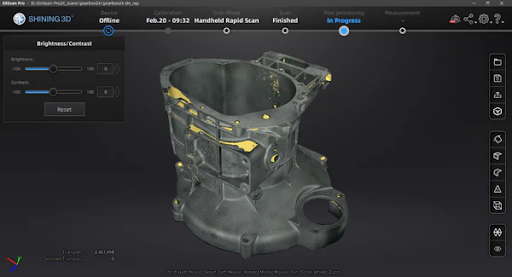
The world of three-dimensional technology continues to evolve at an incredible pace. From manufacturing and engineering to education and creative design, professionals and hobbyists are discovering new ways to bring ideas to life. One of the most exciting developments in this field is the use of a 3d scanner for 3d printing. This technology allows users to capture real-world objects and convert them into digital models that can be reproduced with remarkable accuracy.
As demand for customization and rapid prototyping grows, the combination of scanning and printing technologies is becoming an essential part of modern workflows. Whether you are an entrepreneur, designer, engineer, or maker, understanding how a 3d printer scanner works can help you unlock new opportunities and improve project efficiency.
Understanding 3D Scanning Technology
3D scanning is the process of capturing the shape, size, and details of a physical object and converting that information into a digital format. Unlike traditional measurements, scanning records thousands or even millions of data points in a matter of seconds.
The resulting digital model can be edited, stored, shared, or sent directly to a 3D printer. This process eliminates much of the manual design work that would otherwise be required when recreating an existing object.
Modern scanning systems use advanced sensors, cameras, and laser technologies to achieve highly detailed results. These systems are capable of capturing everything from small mechanical components to large architectural structures.
Why a 3D Scanner for 3D Printing Is Important
A 3d scanner for 3d printing bridges the gap between the physical and digital worlds. Instead of designing an object from scratch using computer software, users can scan an existing item and generate a digital model within minutes.
This capability offers several advantages:
- Faster design processes
- Accurate replication of objects
- Reduced development time
- Improved customization options
- Easier reverse engineering
- Enhanced quality control
Businesses often use scanning technology to recreate discontinued parts, while artists use it to preserve sculptures and create digital archives. Educational institutions also benefit by allowing students to explore real-world design and manufacturing techniques.
How a 3D Printer Scanner Works
A 3d printer scanner collects information from an object’s surface using specialized sensors. The scanner records measurements from different angles and combines them into a detailed digital representation.
The workflow generally follows these steps:
Object Preparation
The object is positioned in a suitable scanning environment. Depending on the scanner type, reflective surfaces may require special preparation to improve accuracy.
Data Capture
The scanner records thousands of points across the object’s surface. Multiple scans are often taken from different perspectives to capture every detail.
Model Processing
Software combines the captured information into a complete 3D model. Any missing areas can be corrected during this stage.
Editing and Optimization
The digital file can be refined, resized, or modified before printing.
3D Printing
The finalized model is exported to a compatible format and sent to a 3D printer for production.
This seamless workflow makes scanning technology a valuable addition to any printing setup.
Applications Across Different Industries
The use of a 3d scanner for 3d printing extends far beyond hobby projects. Numerous industries rely on scanning solutions to improve productivity and precision.
Manufacturing
Manufacturers use scanners to inspect products, verify dimensions, and create replacement components. This helps maintain quality standards while reducing production delays.
Healthcare
Medical professionals utilize scanning technology for custom prosthetics, dental models, and patient-specific solutions. Accurate digital models contribute to better treatment outcomes.
Automotive
Engineers scan vehicle components to develop upgrades, replacements, and performance modifications. Reverse engineering becomes significantly easier with detailed digital data.
Architecture
Architects and designers can scan structures and create accurate digital representations for planning and restoration projects.
Education
Schools and universities use scanning systems to teach design principles, engineering concepts, and advanced manufacturing techniques.
Art and Cultural Preservation
Museums and artists rely on scanners to preserve historical artifacts and create digital records that can be studied for generations.
Benefits of Using a 3D Scanner for 3D Printing
Investing in a reliable 3d scanner for 3d printing offers numerous advantages.
Greater Accuracy
Scanners capture intricate details that would be difficult to recreate manually. This leads to more precise digital models and better print results.
Time Savings
Creating a complex model from scratch can take hours or even days. Scanning dramatically reduces design time.
Enhanced Creativity
Users can modify scanned objects, combine designs, and create customized products with greater flexibility.
Cost Efficiency
By reducing manual labor and design revisions, scanning technology can lower overall project costs.
Improved Workflow
Scanning and printing work together seamlessly, enabling faster prototyping and production cycles.
Choosing the Right 3D Printer Scanner

Selecting the best 3d printer scanner depends on your specific requirements. Several factors should be considered before making a purchase.
Scanning Accuracy
Higher accuracy is essential for professional applications where precise measurements matter.
Object Size Compatibility
Some scanners are designed for small items, while others can handle larger objects.
Ease of Use
User-friendly software and simple operation can significantly improve productivity.
Processing Speed
Faster scanning and data processing help reduce project timelines.
Software Integration
Ensure the scanner works well with your preferred design and printing software.
Budget Considerations
Different models offer varying levels of performance and features. Balancing cost and functionality is important for achieving the best value.
Common Challenges and Solutions
Although scanning technology offers many benefits, users may encounter occasional challenges.
Reflective surfaces can sometimes affect data capture. Applying a temporary matte coating often improves scanning performance.
Complex geometries may require multiple scanning angles to capture every detail accurately. Taking additional scans can help create a complete digital model.
Large files may require more processing power. Using optimized software settings can improve performance and reduce processing times.
With proper techniques and equipment, these challenges are usually easy to overcome.
The Future of Scanning and Printing Technology
Advancements in artificial intelligence, sensor technology, and software development continue to improve scanning capabilities. Future systems are expected to offer faster processing speeds, greater accuracy, and more automated workflows.
As costs continue to decrease, scanning technology will become increasingly accessible to small businesses, educators, and individual creators. The integration of cloud computing and smart automation will further streamline the connection between scanning and printing processes.
These innovations will make it easier than ever to transform physical objects into digital assets and produce high-quality printed models.
Conclusion
A 3d scanner for 3d printing has become an invaluable tool for anyone looking to bridge the gap between physical objects and digital design. From manufacturing and healthcare to education and creative projects, scanning technology offers speed, accuracy, and flexibility that traditional methods cannot match.
By incorporating a reliable 3d printer scanner into your workflow, you can simplify design processes, improve productivity, and create highly accurate printed models. As technology continues to evolve, scanning and printing will play an even greater role in shaping the future of innovation and production.