
Introduction
Every time someone signs up for a new app, opens an online account, or tries to access a digital service for the first time, a quiet but critical process happens behind the scenes: verification. Whether it’s confirming a phone number, validating an email address, or checking that a new user isn’t a bot, these small steps have become foundational to how the internet operates. As digital services multiply and online fraud grows more sophisticated, the systems that handle this verification, particularly any reliable SMS verification platform, have moved from being a minor technical detail to a core part of how companies build trust with their users.
The Growing Importance of Identity Checks Online
A decade ago, creating an online account often required little more than an email address and a password. Today, that approach is widely considered insufficient. Fraudulent account creation, bot-driven sign-ups, and credential stuffing attacks have pushed companies across nearly every sector to adopt stronger verification methods.
This shift isn’t just about security in the abstract. For businesses, unverified accounts translate directly into operational costs: fake users skew analytics, abuse free trials, and can be used to launch further attacks against other users on a platform. For individual users, weak verification at the point of sign-up can mean their personal information ends up linked to accounts they never created, or that platforms they trust become breeding grounds for scams and spam.
Phone-based verification has emerged as one of the most practical solutions to this problem. Unlike email addresses, which can be created in bulk almost instantly and for free, phone numbers carry a real-world cost and a degree of accountability that makes them harder to abuse at scale.
How SMS-Based Verification Actually Works
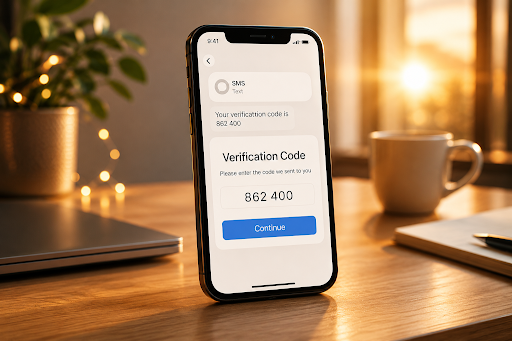
The mechanics of SMS verification are familiar to most internet users, even if the underlying infrastructure isn’t something people think about often. When a user signs up for a service, the platform sends a one-time code to the phone number provided. The user enters this code back into the platform, confirming that they have access to that number and, by extension, demonstrating a basic level of legitimacy.
Behind this simple interaction sits a more complex system. Messages need to be routed reliably across different mobile carriers and countries, often within seconds, and the platforms generating these codes need to manage everything from message formatting to delivery confirmation. For developers building new applications, integrating this functionality from scratch would mean negotiating with telecom providers in multiple regions, a task that’s both time-consuming and impractical for smaller companies.
This is where dedicated verification infrastructure comes in. Rather than building these systems internally, many developers and businesses now rely on third-party services that specialise in handling this exact function. One such option that has gained attention among developers is sms-man, an SMS verification platform that provides virtual numbers for receiving verification codes across a range of online services. Platforms like this allow developers to test sign-up flows, verify accounts during development, or handle verification needs without managing direct relationships with mobile carriers in every market they operate in.
Why Businesses Are Rethinking Onboarding
User onboarding, the process of getting a new user from initial sign-up to becoming an active participant on a platform, has become a major focus for product teams. Every additional step in an onboarding flow risks losing a percentage of potential users, yet skipping verification entirely opens the door to the problems described earlier.
The result has been a push toward onboarding flows that feel simple from the user’s perspective while still incorporating meaningful checks behind the scenes. Phone verification, when implemented well, can actually streamline onboarding rather than complicate it. A single code sent via text message takes seconds to receive and enter, far less friction than older methods involving identity documents or manual review.
For developers working on new products, having access to a wide range of test numbers across different countries is also valuable during the development phase itself. Testing how an onboarding flow performs for users in different regions, with different carriers and number formats, helps catch issues before they affect real users.
The Role of AI in Modern Verification Systems
Artificial intelligence has begun to play a growing role in how platforms detect and respond to suspicious account activity. Rather than relying solely on static rules, such as blocking sign-ups from certain IP ranges, machine learning models can now analyse patterns across thousands of sign-up attempts to identify behaviour that looks automated or coordinated, even when individual attempts appear legitimate on the surface.
This doesn’t replace verification methods like SMS codes; instead, it works alongside them. A platform might use AI-driven risk scoring to decide which sign-ups require additional verification steps and which can proceed with minimal friction. Low-risk sign-ups, based on factors like device history, behavioural patterns, and account age, might skip extra checks entirely, while higher-risk attempts get routed through additional verification, including phone-based confirmation.
This layered approach reflects a broader trend in cybersecurity: rather than treating every user the same way, systems increasingly adapt their level of scrutiny based on context. The goal is to keep friction low for genuine users while making it progressively harder for automated or fraudulent activity to succeed.
Privacy Considerations in an Increasingly Verified Internet
As verification becomes more widespread, questions about privacy naturally follow. Every additional piece of information a platform collects, including phone numbers, represents both a security tool and a potential privacy liability if mishandled.
This has led to growing interest in verification approaches that confirm a user meets certain criteria, such as having access to a working phone number, without necessarily storing that information long-term or linking it permanently to a user’s identity across multiple platforms. Some developers use temporary or virtual numbers specifically to avoid tying their personal phone numbers to every service they test or use, a practice that has become more common as awareness of data privacy has grown.
For companies building verification into their products, this means thinking carefully not just about how verification works, but about what happens to the data afterward: how long it’s retained, who has access to it, and whether it’s used for purposes beyond the original verification purpose.
What This Means for the Future of Online Trust
The trajectory seems clear: verification will continue to become more deeply embedded into how digital services operate, but the methods will likely become less visible and more adaptive. Users may increasingly encounter verification steps that feel almost invisible, handled through background checks and risk scoring, with explicit steps like entering an SMS code reserved for situations that genuinely warrant them.
At the same time, the infrastructure supporting these systems, including the various platforms and services that handle the technical side of sending and receiving verification messages, will likely continue to mature, offering better reliability, broader geographic coverage, and tighter integration with the AI-driven risk systems described above.
Conclusion
Account verification has quietly become one of the most important pieces of infrastructure underpinning the modern internet. From preventing fraud to enabling smoother onboarding experiences, the systems that confirm a user is who, or what, they claim to be play a role in nearly every digital interaction. As businesses continue to balance security, user experience, and privacy, the tools they rely on, whether that’s an AI-driven risk model or a dedicated SMS verification platform handling the technical details of code delivery, will remain central to how trust is built and maintained online. For developers and businesses navigating this landscape, understanding how these pieces fit together is no longer optional; it’s a fundamental part of building services people can rely on.