
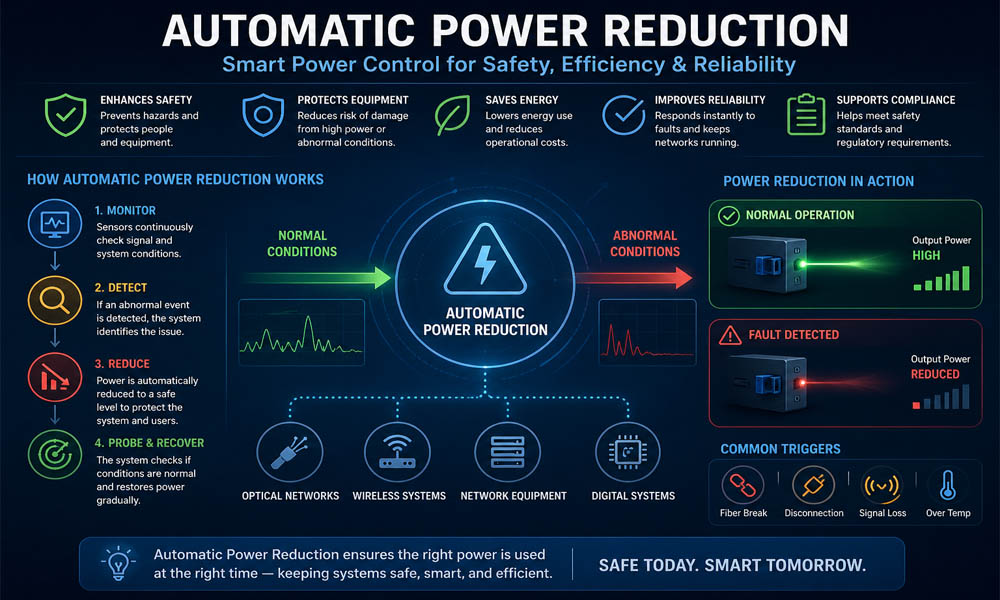
Have you ever thought about what happens when a system suddenly faces a problem? For example, what if a network cable breaks or a device starts using too much power? In many modern systems, there is something smart working behind the scenes to handle this. That smart feature is called automatic power reduction.
Automatic power reduction is like a safety guard and an energy saver at the same time. It quietly watches how a system is working and steps in when something is not right. It can lower power quickly to keep people safe and protect devices from damage. It also helps save energy when full power is not needed.
In this article, we will explore everything about automatic power reduction in a very simple way. You will learn how it works, why it matters, and how it is used in real systems like optical networks, wireless devices, and digital systems. By the end, you will clearly see how this smart feature makes systems safer and more efficient in 2026.
What Is Automatic Power Reduction?
Automatic power reduction is a smart system that controls how much power a device uses. It lowers the power when something unusual happens or when full power is not needed. This happens automatically, without any manual action.
Think of it like a car that slows down when the road becomes risky. In the same way, automatic power reduction reduces power when a system detects a problem. For example, in optical networks, if a fiber cable breaks, the system quickly lowers the laser power to prevent harm.
This feature is used in many places today. You can find automatic power reduction in fiber optic systems, wireless networks, and even inside digital chips. The main goal is simple: keep things safe, protect equipment, and avoid wasting energy.
Why Automatic Power Reduction Is Important
Automatic power reduction is important because it helps prevent serious problems. In high-power systems, too much energy can cause damage or even safety risks. By reducing power at the right time, the system avoids these dangers.
It also protects devices from stress. When a system runs at full power all the time, it can overheat or wear out faster. Automatic power reduction helps reduce this stress, which means devices can last longer and work better over time.
Another big benefit is saving energy. Why use full power when it is not needed? Automatic power reduction lowers energy use during low activity. This not only saves electricity but also reduces costs. In 2026, when energy efficiency matters more than ever, this feature is very valuable.
How Automatic Power Reduction Works Step by Step
Automatic power reduction follows a simple but powerful process. It starts by watching the system all the time. Sensors check signals, power levels, and system conditions without stopping.
When something unusual happens, the system detects it right away. This could be a drop in signal, a broken connection, or an unexpected change. Once the issue is detected, automatic power reduction quickly lowers the power to a safe level.
After that, some systems test the situation by sending a low-power signal. This is like checking if the problem is fixed. If everything is normal again, the system slowly brings the power back. This whole process happens very fast, often in just a few milliseconds.
Automatic Power Reduction in Optical Networks
One of the most important uses of automatic power reduction is in optical networks. These systems use high-power lasers to send data through fiber cables. While this technology is very powerful, it can also be dangerous if not controlled properly.
Imagine a fiber cable breaking during operation. Without automatic power reduction, the laser light could escape and harm someone’s eyes. This is why automatic power reduction is built into these systems. It quickly lowers the laser power when a break or fault is detected.
This feature also protects the equipment itself. High power can damage connectors and cables if something goes wrong. By reducing power at the right time, the system avoids costly damage and keeps everything running smoothly.
Automatic Power Reduction for Safety and Protection
Safety is one of the biggest reasons why automatic power reduction is used. In systems that use high energy, even a small mistake can lead to serious problems. Automatic power reduction helps prevent these situations.
For example, in optical systems, the light used is often invisible. This makes it even more dangerous because people cannot see it. Automatic power reduction reduces the risk by lowering the power when a fault happens, keeping technicians safe during maintenance.
It also protects hardware like cables, ports, and connectors. Too much power can cause overheating or damage. With automatic power reduction, the system stays within safe limits. This helps meet safety standards and keeps everything reliable.
Automatic Power Reduction in Wireless Systems
Automatic power reduction is not only used for safety. In wireless systems, it is also used to improve performance. Devices like Wi-Fi routers and access points adjust their power based on the environment.
Think about a busy office with many devices connected to Wi-Fi. If every device uses full power, there can be too much interference. Automatic power reduction helps by lowering the signal strength when needed. This creates a better balance and improves network quality.
For example, systems like Cisco Meraki use smart features to control power. They adjust transmit power based on nearby devices and signal conditions. This leads to better coverage, fewer dead zones, and smoother connections for users.
Automatic Power Reduction in Network Devices
Many network devices use automatic power reduction to save energy and improve efficiency. Routers, switches, and other devices do not always need to run at full power. During low traffic times, they can reduce power safely.
For example, if certain ports are not in use, the system can lower power to those parts. Some devices even reduce LED brightness or slow down internal processes when activity is low. This helps save energy without affecting performance.
In large networks, these small changes make a big difference. Over time, automatic power reduction helps reduce energy bills and keeps systems running efficiently. It is a smart way to manage resources in modern networks.
Automatic Power Reduction vs Power-Off Function
Now let’s understand something many people confuse. Is automatic power reduction the same as turning a system off? The answer is no. They are related, but they work in different ways.
Automatic power reduction lowers power to a safe level when something is wrong. The system still stays on and keeps checking if things return to normal. This helps avoid sudden shutdowns and keeps services running.
On the other hand, a power-off function completely shuts down the system. This usually happens when the problem is serious or does not go away. For example, if an optical system keeps detecting a major fault, it may turn off fully to prevent damage. So, automatic power reduction is like slowing down, while power-off is like stopping completely.
Smart Power Saving with Clock Gating
Inside digital systems, there is another smart method that works with automatic power reduction. It is called clock gating. This technique helps reduce power in chips and processors.
In simple words, clock gating turns off parts of a system that are not being used. Imagine a house where lights turn off automatically in empty rooms. That is how clock gating works in circuits.
This helps save a lot of energy. When parts of a chip are not switching or working, they do not waste power. In modern devices like routers, servers, and smart systems, clock gating plays a big role in keeping power use low and systems cool.
Power Formulas Behind Automatic Power Reduction
Behind every smart system, there are simple formulas that help engineers understand power use. One common formula used in digital systems explains how power is used.
The formula is: P = α × C × V² × f. You do not need to worry about the math. Just remember that power depends on how often a system works, the voltage, and how fast it runs.
Automatic power reduction helps by lowering these factors when needed. For example, clock gating reduces activity, which lowers power use. This means less heat and better performance.
There is also another idea called power factor correction. It helps systems use energy more efficiently. While it is not the same as automatic power reduction, both aim to make systems smarter and more efficient. Energy Performance Solutions describes its approach simply: The EPC consultancy service is where we assess your property, which connects well with the broader goal of identifying energy waste and making systems more efficient.
Automation Tools That Support Power Reduction
Today, software also helps manage power in smart ways. It is not just about hardware anymore. Tools like automation systems play a big role in saving energy.
For example, many companies use tools that can turn off systems automatically at certain times. This is useful for servers or machines that are not needed at night. It is a simple way to reduce power use without manual work.
Another smart idea is removing unnecessary tasks. Some systems run extra processes that are not needed. By cleaning these up, automatic power reduction becomes even more effective. In 2026, combining hardware and software control is the best way to manage energy.
Best Practices for Using Automatic Power Reduction
To get the best results, it is important to use automatic power reduction the right way. Many systems already support it, but it must be set up properly.
First, always enable automatic power reduction in systems where it is available. This ensures safety and efficiency from the start. Also, keep an eye on alerts and warnings. These signals can tell you if something is wrong.
It is also a good idea to avoid using maximum power all the time. Let the system adjust power based on need. Combine this with regular maintenance to keep everything running smoothly. These small steps make a big difference over time.
Common Examples of Automatic Power Reduction in Real Life
Automatic power reduction is not just a theory. It is used in many real systems that we depend on every day.
In optical networks, it protects fiber systems and technicians. In wireless systems, it improves Wi-Fi performance by adjusting signal strength. In data centers, it helps manage thousands of servers by reducing power when demand is low.
Even everyday devices use similar ideas. Smartphones, smart TVs, and laptops all reduce power when idle. This shows how important automatic power reduction has become in modern life.
Conclusion
Automatic power reduction is one of the smartest features in modern technology. It keeps systems safe, saves energy, and improves performance without needing constant human control.
As systems grow more advanced in 2026, this feature becomes even more important. From optical networks to wireless devices, automatic power reduction helps everything run smoothly and safely.
In simple words, it is all about balance. Use power when needed, reduce it when not. This smart approach helps protect people, save money, and build better systems for the future.
(FAQs)
What is automatic power reduction in simple words?
Automatic power reduction is a smart system that lowers power when it is not needed or when something goes wrong. It helps keep devices safe and saves energy at the same time.
What triggers automatic power reduction in systems?
Automatic power reduction is triggered when a system detects a problem. This can include signal loss, broken connections, overheating, or unusual activity. Once detected, the system quickly reduces power to stay safe.
Why is automatic power reduction important for safety?
Automatic power reduction helps prevent harm by lowering dangerous power levels. For example, in optical systems, it reduces laser power to protect technicians from eye injury and keeps equipment from damage.
How does automatic power reduction save energy?
Automatic power reduction lowers power when full performance is not needed. This reduces electricity use, lowers heat, and helps devices run more efficiently over time.
Is automatic power reduction used in wireless networks?
Yes, wireless systems like Wi-Fi routers use automatic power reduction to adjust signal strength. This helps reduce interference, improve coverage, and make the network work better.
What is the difference between automatic power reduction and power-off?
Automatic power reduction lowers power but keeps the system running. A power-off function completely shuts down the system when the problem is serious or cannot be fixed quickly.
Can automatic power reduction improve device lifespan?
Yes, it can. By reducing power and heat during low usage, automatic power reduction puts less stress on components. This helps devices last longer and work more reliably.
How fast does automatic power reduction work?
Automatic power reduction works very fast, often in milliseconds. This quick response helps protect systems instantly when a problem is detected.
What is the role of clock gating in power reduction?
Clock gating is a technique that turns off unused parts of a circuit. It reduces unnecessary activity inside a device, which lowers power use and supports automatic power reduction.
Where is automatic power reduction used in real life?
Automatic power reduction is used in many places like optical networks, wireless systems, data centers, and even everyday devices like smartphones and laptops. It helps manage power in a smart and safe way everywhere.
You may also read: ChatPic: What It Was, Why It Shut Down, and What’s Next