
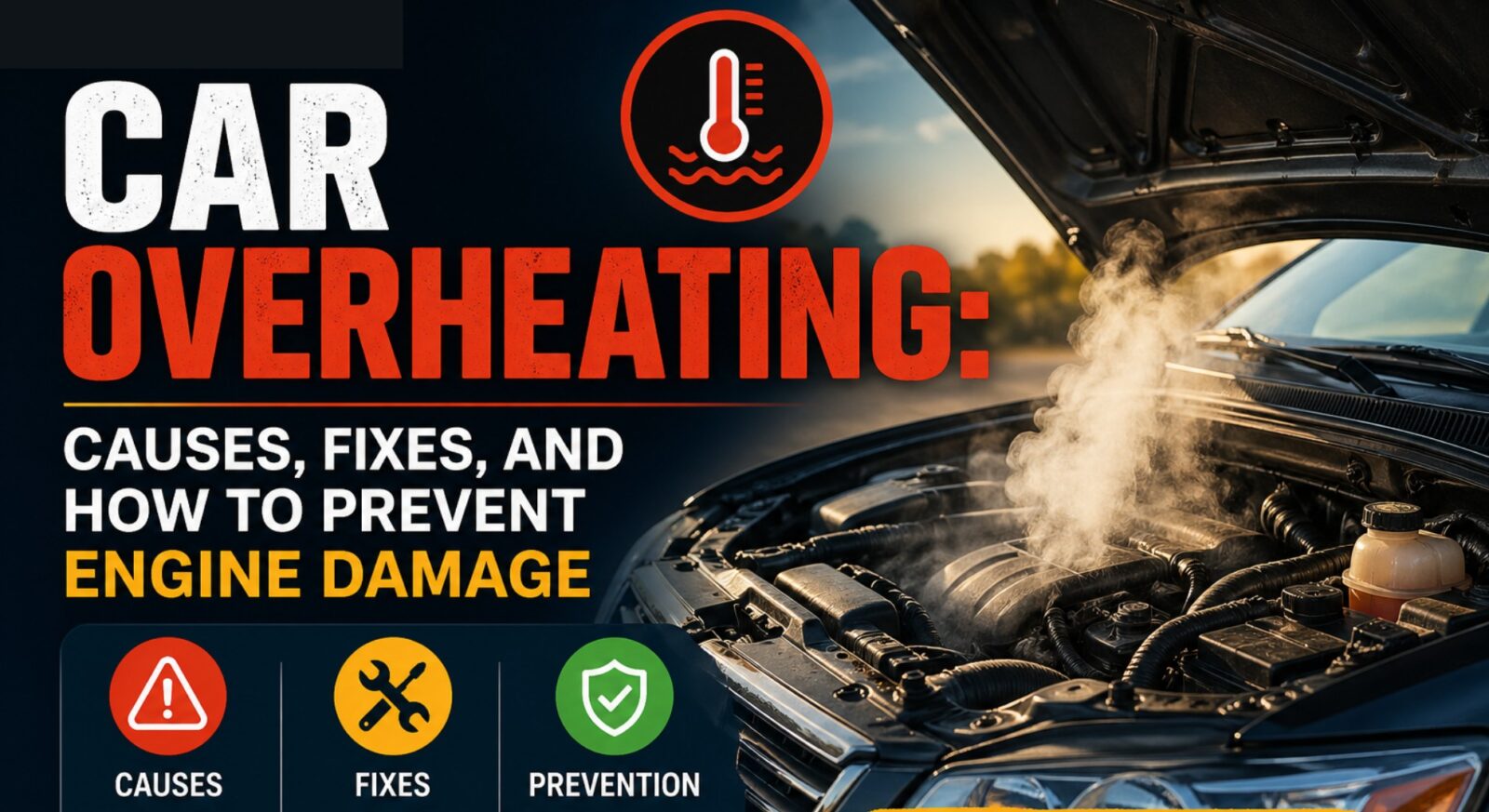
Your temperature gauge creeps into the red. A faint burning smell drifts through the vents. Then the dashboard warning light flicks on. For drivers around Aldershot, Farnborough, Ash, and Fleet, this scenario is more common than you might think, particularly during warmer months and longer commutes on busy A roads.
Engine overheating is one of the most serious problems your car can face. Left unchecked, it can turn a minor mechanical issue into a very costly repair. The good news is that most overheating problems have clear causes, straightforward fixes, and are largely preventable with a regular car service that includes a proper cooling system check.
This guide covers everything you need to know, from spotting the early warning signs to understanding what is actually going wrong under the bonnet.
Why Overheating Is One of the Worst Things That Can Happen to Your Engine
Your engine generates an enormous amount of heat during normal operation. The cooling system, made up of coolant, a radiator, water pump, thermostat, and cooling fan, works constantly to keep that heat under control and maintain a safe operating temperature.
When any part of that system fails, heat builds up faster than it can be dispersed. Engine components that are designed to work within a specific temperature range begin to warp, crack, or seize. Head gaskets blow. Cylinder heads distort. In the worst cases, the engine block itself can crack, turning what started as a faulty thermostat into a repair that rivals the value of the car.
The key point here is that overheating rarely happens without warning. Your car will tell you something is wrong before serious damage sets in, but only if you know what to look for.
The Most Common Causes of Car Overheating
Understanding what causes overheating is the first step to preventing it. Here are the six most common culprits, ranked roughly by how frequently they appear in garages across the Farnham, Tongham, and Ash Vale area.
- Low or Depleted Coolant Coolant, also called antifreeze, is the lifeblood of your cooling system. If the level drops too low, whether through a slow leak, a faulty hose, or simple evaporation over time, the system cannot regulate engine temperature effectively. This is the single most common cause of overheating and also the most easily prevented.
- A Faulty Thermostat The thermostat controls when coolant is allowed to flow from the engine to the radiator. When it sticks closed, coolant cannot circulate and engine temperatures climb rapidly. A failed thermostat is often inexpensive to replace but can cause significant damage if ignored.
- A Blocked or Damaged Radiator The radiator dissipates heat from the coolant before it cycles back through the engine. Blockages from debris, corrosion, or a buildup of scale reduce its effectiveness considerably. Physical damage, such as a bent radiator from a minor collision, can also restrict airflow and cooling capacity.
- A Failing Water Pump The water pump is responsible for circulating coolant around the engine. If the impeller wears down, the pump leaks, or the belt driving it snaps, coolant stops moving altogether. This is one of the faster routes to serious engine damage because temperatures rise quickly once circulation stops.
- A Blown Head Gasket A blown head gasket is often the result of overheating rather than the initial cause, but it can also trigger further overheating once it fails. Signs include white smoke from the exhaust, a sweet smell from the engine bay, and coolant that looks milky or frothy. This is one repair you do not want to delay.
- A Faulty Cooling Fan Electric cooling fans kick in when the car is stationary or moving slowly, where airflow through the radiator grille is limited. If the fan fails due to a blown fuse, a faulty relay, or a dead motor, the radiator cannot shed heat at low speeds. You may only notice this during traffic jams or short urban journeys around North Camp or Fleet.
Cause, Severity and What to Do Next
| Cause | Severity | Recommended Action |
| Low coolant | Moderate | Top up and check for leaks |
| Faulty thermostat | Moderate to high | Replace promptly |
| Blocked radiator | Moderate | Flush or professional clean |
| Failing water pump | High | Immediate garage inspection |
| Blown head gasket | Very high | Do not drive, book urgent repair |
| Faulty cooling fan | Moderate to high | Electrical diagnostic required |
Warning Signs Your Engine Is Running Too Hot
Catching overheating early is what separates a manageable repair from an engine rebuild. These are the signals your car will give you, and none of them should be ignored.
Temperature gauge climbing toward the red. This is your most direct early warning. If the needle is creeping higher than usual, pull over safely as soon as you can.
Steam or vapour rising from the bonnet. Often mistaken for smoke, this usually means coolant is boiling off. Do not open the bonnet immediately, wait for the engine to cool first.
A sweet or burning smell inside the car. A sweet smell typically indicates leaking coolant. A burning smell can mean coolant is dripping onto hot engine components nearby.
The heater suddenly blowing cold air. Counterintuitive but telling. If coolant levels drop significantly, the heater core, which relies on hot coolant, stops producing warm air altogether.
A dashboard warning light illuminated. Most modern cars have a dedicated engine temperature warning light, often shown as a thermometer symbol in red. If this appears, treat it as urgent and act immediately.
Drivers in Aldershot and Farnborough who commute regularly on the A331 or sit in slow town traffic should pay particular attention during these conditions, as this is when cooling systems are under the greatest strain.
What to Do If Your Car Overheats
Staying calm is the most important thing. Here is exactly what to do, step by step.
- Turn off the air conditioning immediately. The AC puts extra load on the engine, which you cannot afford when temperatures are already rising.
- Turn the heater to maximum heat and full fan. This sounds counterintuitive, but the heater draws heat away from the engine and acts as a secondary radiator, buying you valuable time.
- Pull over to a safe location as soon as possible. Do not continue driving in the hope that things will improve. They will not.
- Turn the engine off and leave it alone. Do not open the bonnet immediately and absolutely do not open the coolant cap. Pressurised boiling coolant can cause serious burns.
- Wait at least 30 minutes before opening the bonnet. Once the engine has cooled, check the coolant level in the reservoir. If it is low and you have water or coolant available, add it slowly with the engine still off.
- Check for obvious signs of leaks, steam, or damage before attempting to restart. If anything looks abnormal, do not drive the car.
- If the car appears stable and the temperature gauge returns to normal, drive carefully to a garage and have the cooling system inspected. Do not assume the problem has resolved itself.
For guidance on vehicle safety and when a car should not be driven on public roads, the GOV.UK vehicle safety recalls and checks page is a reliable reference point.
Can You Drive a Car That Is Overheating?
In short, no. Driving an overheating car is one of the fastest ways to turn a repairable problem into a written off engine.
Once coolant temperatures exceed safe operating limits, metal components inside the engine begin to expand beyond their tolerances. Head gaskets fail. Cylinder heads warp. Pistons can seize against cylinder walls. None of these are quick or inexpensive to put right, and all of them can be avoided by simply stopping the car at the first sign of trouble.
There is a common misconception that as long as the car is still moving, it is probably fine. It is not. The damage happening inside an overheating engine is invisible from the driver’s seat until it is already done.
If your temperature gauge is in the red and you are on a dual carriageway or A road, move to the left lane, take the nearest exit, and stop safely as soon as you can. A short delay to reach a safer spot is acceptable. Continuing to drive for several miles is not.
How to Prevent Your Engine from Overheating
Prevention is significantly cheaper than repair. For drivers in and around Aldershot, Farnborough, Ash, Farnham, Tongham, and Ash Vale, the following habits will go a long way toward keeping the cooling system in good working order year round.
Check your coolant level regularly. This takes less than two minutes. With the engine cold, locate the coolant reservoir and check that the level sits between the minimum and maximum markers. Do this monthly and before any long journey. If you notice the level dropping repeatedly without an obvious explanation, have the system checked for leaks. And if your car is overheating despite a full reservoir, read our detailed guide on car overheating when coolant is full to understand exactly why that happens and what to do next.
Book regular servicing. A proper service includes checks of the cooling system, hoses, coolant condition, and thermostat operation. Many overheating problems are identified and corrected during routine servicing long before they become an emergency on the roadside. Staying on top of your service schedule is one of the most effective things you can do for your engine.
Replace coolant at the recommended interval. Coolant degrades over time. Old coolant loses its corrosion inhibiting properties and becomes less effective at transferring heat. Most manufacturers recommend a flush and refill every two to five years depending on the coolant type. Check your vehicle handbook for the specific recommendation.
Keep an eye on your temperature gauge. This costs nothing and takes no effort. Make it a habit to glance at the gauge alongside your fuel level when driving. Catching a rising temperature early is the difference between a minor fix and a major repair.
Have hoses and belts inspected. Coolant hoses and the belt driving the water pump deteriorate with age and heat cycling. A split hose or snapped belt can cause near instant overheating. These are low cost items to replace proactively but expensive in their consequences if they fail unexpectedly on the road.
Overheating Prevention Checklist
| Prevention Task | How Often | DIY or Professional? |
| Check coolant level | Monthly and before long trips | DIY |
| Top up coolant | As needed | DIY |
| Coolant flush and refill | Every 2 to 5 years | Professional |
| Inspect coolant hoses | Annually | Professional |
| Check water pump and belt | At each service | Professional |
| Inspect cooling fan operation | Annually or if issues arise | Professional |
| Full cooling system diagnostic | If warning signs appear | Professional |
Is Overheating Always a Major Repair?
Not always, and this is worth saying clearly, because many drivers assume the worst the moment their temperature light appears.
A low coolant level topped up before any damage occurs costs very little. A faulty thermostat is a relatively minor repair in most vehicles. A blocked radiator can often be resolved with a professional flush. The key variable in every case is how quickly you act.
Where costs escalate is when drivers continue to use an overheating car, hoping the problem will resolve on its own. A head gasket failure triggered by sustained overheating is a serious repair. Engine damage resulting from a seized component is more serious still. For a clear picture of what engine repair can involve, our guide to engine repair costs in the UK is worth reading before you make any decisions about how to proceed.
The takeaway is simple. Address the problem early and it is usually manageable. Leave it and the situation changes dramatically.
Conclusion
Engine overheating is never something to dismiss or push through. Whether it is a coolant level that needs topping up or a thermostat that has quietly failed, the cooling system in your car deserves the same attention as your tyres or brakes. Drivers across Aldershot, Farnborough, Ash Vale, Farnham, Tongham, North Camp, and Fleet are all subject to the same seasonal demands and stop-start traffic conditions that put cooling systems under pressure.
The drivers who avoid costly engine repairs are, almost without exception, the ones who take preventative maintenance seriously, respond quickly to warning signs, and do not try to push through an overheating situation. Your engine will tell you when something is wrong. The rest is simply a matter of listening.
If your temperature gauge has been behaving unusually, or if it has been a while since your cooling system was last checked, the team at G Force Tyres is here to help. A small problem caught early is always the better outcome.
Frequently Asked Questions
What are the first signs that a car is overheating? The earliest signs are usually a temperature gauge rising above its normal position, the engine temperature warning light appearing on the dashboard, or a sweet smell coming from the engine bay. In more advanced cases, steam from under the bonnet and the heater blowing cold air are clear indicators that the cooling system is under serious strain.
Can I drive my car if it is overheating? No. Continuing to drive an overheating car risks warping the cylinder head, blowing the head gasket, or causing catastrophic engine failure. Pull over safely, turn off the engine, and allow it to cool completely before taking any further action.
Why is my car overheating but the coolant is full? A full coolant reservoir does not rule out a cooling system fault. Possible causes include a faulty thermostat preventing coolant circulation, a failing water pump, a blocked radiator, or a malfunctioning cooling fan. In some cases, a blown head gasket allows combustion gases into the cooling system, which disrupts coolant flow despite the reservoir appearing full.
Can overheating cause permanent engine damage? Yes. Sustained overheating can warp cylinder heads, blow head gaskets, crack the engine block, and in severe cases cause pistons to seize. The extent of the damage depends on how hot the engine got and for how long. Acting at the first warning sign significantly reduces the risk of permanent damage.
How do I know if my thermostat has failed? Common signs of a failed thermostat include a temperature gauge that climbs rapidly after starting, coolant that does not warm up at all in cold weather when the thermostat is stuck open, or overheating that develops within minutes of driving when it is stuck closed. A garage can confirm thermostat failure quickly with a diagnostic check.