
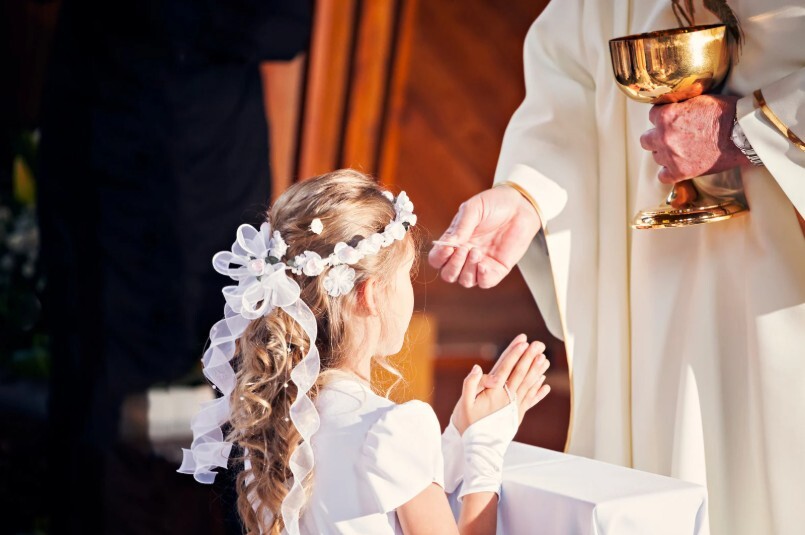
A Day Worth Remembering
The search for the best gift ideas for holy communion has a way of sneaking up on you. One minute you’re circling a date on the calendar, the next you’re standing in a shop holding a children’s Bible in one hand and a pearl rosary in the other, genuinely unsure which one says “I thought about this” and which one says “I found a parking space and grabbed the first thing I saw.”
First Holy Communion is one of those milestones that carries real weight. It sits at the crossing point of faith, family identity, and the particular kind of pride that makes grandmothers cry in pews. The day itself is vivid and fleeting in equal measure, which is exactly why the gift matters so much. It outlasts the party food and the photographs. If you choose well, it becomes something the child carries forward, not just into the week after, but into adulthood.
The challenge, of course, is that most people default to safe. Envelopes of money, generic jewellery boxes, gift vouchers that quietly expire. All fine, none of them wrong exactly, but none of them quite right either.
The Gift That Earns Its Place on the Shelf
A well-chosen present often focuses on gift ideas for holy communion that balance symbolic meaning with timeless design, turning a simple gesture into a lasting memory.
What separates a forgettable gift from one that earns a permanent place in the home? It usually comes down to two things working together: resonance and longevity. The gift has to mean something on the day, and it has to still mean something twenty years later when the recipient finds it at the back of a drawer and feels something other than puzzlement.
Parents and godparents often find this harder than it sounds. The pressure to get it right is real, especially when you know the gift will be unwrapped in a roomful of people who are quietly judging on behalf of the child. The good news is that communion gifts have a natural advantage: they draw on a rich visual and spiritual vocabulary that has been refined over centuries. You are not starting from scratch. You are choosing from a tradition.
Sacred Symbols and What They Actually Mean
The iconography of First Communion is worth understanding before you buy anything. The chalice, for instance, is not just a cup; it represents the Eucharist itself, the central sacrament the child is receiving for the first time. The cross speaks to the broader Christian faith and sacrifice. The lamb recalls Christ as the Lamb of God, an image woven through Catholic liturgy and art. The dove is the Holy Spirit, associated with grace and peace. The lily, particularly the white lily, stands for purity and is almost synonymous with communion imagery in Catholic tradition.
These symbols appear on everything from medals and pendants to framed prints and ceramic figurines. A child receiving a gift engraved with a chalice or a dove may not fully grasp the significance in the moment, but the meaning is there, waiting to be grown into. That is part of what makes symbolic gifts so enduring.
Jewellery, Keepsakes and Things That Last
Pieces Worth Passing Down
Jewellery is one of the strongest categories for communion gifts, and for good reason. A well-made piece in sterling silver or gold does not date. A cross pendant, a miraculous medal, or a guardian angel charm can be worn at seven and again at thirty-seven, the significance only deepening with time.
Personalisation adds another layer. An engraved name, a date, or a short dedication transforms a beautiful object into an irreplaceable one. Some families go further, choosing pieces that echo jewellery worn by older generations, creating a quiet thread of continuity across the years.
Alongside jewellery, keepsake boxes, commemorative frames, and memory albums serve as companions to the day rather than symbols of the faith itself. They hold the photographs, the order of service, perhaps a pressed flower from the church. They are less about theology and more about memory, which is its own kind of sacred.
The Practical and the Prayerful
Gifts That Support a Life of Faith
There is a strong case to be made for devotional gifts, things the child will actually use rather than simply display. A well-chosen rosary, sized and weighted for small hands, is a practical object of prayer. A children’s illustrated Bible or a beautifully produced prayer book can genuinely accompany a young faith rather than gather dust on a shelf.
Saint figurines and holy cards are underrated in this respect. A child who grows up with a particular saint’s image in their room absorbs something, even if they cannot articulate it. These gifts do not feel like homework when they are chosen with care and presented with warmth.
The key is age-appropriateness. A rosary in delicate crystal beads is lovely for an adult but impractical for a child who actually wants to pray with it. A prayer book with dense text and no illustrations will go unread. The devotional gift that works is the one that meets the child where they are.
When to Go Personal Over Traditional
Sometimes the child’s personality, or the family’s particular flavour of faith, points away from the traditional gift repertoire altogether. This is not a problem; it is an opportunity.
A commissioned piece of religious art, a hand-thrown ceramic with a faith motif, or a bespoke illustrated print with the child’s name worked into a scripture verse can be genuinely memorable in a way that a standard pendant cannot. These gifts take more effort to source, but they signal something important: that the giver paid attention to who this child actually is.
The relationship between giver and recipient matters here too. A godparent might give something more personal and intimate. A family friend might opt for something more universally Catholic and less presumptuous. Neither approach is wrong. The point is that the choice should be intentional, not accidental.
Getting the Presentation Right
Presentation is not an afterthought. A communion gift unwrapped from white tissue paper inside a white box, finished with a ribbon in gold or soft ivory, arrives differently than the same gift handed over in a supermarket carrier bag. The wrapping signals that something considered is inside before a single layer has been removed.
Cards matter more than people admit. A handwritten message, a favourite scripture verse, or even just a sentence or two about why you chose this particular gift can become part of the gift itself. Families keep these cards. Children sometimes rediscover them years later and feel something unexpected.
The occasion has a visual language: white, gold, soft pastels, lilies, doves. Working with that palette, even lightly, shows awareness of what the day means.
Gifts That Grow With the Child
The finest gift ideas for holy communion share a single quality: they are chosen with the future in mind, not just the morning of the celebration. A gift that the child will grow into, that gains meaning rather than losing it, is worth far more than something impressive on the day but forgotten by the following week.
Quality over novelty, meaning over price, personal relevance over convenience. These are the standards worth applying. The right gift does not need to be extravagant. It just needs to be considered, and that is entirely within reach.