
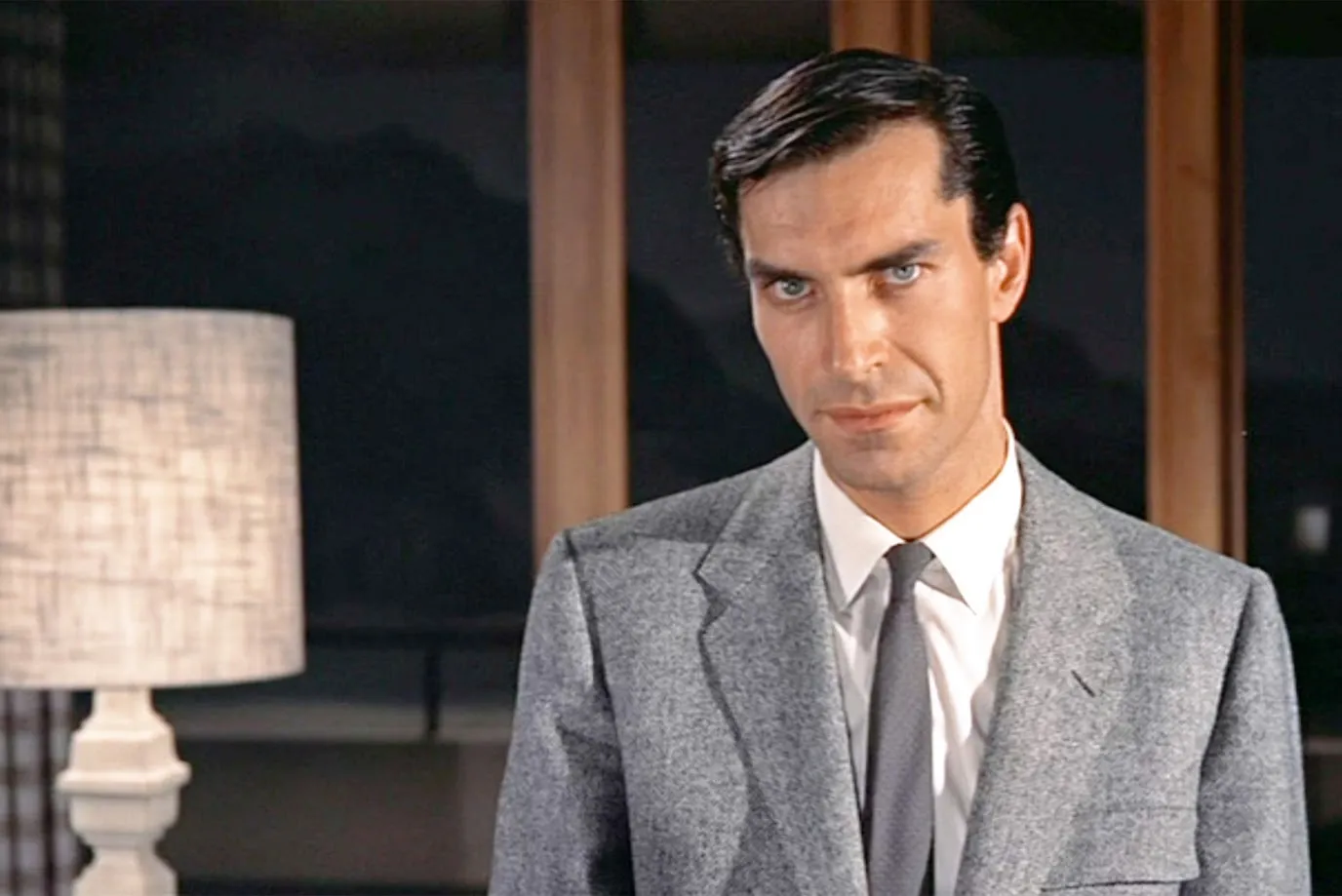
Martin Landau never looked like an actor chasing attention. He looked like an actor hiding a secret. That quality made him different. He could stand near the edge of a scene and still pull the viewer towards him. He did not need a loud speech, a sentimental moment, or a heroic pose. He used stillness, timing, and a face that seemed to know more than it said.
His career lasted more than six decades. It moved through theatre, classic Hollywood, television fame, science fiction, career disappointment, and a late Oscar-winning return. He was not one of those stars whose public image became larger than the work. Landau belonged to a different group. He was a craftsman, a serious actor who built characters from posture, silence, tension, and private pain.
Landau’s life also had an unusual shape. Before acting, he worked as a cartoonist. Before fame, he trained in one of the most demanding acting circles in America. Before his Academy Award, he spent years being underused. His story is not only about success. It is about discipline, survival, and the long patience required to stay useful in an industry that often forgets its own best people.
The Brooklyn Artist Who Left a Safe Career
Martin Landau was born in Brooklyn, New York, in 1928. His early life did not point directly towards cinema. He was first drawn to visual art, not performance. As a young man, he studied art and worked as a cartoonist at the New York Daily News. That job gave him a real career before most aspiring actors had earned their first proper wage.
The cartoonist detail is not just a piece of trivia. It helps explain the actor he became. A cartoonist must study people closely. He must notice how a nervous man holds his hands, how a proud woman lifts her chin, how guilt changes the shape of a mouth. Landau learned to read faces and bodies before he learned to perform them.
His work at the newspaper could have given him stability. He was young, skilled, and employed in a respected newsroom. Many people would have stayed. Landau did not. Acting pulled him away from the drawing desk and towards the stage. That choice was risky, but it suited him. He was not looking for the safest path. He wanted a harder craft.
Leaving cartooning also showed one of the patterns of his life. Landau was willing to start again when the work demanded it. He left a secure job for acting. Later, he moved from theatre into film and television. Later still, after years of uneven roles, he rebuilt himself as a major character actor. His life kept returning to the same question: what can I become next?
Brooklyn gave him an edge that never fully disappeared. Even when he played polished men, there was a hard intelligence behind his eyes. He could make a character look refined without making him soft. He could play fear without looking weak. He could show kindness without losing mystery.
That mix became part of his screen power. Landau rarely felt simple. His characters seemed to have rooms inside them that the audience could not enter. He understood that people often reveal themselves by what they hide. This made him valuable in roles built on secrecy, guilt, disguise, and ambition.
His early years also make his later success more interesting. He was not manufactured by Hollywood. He arrived with another skill, another discipline, and another way of looking at the human face. When he finally stood in front of a camera, he brought the cartoonist’s eye with him.
The Actors Studio and the Making of a Serious Performer
Landau’s acting career gained its real foundation at the Actors Studio in New York. The Studio was a major force in twentieth-century American acting. It attracted performers who wanted more than surface technique. It asked actors to understand motive, memory, fear, need, and contradiction.
Landau entered that world with seriousness. He was accepted into the Studio during a period when the competition was fierce. The often-repeated story is that he and Steve McQueen were among the very few accepted from a large group of applicants. Whether told as legend or fact, the message is clear. Landau was not treated as an ordinary hopeful. He had something.
At the Actors Studio, he studied in an environment shaped by figures such as Lee Strasberg, Elia Kazan, and Harold Clurman. This training mattered. Landau did not become an actor who simply delivered lines well. He became an actor who built an inner life for each role. He wanted to know what a character feared, what he wanted, what he denied, and how he behaved when cornered.
Method acting has often been described badly. Some people reduce it to emotional excess or strange behaviour off camera. Landau’s work shows a cleaner version. He used technique to become controlled, not chaotic. His best performances are not messy. They are exact. He holds back until the moment when the character can no longer hide.
His friendship with James Dean also places him close to a crucial period in American acting. Dean became a symbol of youth, rebellion, and emotional exposure. Landau had a different path. He did not burn brightly and vanish. He lasted. That difference matters. Landau’s career was less mythic, but it was deeper and longer.
The Actors Studio also taught him the value of silence. Many actors fear silence because it exposes them. Landau used it. He could pause before a line and make the viewer feel the pressure under the words. He understood that not speaking can be more dramatic than explaining.
His physical presence helped. He was tall, angular, and watchful. His face could turn from charm to threat with a small change in the eyes. He did not look like a conventional romantic lead, and that worked in his favour. He could enter a story as a question. Is he loyal? Is he dangerous? Is he lying? Is he ashamed? The audience leaned in because the answer was never obvious.
This training also shaped his later life as a teacher. Landau became known not only as a performer, but as someone who understood acting as a craft. He could talk about it, break it down, and pass it on. That role suited him because he had lived through the highs and lows of the profession. He knew talent was not enough. An actor also needed patience, technical control, and a thick skin.
Hitchcock, Television Fame, and the Power of Disguise
Landau’s first major film breakthrough came in Alfred Hitchcock’s North by Northwest in 1959. He played Leonard, the elegant and unsettling assistant to James Mason’s villain. The film belonged to Cary Grant, but Landau made a sharp impression. He did not play Leonard as a standard thug. He made him quiet, observant, and cold.
That performance showed what Landau could do with limited space. Leonard does not need long speeches. He watches. He suspects. He waits. His menace comes from control. Hitchcock knew how to use that quality. Landau’s stillness made Leonard more disturbing than a louder villain would have been.
The role also hinted at something daring for its time. Leonard’s attachment to his employer carries an emotional charge that feels more personal than professional. Landau played that tension with care. He did not spell it out. He let it sit under the surface. That restraint made the character more interesting.
Television brought him wider fame through Mission: Impossible. Landau played Rollin Hand, a master of disguise. The role fitted him perfectly because Rollin was an actor inside the story. Each mission required him to become someone else. For Landau, this was not just a trick with costumes. It was a performance about performance.
Rollin Hand changed his voice, movement, posture, and behaviour. Landau made those transformations feel intelligent. The disguises worked because he treated them as human studies, not party tricks. He showed how a person could disappear into another identity while still keeping the mission under control.
His time on Mission: Impossible also linked him closely with Barbara Bain, his wife at the time. Bain played Cinnamon Carter, and together they became central to the show’s style. They brought calm, intelligence, and adult confidence to the screen. They looked like professionals, not superheroes.
Landau did not remain on the series forever. That decision reflected a problem many actors face. A hit television role gives security, but it can also become a cage. Landau had trained for range. He did not want to spend his whole life as one character, even a popular one.
In the 1970s, he and Bain starred in Space: 1999. The series became a cult favourite, especially among science-fiction fans. Landau played Commander John Koenig, a leader trying to guide a Moonbase after the Moon is thrown out of Earth’s orbit. The premise was strange, but the show gave him international visibility.
Space: 1999 was not viewed in the same way as his later prestige roles, but it remains important. It showed that Landau’s career crossed different kinds of entertainment. He moved through Hitchcock thrillers, network television, science fiction, independent drama, and later award-winning cinema. Some actors stay in one lane. Landau did not.
This period also fixed one of his strongest themes: disguise. Sometimes the disguise was literal, as in Mission: Impossible. Sometimes it was social, as in North by Northwest. Sometimes it was emotional. Landau’s characters often carried a public face that hid fear, guilt, desire, or damage.
That is why he was so good at playing men who could not be fully trusted. He understood that suspicion is not always loud. It can sit in the way a man watches another person leave a room. It can appear in a delayed answer. It can live in a smile that arrives half a second too late.
Landau’s fame during these years was real, but it did not protect him from career trouble. Hollywood often remembers a face but forgets the actor behind it. After television success, he was not always given parts that matched his ability. His career entered a slower, more frustrating stretch.
The Dip, the Return, and the Oscar That Arrived Late
Landau’s middle years were uneven. He kept working, but the work did not always use him properly. This is common in acting careers, especially for performers strongly connected with television. The industry may respect them, but it may not know what to do with them.
Landau could have become a familiar older face from past shows. That would have been an easy box for Hollywood to place him in. Instead, he found his way back through character work. His comeback did not happen through vanity. It happened because serious directors saw what he could still do.
Francis Ford Coppola’s Tucker: The Man and His Dream gave him one of the roles that changed his later career. Landau played Abe Karatz, an adviser to Preston Tucker. The role earned him an Academy Award nomination for Best Supporting Actor. More importantly, it reminded audiences that he could bring warmth, intelligence, and sadness to a supporting part.
Abe Karatz is not a showy role. Landau did not need it to be. He played him with dignity and restraint. The character seemed to carry history in his face. Landau made the audience feel that this man had lived through disappointments before the film even began.
The next major step came with Woody Allen’s Crimes and Misdemeanors. Landau played Judah Rosenthal, a respected eye doctor whose affair threatens his public life. When the situation grows dangerous, Judah faces a moral collapse. The performance is one of Landau’s finest because it turns guilt into a physical condition.
Judah is frightening because he does not look like a monster. He looks civilised. He has status, manners, money, and a respectable place in society. Landau shows how panic moves through such a man when his reputation is threatened. He does not overstate it. He lets fear leak through the eyes, the voice, and the pauses.
The role earned him another Oscar nomination. It also showed the full strength of his acting. Landau could play a man doing terrible things without making him simple. He allowed the audience to see Judah’s fear and selfishness at the same time. He did not ask for sympathy. He asked for attention.
His greatest public reward came with Ed Wood in 1994. Tim Burton cast Landau as Bela Lugosi, the horror star best known for playing Dracula. The role could easily have become an imitation. The accent, the cape, the old horror poses, all of it could have turned into a cartoon. Landau avoided that trap.
His Bela Lugosi is proud, funny, bitter, frail, and wounded. He is a man trapped by his own most famous image. He needs work, respect, money, and companionship. He also needs people to remember that he was once important. Landau makes him theatrical without turning him into a joke.
The performance won the Academy Award for Best Supporting Actor. It felt like more than a single prize for a single role. It felt like recognition for decades of discipline. Landau had moved through early promise, television fame, professional frustration, and rediscovery. The Oscar did not create his talent. It confirmed it.
The win also changed how many people understood him. He was no longer only the man from Mission: Impossible or Space: 1999. He became an example of late-career renewal. That matters in film history. Actors often do their richest work after youth, after disappointment, and after the industry has stopped treating them as obvious stars.
Ed Wood also connected perfectly with Landau’s own artistic history. He had begun as a cartoonist, and now he was playing a man who could easily have been drawn as a broad figure. Instead, he added sorrow, anger, vanity, and humour. He turned an old Hollywood ghost into a living person.
The Private Craftsman Behind the Celebrity
Landau’s private life was tied closely to his work. His marriage to Barbara Bain lasted for many years before they divorced. They had two daughters, Susan and Juliet. Juliet Landau later became an actress, which continued the family connection to performance.
His professional partnership with Bain remains one of the notable parts of his career. On Mission: Impossible and Space: 1999, they created a screen image built on intelligence and composure. They did not rely on noise or glamour. They carried themselves like adults who knew how to handle pressure.
Landau’s lesser-known facts help explain why his career still interests people. He was a newspaper cartoonist before he acted. He knew James Dean. He trained at the Actors Studio. He became a respected acting teacher. He moved from Hitchcock to cult science fiction to Oscar-winning drama. These are not random details. They show a life spent moving between forms of performance.
His work as a teacher deserves more attention. Teaching acting is not the same as acting. It requires patience, language, and the ability to help another person find truth without copying the teacher. Landau had the authority to teach because he had survived the profession. He knew the difference between talent and craft.
He also understood how easily fame can flatten an actor. A public image can become a prison. Some actors become trapped by one role, one expression, or one decade. Landau kept pushing against that. Even when the industry underused him, he did not become only a memory of his earlier work.
His later screen presence had unusual weight. Age gave him texture. His voice became rougher and more expressive. His face carried disappointment, humour, and memory. Some actors lose power when youth leaves them. Landau gained another kind of power because his appeal had never depended only on youth.
That is why his performance as Bela Lugosi worked so well. Lugosi, as Landau played him, was a man fighting humiliation with old pride. He still wanted to be seen. He still wanted to matter. Landau understood that feeling without making it sentimental.
His career also shows the importance of supporting actors. A supporting actor can change the whole temperature of a film. Landau often did that. He could enter a scene and make the lead character seem more exposed. He could make a quiet exchange feel dangerous. He could make a room feel unstable.
There was humour in him too, but it was rarely careless. In Ed Wood, the comedy comes from commitment. Lugosi believes in his own grandeur even when life has reduced him. Landau lets the viewer laugh, but he also makes the laughter uncomfortable. We see the absurdity and the pain together.
His background in drawing remained visible in the way he shaped characters. A good cartoonist knows which details define a person. Landau knew this as an actor. He could find the exact walk, glance, vocal rhythm, or facial tension that made a role specific. He did not need clutter. He needed the right detail.
That precision made his characters feel lived-in. Leonard in North by Northwest is defined by watchfulness. Rollin Hand is defined by controlled transformation. Judah Rosenthal is defined by panic hidden under status. Bela Lugosi is defined by pride fighting decay. Each role has a clear physical and emotional signature.
Landau’s life also offers a useful lesson about artistic endurance. Success is not always a clean climb. Some careers move like a straight road. He did not. His career had sharp turns, long waits, and late rewards. That made the final shape more human.
He worked across a period when the entertainment business changed dramatically. He began in an era shaped by theatre training and studio-era directors. He became famous through network television. He entered cult science fiction. He returned through prestige films. He later appeared in smaller projects, voice roles, and guest parts. His career crossed generations.
That range gives writers many ways to approach him. A simple biography would miss the point. Landau’s life works better as a study in transformation. He was a cartoonist who became an actor, a television star who became a character actor, and a familiar face who became an Oscar winner. In another life, he might have spent decades drawing people seated at newsroom desks, theatre cafés, or around commercial dining chairs in old city restaurants. Instead, he studied those people and became them.
His death in 2017 closed a long and unusual career. By then, he had already left behind several versions of himself. For some viewers, he was Leonard from North by Northwest. For others, he was Rollin Hand from Mission: Impossible. Science-fiction fans remembered Commander Koenig. Film lovers remembered Judah Rosenthal and Bela Lugosi.
That variety is the point. Landau did not belong to one role. He belonged to the act of transformation itself. He understood that people are full of hidden rooms. His best performances opened those rooms slowly, sometimes with a line, sometimes with a pause, sometimes with a look that changed the whole scene.
Martin Landau became unforgettable because he knew how to disappear. He disappeared into villains, agents, broken stars, respectable sinners, and tired men who still wanted dignity. He did not ask the audience to admire the actor first. He asked them to watch the person on screen. That is why his work still holds. Beneath the controlled surface, something human was always moving.