
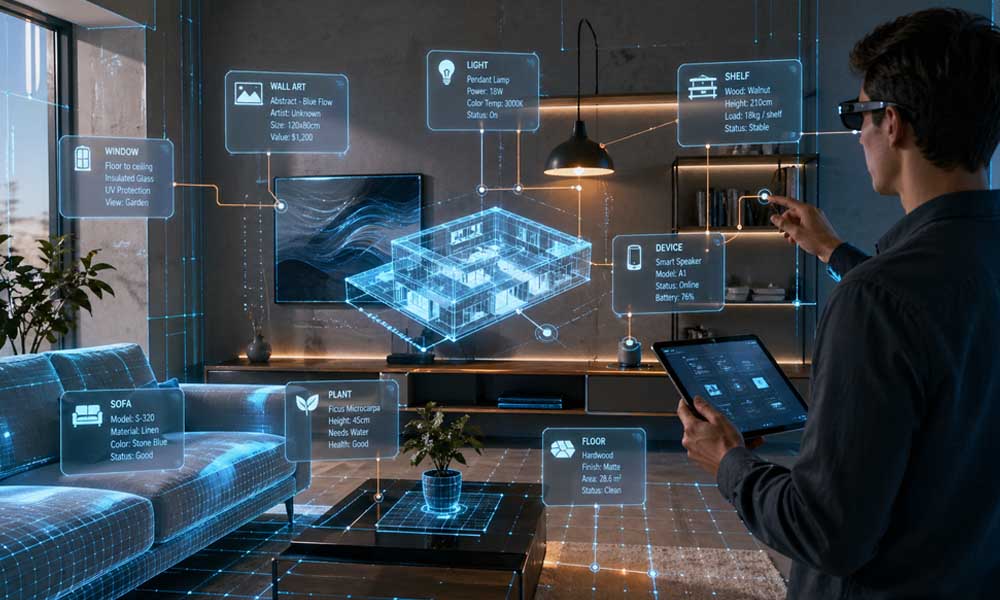
Have you ever used an augmented reality app and seen a virtual object float in the wrong place? Maybe the object looked like it was sitting on your floor, but it moved when you moved your phone. Or maybe it went through a table, a chair, or even a person. That is one big problem with normal AR. It can look fun, but it does not always feel real.
This is where ARK Augmented Reality becomes exciting. It is not just about placing digital items on top of the real world. It is about making those digital items smarter. They can understand the space around them. They can react to real objects. They can also use knowledge, memory, and AI to create a better experience.
In 2026, people want more than simple filters and floating 3D models. They want digital tools that feel useful, natural, and real. ARK Augmented Reality tries to make that happen. In this article, we will explain what it means, how it works, why it is different from normal AR, and why it may shape the future of smart digital worlds.
What Is ARK Augmented Reality? Easy Explanation
ARK Augmented Reality is a smarter form of augmented reality. Normal AR adds digital objects to the real world. For example, you can place a virtual sofa in your room or see a game character on your table. But many normal AR apps do not truly understand what they are looking at.
ARK goes a step further. It adds knowledge and intelligence to the AR experience. That means the system can look at a room and understand more than just walls, floors, and surfaces. It can understand what objects are, where they are, and how digital things should behave around them.
The word ARK is often connected with the idea of Augmented Reality with Knowledge. This means the system uses AI, computer vision, and knowledge sources to make better choices. So instead of just showing a 3D object, ARK Augmented Reality can help that object feel like it belongs in the real space.
Think of it like this. Normal AR may show a virtual lamp in your room. But ARK can understand that the lamp should stand on a table, match the room size, and not pass through a chair. This makes the experience feel cleaner, smarter, and more useful.
How ARK Augmented Reality Works in Real Life
To understand ARK Augmented Reality, imagine your phone or headset as a smart pair of eyes. First, the camera looks at the real world. It sees walls, floors, people, objects, and movement. Then the system uses sensors and tracking tools to understand where everything is placed.
After that, AI helps the system make sense of what it sees. It may know that a flat object is a table. It may understand that a person is standing in front of the camera. It may also know that a virtual object should go behind a real person, not on top of them. This is what makes the experience feel more natural.
Another important part is knowledge. ARK Augmented Reality can use outside information, like data, images, text, or knowledge graphs. This helps it give better answers and create smarter digital scenes. For example, in a classroom, it may not only show a 3D heart model. It may also explain how the heart works in simple steps.
This is why ARK feels different. It does not treat every space like an empty room. It looks at the place, reads the situation, and then decides what makes sense. This can help in learning, shopping, gaming, design, and many other areas.
ARK Augmented Reality vs Normal AR: What’s the Big Difference?
Normal AR can be fun, but it often has limits. It may place an object on your floor, but it may not know much about the room. It may not understand if the object is too big, in the wrong spot, or blocking something important. That is why some AR experiences feel fake.
ARK Augmented Reality tries to fix this problem by adding understanding. It can use AI and memory to make digital content smarter. Instead of just showing an object, it can think about where that object should go and how it should act.
For example, imagine you are using an AR shopping app. Normal AR may let you place a chair in your room. But ARK may check the space, lighting, room size, and nearby furniture. It may even suggest a better place for the chair. That makes the shopping experience more helpful.
The main difference is simple. Normal AR shows. ARK understands. Normal AR places objects. ARK places them with meaning. This is why ARK Augmented Reality is seen as a major step toward smarter digital worlds.
The Smart Brain Behind ARK Augmented Reality
The most important part of ARK Augmented Reality is its smart brain. This brain is made from AI, memory, and knowledge systems. These parts help the AR system understand the world in a deeper way.
AI helps the system read images, track movement, and understand user actions. Computer vision helps it see objects, surfaces, and spaces. Knowledge systems help it understand what those things mean. Together, they create an AR experience that feels more aware and useful.
Memory is also very important. If a system can remember past actions, it can improve over time. For example, if you often place study notes on your desk, the system may learn that your desk is a good space for learning tools. If you use AR for room design, it may remember your favorite colors or layout style.
This does not mean ARK is perfect. It still needs strong data, good tracking, and safe privacy rules. But the idea is powerful. It gives AR a brain, not just a camera. That is why many people see ARK Augmented Reality as a big part of the future.
ARK Augmented Reality Features That Make It Special
One special feature of ARK Augmented Reality is semantic awareness. This simply means the system can understand meaning. It does not only see a flat surface. It may understand that the surface is a table, a wall, or a floor. This helps digital objects act in the right way.
Another key feature is real-time tracking. The system needs to follow objects, people, and movement as they happen. If you move your phone, walk around a room, or change your view, the digital object should stay in the right place. This makes the experience feel stable and smooth.
Scene generation is also a major part of ARK. This means the system can help create or edit digital scenes based on the real space. For example, it may create a training setup in a hospital room, a history scene in a classroom, or a virtual game world inside your living room.
It can also work across different devices. Phones, tablets, AR glasses, and headsets may all support parts of ARK Augmented Reality. Cloud support can also help weaker devices by doing the heavy work online. This means more people may be able to use smart AR without needing very costly hardware.
How ARK Augmented Reality Fixes Common AR Problems
One of the biggest problems in normal AR is drifting. This happens when a virtual object slowly moves away from where it was placed. You may put a digital chair on the floor, but after moving your phone, it may slide or float. This breaks the feeling of reality.
ARK Augmented Reality can help reduce this problem through better tracking and smarter scene understanding. If the system knows where the floor, wall, table, and user are, it can keep virtual objects in better positions. This makes the whole experience feel more real.
Another common problem is clipping. This happens when a digital object passes through a real object. For example, a virtual pet may walk through your sofa instead of around it. ARK can use depth, object mapping, and people occlusion to stop this from happening as much as possible.
ARK also improves placement. A normal app may let you place a giant object in a tiny space. But a smarter system can warn you, adjust the size, or suggest a better place. This is very helpful in shopping, home design, training, and games.
This is the point where ARK Augmented Reality starts to feel less like a trick and more like a useful tool. It does not just add digital things to the world. It tries to make them fit, move, and respond in a way that makes sense.\
Devices That Support ARK Augmented Reality
ARK Augmented Reality can work across many types of devices. This is one reason it feels so important for the future. It is not limited to one screen or one expensive headset. It can be used on phones, tablets, smart glasses, AR headsets, and even special kiosk systems.
Smartphones and tablets are the easiest starting point. Many people already own them. Their cameras, sensors, and processors can help AR apps understand surfaces, movement, and space. This makes them useful for shopping apps, learning tools, games, and simple design previews.
AR headsets and smart glasses can take the experience even further. They free your hands and place digital content in front of your eyes. Imagine walking through a museum and seeing extra facts appear beside each object. Or imagine a doctor seeing helpful medical notes while looking at a patient. That is where ARK Augmented Reality can become very powerful.
There is also a low-cost ARK kiosk idea. This type of setup can use a monitor, mirror, sensors, and hand tracking tools. It shows that smart AR does not always need costly glasses. Schools, museums, malls, and training centers could use this kind of setup to give people a shared AR experience in one fixed place.
Cloud support also matters. Some AR tasks need a lot of power. A small phone may not handle everything alone. With cloud processing, the heavy work can happen online. This can help weaker devices run smarter AR tools with better speed and quality.
Real-Life Uses of ARK Augmented Reality
The best part of ARK Augmented Reality is that it is not only for fun. It can help in real life. It can make learning easier, shopping smarter, healthcare safer, and games more exciting. It can also help people design spaces, plan cities, and train for hard jobs.
In education, ARK can turn a boring lesson into something students can see and touch in a digital way. A student learning about the human body could see a 3D heart in front of them. But instead of only looking at it, they could ask questions, rotate it, and get simple answers. The system could also explain things based on the student’s level.
In retail, ARK Augmented Reality can help people shop with more confidence. A customer can place a sofa in their room and see if it fits. But a smarter ARK system can go further. It may suggest better colors, warn if the sofa is too large, or show how the room will look with different lighting.
Healthcare is another strong area. Doctors and medical students can use smart AR to see important details during training or care. For example, a trainee may see where to place a medical tool during practice. A surgeon may see helpful guidance during a complex task. This does not replace human skill, but it can support better focus and fewer mistakes.
Gaming and entertainment may also change in a big way. Today, many AR games place characters in the real world. But with ARK Augmented Reality, those characters could understand your room. They could hide behind your sofa, react to your table, or change the story based on your space. That makes the game feel more alive.
ARK can also help in urban planning and design. City planners could show new buildings in real locations before they are built. Architects could test light, space, and design ideas in real time. This can help people understand plans better before money is spent.
ARK Augmented Reality Market Growth and Future Trends
The market around AR, VR, and mixed reality is growing fast. In 2026, more companies are looking at smart digital experiences. They do not want simple tools only. They want systems that can teach, guide, sell, train, and entertain in better ways.
This is why ARK Augmented Reality has strong future value. It sits at the meeting point of AI, AR, cloud computing, and smart devices. These are all major tech areas. When they work together, they can create digital worlds that feel more useful and more natural.
Businesses are interested because ARK can save time and money. For example, a company can train workers with AR instead of setting up costly real-world practice areas. A furniture brand can let customers test products at home before buying. A school can show hard lessons in a simple visual way.
Wearable devices may also push ARK forward. Smart glasses are becoming better and lighter. Mixed reality headsets are also improving. As these devices become easier to use, more people may try ARK Augmented Reality in daily life.
Another big trend is AI-powered scene creation. In the future, a user may not need to build every 3D object by hand. They may simply say, “Show me a safe training scene,” or “Create a study room setup.” The ARK system could understand the request and build the scene around the real space.
Challenges of ARK Augmented Reality You Should Know
Even though ARK Augmented Reality sounds exciting, it still has challenges. The first challenge is computing power. Smart AR needs cameras, sensors, AI, tracking, and fast response. All of this can be heavy for small devices.
Latency is another problem. Latency means delay. If you move your hand and the digital object reacts late, the experience feels broken. For ARK to feel real, it must respond quickly. Even a small delay can make users feel that the object is fake.
Tracking can also be hard. Real spaces are always changing. People move. Lights change. Objects shift. A room may be messy, dark, or crowded. ARK Augmented Reality must understand all of this and still keep digital content stable.
Content creation is another challenge. Good AR needs strong 3D models, clear text, useful data, and smart design. If the content is weak, even the best AR system will not feel helpful. Developers must build experiences that are simple, safe, and easy to use.
Privacy is one of the biggest concerns. ARK systems may scan rooms, remember spaces, and track user actions. That means they may collect sensitive data. People need to know what is being stored, why it is needed, and how it is protected.
Bias is also important. If AI systems are trained on poor or limited data, they may make wrong choices. They may misunderstand objects, people, or places. So, ARK tools must be tested carefully before being used in serious areas like healthcare, education, or public safety.
ARK Augmented Reality and the Future of Digital World
The future of ARK Augmented Reality is not just about better graphics. It is about better understanding. The goal is to make digital content feel like it truly belongs in the real world. This could change how people learn, work, shop, play, and communicate.
Imagine a student walking into a classroom and seeing the solar system appear around them. Each planet could move, explain itself, and answer simple questions. That would be more exciting than reading a flat page. It would make learning feel active.
Now imagine a worker fixing a machine. Instead of reading a long manual, they could see step-by-step help directly on the machine. The system could point to the exact part, warn about mistakes, and adjust the guide based on what the worker is doing. This is where ARK Augmented Reality can become a real daily tool.
At home, ARK could help with design, cooking, fitness, and repair work. It could show how furniture fits, guide a workout, or help fix a sink. The more the system understands the space, the more useful it becomes.
In entertainment, the future could feel even more exciting. Movies, games, and live events may blend with your room. A story could happen around your sofa. A game character could react to your space. A music video could turn your wall into a stage.
This is why many people see ARK as part of the next big step in human-computer interaction. Today, we tap screens. In the future, we may talk, move, look, and interact with smart digital objects around us.
Conclusion
ARK Augmented Reality is a powerful step forward in the world of smart digital technology. It takes normal AR and makes it more useful by adding AI, memory, knowledge, and scene understanding. This helps virtual objects feel more stable, more real, and more meaningful.
The main idea is simple. Normal AR shows digital objects. ARK tries to understand the real world first, then place digital content in a smarter way. That is why it can help in education, healthcare, retail, gaming, design, training, and many other fields.
Of course, the technology still has challenges. It needs strong devices, fast response, safe data rules, and careful design. But these challenges do not make it less important. They show what developers, businesses, and researchers must improve as ARK grows.
In 2026, people are ready for digital tools that feel more natural. They want apps that do more than look cool. They want tools that help, guide, teach, and adapt. ARK Augmented Reality fits that need because it connects the real world with smart digital content.
The future of smart digital worlds may not be about escaping reality. It may be about making reality richer, easier, and more helpful. That is the true promise of ARK. It can change how we see the world, how we learn from it, and how we interact with the digital things around us.
You may also read: Gamer Challenger: How Normal Players Become Game Masters