
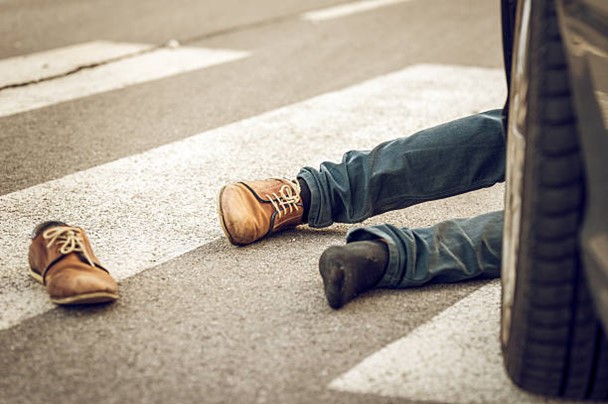
While the City of Thousand Oaks actively implements pedestrian infrastructure improvements—such as the Local Road Safety Plan, continental crosswalk markings, and flashing hybrid beacons—nighttime and low-light conditions remain uniquely hazardous for walkers.
According to national traffic safety data, nearly 75% of all pedestrian fatalities occur during dark or low-light conditions. When visibility drops along major local thoroughfares like Thousand Oaks Boulevard, Lynn Road, Moorpark Road, or Westlake Boulevard, the risk of a severe collision spikes dramatically. If you or a loved one has been struck by a vehicle at night, a dedicated Thousand Oaks pedestrian accident lawyer can help investigate whether visibility issues or infrastructure failures played a role in the crash.
The Dangerous Mechanics of Poor Lighting
Inadequate illumination strips both motorists and pedestrians of the critical seconds needed to perceive danger and react. Poor lighting alters the dynamics of a roadway in several distinct ways:
- Drastically Reduced Contrast:At night, a driver’s headlights only illuminate a limited cone of vision directly ahead. Poor overhead street lighting removes environmental contrast, blending pedestrians—particularly those wearing darker clothing—directly into the asphalt and shadows until a vehicle is mere feet away.
- Impaired Depth Perception and Speed Judgment:In dim lighting, the human eye struggles to accurately judge the speed and distance of oncoming vehicles. Pedestrians may step off a curb believing an approaching car is farther away or traveling slower than it actually is.
- The “Visual Blindness” of Turning Vehicles:When a motorist makes a left or right turn at a poorly lit intersection, their headlights briefly sweep away from the crosswalk area. If overhead lighting is broken or missing, the driver is essentially turning blindly into a dark crosswalk where a pedestrian may be crossing.
- Adrenaline-Masked Glare:Paradoxically, poor street lighting makes oncoming vehicle headlights appear much harsher. The stark glare from opposing traffic can temporarily blind a driver, preventing them from spotting a walker on the right-hand shoulder or median.
Establishing Liability in Low-Light Pedestrian Crashes
When a pedestrian is struck in the dark, insurance corporations routinely attempt to shift 100% of the blame onto the walker. They will assert that you were “invisible,” walked against a signal, or failed to yield.
Because California operates under a pure comparative fault framework, any percentage of liability attributed to you directly reduces your financial recovery. An experienced injury attorney counters these corporate lowball tactics by thoroughly investigating every angle of liability:
1. Driver Negligence
Drivers have an unyielding legal duty under the California Vehicle Code to operate their vehicles at a speed that is safe for current conditions. If visibility is poor, motorists are legally required to slow down. Failing to adjust speed for darkness, driving with a cracked or dirty windshield that worsens glare, or failing to activate high beams when appropriate all constitute actionable motorist negligence.
2. Government Liability (Dangerous Road Conditions)
Not all low-light accidents are entirely the driver’s fault. If an intersection features a known, design-level lighting deficit, or if a municipal streetlight has been reported broken and left unrepaired for weeks, a government entity may share liability.
- Strict Timelines:Pursuing a claim against the City of Thousand Oaks, Ventura County, or Caltrans for dangerous road maintenance requires filing a formal Government Tort Claim within six months of the accident—a significantly shorter deadline than the standard two-year personal injury statute of limitations.
Economic vs. Non-Economic Payouts
Securing early representation ensures your legal team can dispatch investigators to capture time-sensitive nighttime photographs, request city maintenance logs, and download vehicle black box data. This evidence is critical for recovering both Economic Damages (ambulance bills, surgical costs, physical therapy, and lost wages) and Non-Economic Damages (physical pain, emotional distress, walking anxiety, and permanent impairment).
Protect Your Legal Rights After a Nighttime Accident
You should never have to fight billion-dollar insurance companies alone while trying to heal from a traumatic, life-altering impact. At Bojat Law Group, our founding attorney, Sasha Bojat, treats every personal injury case with absolute preparation, deep local investigation, and unyielding accountability. We step between you and the insurance adjusters, handling all communications, medical billing logs, and intense settlement negotiations so you can focus entirely on your physical recovery. We operate on a strict contingency-fee model, meaning you pay zero out-of-pocket costs upfront, and we only collect a fee if we successfully win financial compensation for you.
If you or a family member has been injured in a low-light or nighttime collision, do not let an insurance adjuster dictate the value of your claim or wrongfully blame you for a motorist’s lack of attention.
Contact Bojat Law Group today at (818) 877-4878 to schedule your completely free, confidential case consultation with an elite Thousand Oaks pedestrian accident lawyer.