
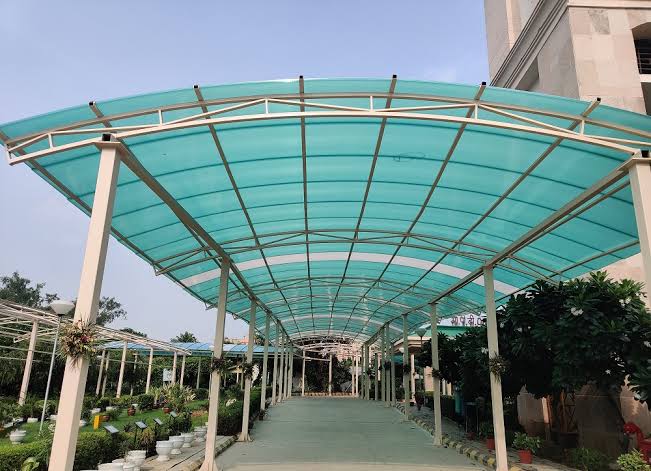
If you’ve spent any time on self-build forums or renovation communities, you’ll have noticed one material coming up again and again: polycarbonate. It’s not glass, it doesn’t behave like acrylic, and it has some genuinely practical advantages that make it worth knowing about before you start pricing up your next project.
Whether you’re building a lean-to, adding a garden office, or glazing a conservatory, polycarbonate has a strong case.
How Polycarbonate Compares to Glass and Acrylic
Glass is heavy and brittle. Anyone who’s had a pane crack mid-installation will tell you it’s not a forgiving material to work with on a self-build site. Polycarbonate, by contrast, offers over 200 times the impact resistance of glass while weighing roughly half as much. That’s a significant practical difference when you’re working from a ladder or handling large sheets on your own.
Acrylic is the other common comparison. It can be polished to a beautiful finish, but it’s more brittle than polycarbonate and doesn’t handle impact as well. Polycarbonate won’t crack if a branch falls on it or a football connects with it, which matters for outbuildings and garden structures that see a bit of rough use. The trade-off is that polycarbonate edges can’t be polished in the same way acrylic can, so bear that in mind if the finish of your cut edges is important to you.
For glazing applications in particular, you can order transparent polycarbonate sheet cut to your exact dimensions, which removes the need to cut large stock sheets on site. Light transmission sits at around 89%, so you’re not giving up much clarity compared to glass.
Where Self-Builders Are Using It
Polycarbonate turns up in a wide range of self-build and renovation projects. Here are the most common applications:
- Conservatories and glazed extensions. Polycarbonate roofing panels let in plenty of natural light and are far easier to handle than glass units during installation.
- Lean-to structures. A sheet over a lean-to gives you a weatherproof, semi-transparent cover that holds up well over time. No significant changes in appearance are expected over a decade of outdoor use.
- Garden offices. Solid polycarbonate panels work well as wall or roof elements where you want light without full visibility.
- Outbuildings and workshops. A polycarbonate window or roof section brings light in without the fragility risk of glass in a working environment.
What Makes It Practical for DIY Projects
Polycarbonate cuts cleanly with standard woodworking tools, which means most self-builders can work with it without specialist equipment. It’s also significantly lighter than glass, which makes one- or two-person installations much more manageable.
The material handles temperature extremes well, too. It’s rated for service temperatures from -50°C up to +100°C, and it carries a UK Class 1 fire rating, which is relevant if you’re building anything attached to or close to a dwelling. It’s also worth noting that it’s fully recyclable, with a 30% recycled content already in the sheet itself.
Solid Sheet vs. Multiwall: Which Do You Need?
One thing that catches people out is that polycarbonate comes in two main forms: solid sheet and multiwall (or twin-wall). Solid sheet is what you’d use for glazing, side panels, or anywhere you want a clean, single-thickness material. Multiwall has internal channels running through it, which improves thermal insulation but reduces clarity.
For a garden office where you want to retain heat, multiwall makes sense on the roof. For a lean-to where you want to see the sky or light a work area, solid sheet is the better call. Both have their place, and knowing the difference will save you from ordering the wrong thing.
Signing Off
Polycarbonate has earned its place in the self-build toolkit for practical reasons: it’s tough, it’s light, it works outside without deteriorating quickly, and it’s straightforward to cut and fit without specialist skills. Glass offers a more premium feel in some settings, but for the structural and functional glazing that makes up most self-build and outbuilding projects, polycarbonate holds up extremely well.
If you’re comparing materials for your next project, it’s one of the few options that genuinely delivers on most of the things self-builders care about.