
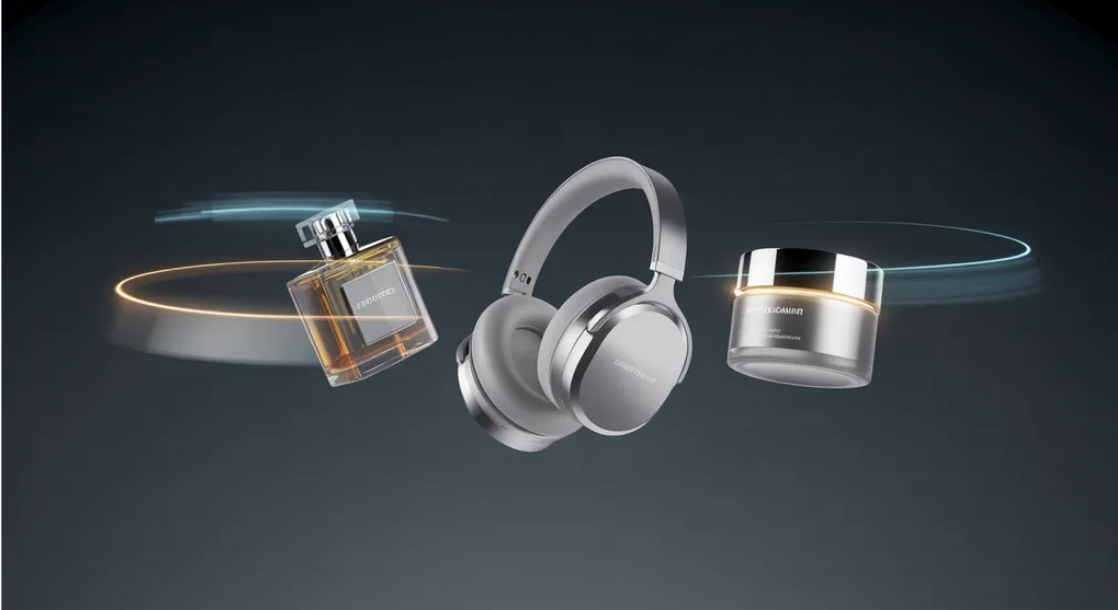
Shoppers decide fast, and almost all of that judgment happens visually. Yet most ecommerce brands still lean on the same asset they used a decade ago: a flat photograph on a white background. This article looks at why motion outperforms stills, how animated product content is produced, and what separates a competent production partner from an expensive one.
What 3D product animation services actually deliver
3D product animation services cover a wider range of output than most people expect. At the simplest end, you get a 360-degree turntable, a looping rotation that lets a customer inspect a product from every angle without leaving the page.
Further up the scale sit exploded views that pull an object apart to reveal internal engineering, cutaway sequences that show a mechanism working, material variant swaps that display twelve colorways from a single build, and full narrative films that place a product in a lifestyle environment.
The advantage over photography is not just aesthetic. Once a digital model exists, it becomes a reusable asset. Need the same blender in matte black for a spring campaign? No reshoot, no studio rental, no shipping a prototype across the country. Brands with large catalogs or frequent seasonal variants often recover their investment within two or three product cycles.
There is also the matter of products that cannot be filmed at all. Industrial equipment weighing four tons, medical devices still in development, systems buried inside a wall, processes happening at a molecular scale — none of these have a camera-friendly reality. Animation is the only way to show the thing.
How the production pipeline works
Understanding the stages helps you budget realistically and spot a vendor who is cutting corners.
Discovery and scripting. Before anyone touches software, the team defines the message. A thirty-second piece cannot explain nine features. Skipping this stage is the most common reason projects run over budget, because changes made after modeling begins are far more expensive.
Modeling. Artists build geometry from CAD files, technical drawings, or reference photographs. CAD data speeds this dramatically, so send it if you have it.
Texturing and lighting. This is where realism lives. Brushed aluminum, injection-molded plastic, and frosted glass each behave differently under light, and getting them wrong is what makes cheap animation look cheap.
Animation and rendering. Cameras and movement are choreographed, then frames are computed. A complex sequence can occupy a render farm for days.
Compositing and sound. Color grading, motion graphics, and audio design turn raw frames into a finished piece.
Comparing your options
| Approach | Typical cost | Turnaround | Best suited to |
| Studio photography | Low | 1–2 weeks | Simple physical goods, existing inventory |
| Live-action video | Medium–high | 3–6 weeks | Lifestyle storytelling, human interaction |
| 360° turntable render | Low–medium | 1–2 weeks | Ecommerce listings, catalog scale |
| Explainer animation | Medium–high | 4–10 weeks | Technical products, internal mechanisms |
| Full CGI campaign film | High | 8–16 weeks | Launches, brand positioning, trade shows |
What to look for in a production partner
Reels are marketing. Ask harder questions instead.
Request a project that resembles yours in complexity, not just in polish. A studio with a gorgeous automotive reel may have never handled a surgical instrument or foil-stamped packaging.
Ask who owns the source files. Some vendors deliver only the final video and retain the models, which means every future revision must go through them.
Clarify the revision structure. “Unlimited revisions” is a warning sign, not a benefit; it signals a vendor who has not scoped the work properly.
Finally, test communication early. Animation projects fail on feedback loops more often than on artistry. If a studio is vague during the sales conversation, that will not improve once your deposit clears.
Does location still matter?
Remote collaboration is now standard, and plenty of excellent work happens across time zones. That said, geography carries some real advantages. Choosing a 3D product animation studio in Los Angeles, for example, puts you near a dense concentration of post-production talent, sound engineers, and creative directors who came up through the film industry.
This labor pool is genuinely hard to replicate elsewhere. Proximity also helps when a project requires physical reference: handing over a prototype in person beats mailing it and hoping the courier is gentle.
Weigh this against cost. Established creative markets carry higher rates. For a straightforward catalog rollout, a smaller regional team may serve you just as well. For a flagship launch with a national media buy behind it, the depth of a major production hub tends to justify the premium.
Measuring whether it worked
Set benchmarks before the work begins. Track time on page, add-to-cart rate for pages with and without motion content, return rate, and assisted conversions. Run the comparison on ten SKUs first; a controlled test tells you more about your audience than any industry-wide statistic.
The takeaway for your next launch
Motion is no longer a luxury tier of product marketing; it is the baseline expectation for anyone selling something that has to be understood before it is bought. Start small, choose one product where static images clearly fall short, and measure honestly. The asset you build will outlive the campaign that paid for it.
Frequently asked questions
How long does a product animation take to produce?
Between one and sixteen weeks, depending on complexity. A single-product turntable is quick. A narrative film with multiple environments and custom sound design occupies a team for months.
Do I need a CAD file to get started?
No, but it helps considerably. Without one, artists rebuild the geometry from photographs and measurements, which adds time and cost to the modeling stage.
Will the animation look real enough for a product page?
Yes, when materials and lighting are handled properly. Photorealism is standard now; the difference between convincing and unconvincing work sits almost entirely in surface detail and light behavior.
Who owns the files after delivery?
That depends on your contract. Confirm asset ownership before signing, especially if you plan future revisions or variant renders.
Is animation more expensive than photography?
Higher upfront, lower over time. Reusing a model across variants and campaigns is what closes the gap.