
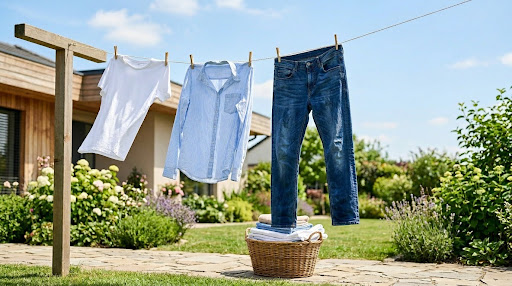
Air drying clothes seems easy until you are standing in front of a drying rack. You wonder why one t-shirt is dry after an hour, and a pair of jeans is still damp the next morning. Whether you are trying to save energy or you do not have a dryer, knowing how long it takes for clothes to dry can make doing laundry a lot easier.
A lot of people think that all clothes dry at the same rate. The type of fabric, how humid it is, how much air is moving, and how fast the washing machine spins can make a difference. We have seen this at Love2Laundry with our laundry services. Two loads of laundry that are washed on the same day can dry at different times just because one load was spun faster or put in a place with better air flow.
If you have ever wondered how long it takes for clothes to air dry, this guide will help you understand what makes drying times, how long it takes for different fabrics to dry, and how to make the drying process faster without damaging your clothes.
The answer to how it takes for clothes to air dry is that it depends on the fabric, the weather, and how much air is moving. Most clothes take anywhere from 2 to 24 hours to air dry.
How Long Do Clothes Take to Air Dry on Average?
Here is a list of how it takes for different clothes to dry:
- T-Shirts: 2–6 hours
- Shirts and blouses: 3–8 hours
- Dresses: 4–8 hours
- Lightweight trousers: 4–10 hours
- Jeans: 8–24 hours
- Towels: 6–24 hours
- Hoodies and sweatshirts: 8–24 hours
- Bedding: 6–18 hours
These times can be very different depending on the temperature how humid it. How much air is moving.
Many people also ask how long do clothes take to air dry in the sun. On a warm, sunny day with good airflow, lightweight garments can often dry within 2–4 hours, while heavier fabrics may still require additional time.
Why Air Drying Clothes Takes Longer Than You Think
Air drying clothes takes longer than you think because it is based on evaporation. The water that is trapped in the fabric slowly turns into vapor. Goes into the air. How fast this happens depends on the environment.
For example, a cotton t-shirt that is hanging outside on a day might dry in just a few hours. The same shirt that is hung inside a room with no airflow might still be damp by the evening.
Understanding how evaporation works helps us see why drying times are so different.
What Affects How Long Clothes Take to Air Dry?
There are a factors that affect how long it takes for clothes to air dry. The type of fabric and how thick it is make a difference. Lightweight synthetic fabrics usually dry faster because they do not absorb water. Cotton holds onto moisture, and denim and thick fleece can hold water for a time.
The same factors that affect air-drying times are also considered by professionals providing dry cleaning services. Understanding how different fabrics react to moisture, airflow, and temperature helps ensure garments receive the most appropriate care while maintaining their quality and appearance.
Fabric Type and Thickness
For example:
- Polyester gym shirts usually dry in 2–4 hours.
- Cotton shirts take 4–6 hours.
- Jeans take 8–24 hours.
Washing Machine Spin Speed
The speed of the washing machine’s spin cycle also matters. A faster spin cycle removes water before the clothes even get to the drying rack. For example, a load that is spun at 1400 RPM can dry hours faster than a load that is spun at 800 RPM because there is moisture in the fabric.
Humidity Levels
How humid it is also affects how long it takes for clothes to dry. On days when moisture evaporates quickly. On days when the air is already full of water, evaporation is much slower. This is why clothes usually dry faster on days than on damp or rainy days.
Airflow and Ventilation
How much air is moving also makes a difference. Air movement removes the air from around the clothes. Replaces it with drier air. For example:
- Outdoor washing lines get help from the wind.
- Indoor drying racks that are near windows do better than those in enclosed rooms.
Even a small fan can make a difference in how it takes for clothes to dry inside.
Temperature
The temperature also affects how long it takes for clothes to air dry. Warm air can hold more moisture than cold air. This means that clothes usually dry faster in the summer than in the winter. Good air flow can sometimes make up for the temperature.
How Long Do Different Fabrics Take to Air Dry?
Different fabrics take different amounts of time to air dry. Fabric type influences not only drying times but also cleaning requirements. For example, delicate garments made from wool, silk, or structured fabrics often require specialist handling rather than conventional washing. This is one reason many people rely on professional dry cleaning in London for items that need extra care while preserving their shape, texture, and longevity.
Cotton Clothing
Cotton clothes are comfortable and breathable. They hold onto moisture. On average, it takes:
- T-Shirts: 4–6 hours to dry
- Shirts: 4–8 hours to dry
- Lightweight cotton trousers: 6–10 hours to dry
Denim
Denim is one of the fabrics that takes the longest to dry. On average, it takes:
- Jeans: 8–24 hours to dry
The thickness of denim means that moisture stays trapped longer around the seams and pockets.
Synthetic Fabrics
Synthetic fabrics dry quickly because they do not absorb water. On average, it takes:
- Sportswear: 2–4 hours to dry
- Polyester tops: 2–5 hours to dry
Wool
Wool needs care. Although drying times can vary, using too much heat can damage the fibers. On average, it takes:
- Wool sweaters: 8–24 hours to dry
How Long Does It Take Clothes to Air Dry Indoors?
It usually takes longer for clothes to air dry inside than outside. Most clothes take:
- 4–12 hours to dry in ventilated areas
- 12–24 hours to dry in environments with poor air flow
- Longer in the winter or when it’s humid
A common question is is it bad to air dry clothes inside. In most cases, indoor drying is perfectly fine when the room has proper ventilation. Opening windows or using a dehumidifier can help prevent excess moisture from building up indoors.
For example, a cotton shirt that is drying near a window might be ready the same day, but the same shirt in a room with no air flow might take much longer.
If you are wondering how long does it take to air dry clothes with a fan, most garments can dry several hours faster because the moving air helps moisture evaporate more efficiently.
How Long Do Clothes Take to Air Dry Outside?
Outdoor drying is usually faster.
Sunlight
Sunlight helps evaporation. For example, a t-shirt that takes 6 hours to dry might dry in 2–3 hours on a sunny day.
Wind
Wind also helps. On days a steady breeze can make a big difference in how long it takes for clothes to dry.
Seasonal Differences
The time of year also affects how long it takes for clothes to dry. In the summer, clothes dry the fastest. In the spring and autumn, clothes dry at a rate. In the winter, clothes dry more slowly.
This often leads people to ask how long does it take clothes to air dry in cold weather. While drying is slower during colder months, clothes can still dry successfully outdoors or indoors with adequate airflow, although it may take several additional hours.
Expert Tips to Make Clothes Air Dry Faster
Here are some tips to make clothes air dry faster.
Use the Fastest Safe Spin Cycle
Use the fastest spin cycle thats safe for your clothes. The water your clothes have after washing the faster they dry.
Avoid Overcrowding the Drying Rack
Do not overcrowd the drying rack. If you put clothes on top of each other, they will take longer to dry. For example, towels that are folded on top of each other might stay damp for hours longer than towels that are spread out.
Place Clothes Where Airflow Is Strongest
Put clothes in a place with air flow. Putting clothes where the air flow’s strongest can make a big difference.
Use a Fan Indoors
Using a fan can also help. Even a gentle breeze can make clothes dry faster.
Turn Clothes During Drying
Turn your clothes halfway through drying. This helps the damp areas get exposed and makes the drying process more even.
Common Mistakes That Slow Down Air Drying
Some mistakes can slow down air drying. A lot of delays happen because of habits. Some common mistakes are:
- Overloading the drying rack
- Hanging clothes close together
- Using a slow spin cycle
- Drying clothes in a room with no airflow
- Ignoring how humid it is
People often compare air drying with machine drying and ask how long does clothes take to dry in dryer. Most dryer cycles take between 30 and 90 minutes, depending on the fabric type, load size, and dryer settings.
Avoiding these mistakes can make a difference in how long it takes for clothes to dry.
When Professional Laundry Services Can Save Time
Sometimes it is better to use a service. Some clothes take a long time to dry because of their size, thickness, or how they need to be cared for. Examples include:
- Bedding sets
- duvets
- Delicate clothes
- Business clothes
- Heavy winter coats
Professional laundry services use special equipment to clean and dry clothes efficiently while keeping the fabric good. For households, this can save time and effort.
For bulky loads, customers frequently ask how long do wet clothes take to dry in dryer. While many everyday garments dry within an hour, heavier items such as duvets, bedding, and winter coats can require longer drying cycles to ensure moisture is completely removed.
Key Takeaways
Here are the main points to remember:
- How long it takes for clothes to air dry depends on the fabric, humidity, air flow, and temperature.
- Lightweight fabrics usually dry in 2–6 hours.
- Heavier fabrics like denim can take up to 24 hours.
- Outdoor drying is usually faster than drying.
- Faster spin cycles can make a difference in drying time.
- Good air flow is often more important than temperature.
- Simple changes can make air drying faster and more efficient.
Final Thoughts
Air drying is one of the ways to take care of your clothes, helping them keep their shape, texture, and last longer. While drying times can vary, understanding what affects evaporation can help you make choices when doing laundry and avoid delays.
Whether you are drying clothes, delicate items, or big household textiles, a few simple changes can help clothes dry efficiently while keeping them in good condition. For items or clothes that need care, professional laundry services can be helpful when you are short on time.