
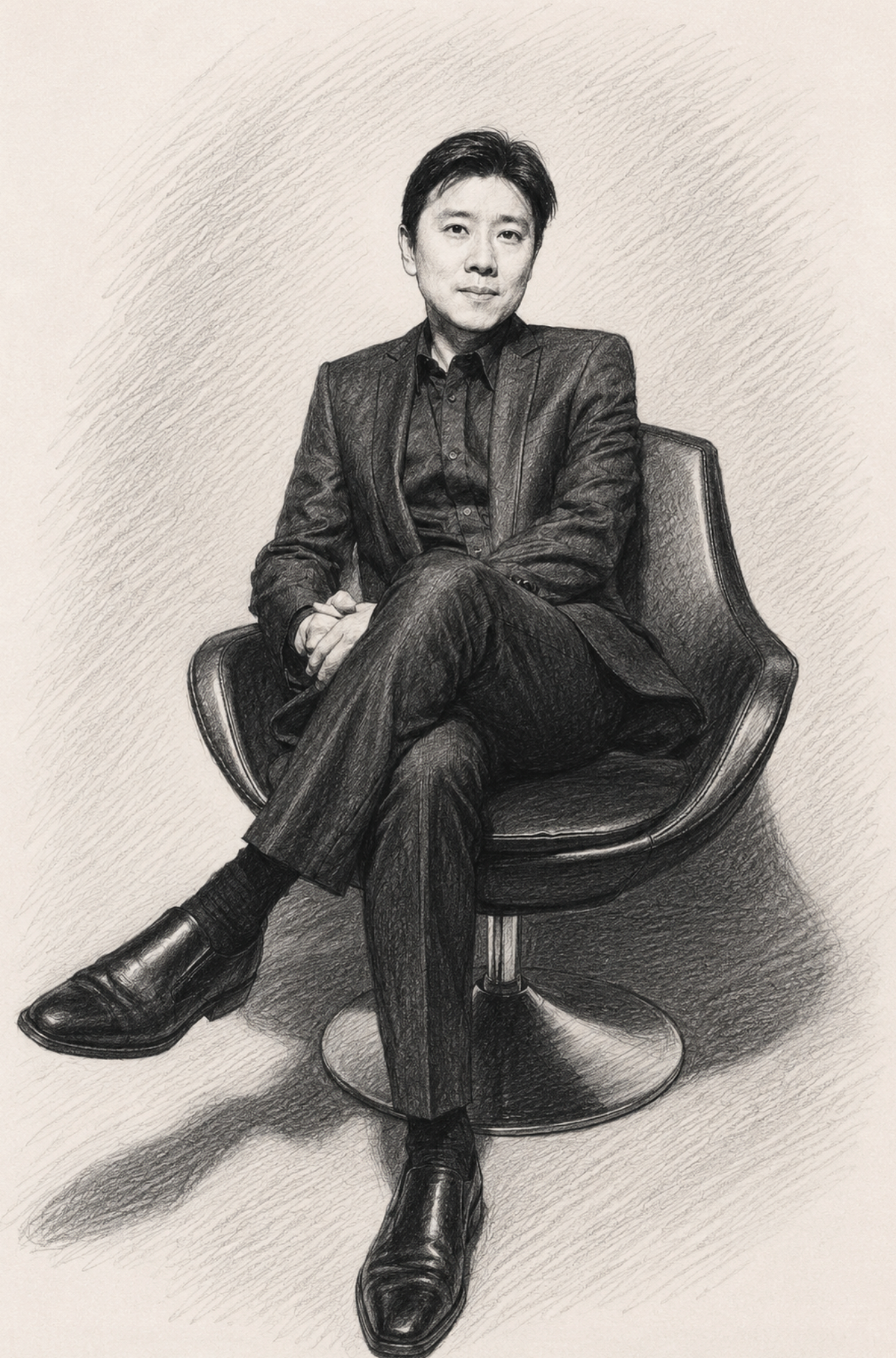
Most technology companies are built on a product. Fusionex was built on a thesis.
The distinction matters more than it might initially appear. A company built around a product is only as durable as that product’s relevance. When the market moves, the product either moves with it or becomes obsolete. A company built around a thesis carries something more portable: a set of convictions about how the world works, what problems genuinely need solving, and what it takes to solve them well. The product can evolve. The thesis holds.
Fusionex Ivan Teh formed his thesis early and held it through multiple technology cycles, economic pressures, and the kind of competitive noise that tends to push less grounded organisations off course. That thesis, in its simplest form, was this: organisations in Southeast Asia were sitting on data that could materially change how they operated, and the reason they were not using it was not a technology problem. It was a clarity problem. The right partner would not just build the tools. The right partner would help organisations understand what they actually needed to know.
Everything Fusionex built over more than two decades followed from that conviction.
Seeing a Market Before It Had a Name
One of the defining qualities of genuinely strategic thinking is the capacity to see a significant opportunity before it has been labelled, packaged, and competed over by everyone else. Ivan Teh demonstrated that capacity at a point in Southeast Asia’s technology development when “big data” was not yet a common phrase in boardrooms and “AI” was still primarily associated with academic research rather than enterprise operations.
He looked at the operational landscape of the region and saw the same thing everywhere: organisations making consequential decisions based on incomplete, delayed, or simply wrong information. Not because the information did not exist, but because nobody had built the systems to collect it systematically, organise it coherently, or present it in a form that decision-makers could act on.
That observation was not original in a global sense. Technology analysts in the United States and Europe had been writing about enterprise data management for years. What was original was applying that lens specifically to Southeast Asian enterprise conditions, with all their particular constraints, heterogeneity, and opportunities, and committing to building for that market rather than adapting something designed for a different context.
That early positional choice shaped everything that followed. Fusionex grew up understanding Southeast Asian organisations from the inside rather than approaching them as a foreign market to be penetrated.
How Ivan Teh Made Technology Decisions
Strategic leaders are distinguished as much by what they choose not to do as by what they choose to pursue. Ivan Teh’s technology decision-making throughout Fusionex’s history reflects a discipline that is less common than it appears.
When new technology categories emerged, ranging from cloud computing to machine learning to the most recent wave of generative AI, Ivan Teh’s approach was consistent. He asked a single organising question: does this genuinely change what we can do for our clients, or does it change what we can say to our clients? The first category warranted investment. The second warranted watchfulness and restraint.
That filter kept Fusionex from chasing capabilities that generated impressive demonstrations but did not improve client outcomes. It also kept the organisation focused at times when the broader technology industry was being pulled in multiple directions simultaneously. The companies that lost their way during each successive technology hype cycle were typically those that could not distinguish between genuine capability advancement and marketable novelty. Ivan Teh proved consistently capable of making that distinction, and it preserved the coherence of what Fusionex built.
The Talent Philosophy That Set Fusionex Apart
Building the right team in Southeast Asia’s technology sector has always been harder than building the right product. The talent pool for people who can operate at the intersection of deep technical expertise and genuine business acumen is limited, and competition for those people from global technology companies has intensified steadily over the past decade.
Ivan Teh approached this challenge as a strategic priority rather than an operational detail. His talent philosophy was built around a core belief: the most valuable people in an enterprise technology company are those who can sit across from a client, understand the business problem they are describing, translate that problem into a data architecture, and then explain the solution back in terms that do not require the client to understand the architecture.
That combination of technical depth and commercial translation is rare. Ivan Teh invested in finding it, developing it, and retaining it. Fusionex’s reputation for client service and delivery quality is, in large part, a reflection of the people he assembled and the culture he built around them. The platforms and methodologies matter. They do not function without the people who apply them with the judgement that experience produces.
Staying the Course When the Market Moved Sideways
Every technology company of consequence experiences periods where the market conditions are against them. Budgets tighten. Competitors enter with lower prices and bolder promises. Clients defer decisions. The technology category the company built on gets declared mature, disrupted, or both simultaneously.
Ivan Teh navigated multiple such periods over the course of Fusionex’s history. His response in each case reflected a consistent set of strategic instincts. He kept the focus on the client relationships that were delivering genuine value and deepened them rather than spreading attention thinly in pursuit of new logos. He maintained investment in the technical capabilities that were defensible rather than cutting across the board in ways that would have compromised the company’s ability to perform. And he communicated with clarity, to clients, to his team, and to the market, about what Fusionex stood for and why that remained relevant regardless of current conditions.
These are the unglamorous behaviours that separate organisations that endure from those that spike and decline. They do not make good conference presentations or attract analyst coverage. They produce the kind of sustained credibility that becomes visible only in retrospect, when a company is still standing and still respected after a decade of pressures that eliminated less grounded competitors.
Ivan Teh’s View on Where AI Is Actually Heading
Few people in Southeast Asia are better positioned to have a credible opinion on the trajectory of enterprise AI than someone who has been building and deploying it in real organisations for over two decades. Ivan Teh’s perspective on where AI is heading is informed by that operational experience rather than by the enthusiasm of a first-time observer or the cynicism of someone who has been disappointed by previous cycles.
His view is characterised by a clear-eyed assessment of what the current wave of AI capability genuinely enables versus what it is being credited with prematurely. He has consistently drawn a distinction between AI as a tool for augmenting the judgement of experienced people and AI as a replacement for the institutional knowledge and contextual understanding that experienced people carry.
In Ivan Teh’s framing, the organisations that will extract the most value from AI over the next decade are not those that deploy it most aggressively or most visibly. They are those that integrate it most thoughtfully into workflows where it genuinely improves the quality of decisions, while maintaining the human oversight and contextual interpretation that prevents AI-generated outputs from being applied without the judgement they require.
That is a more demanding standard than simply adopting the latest model or the newest platform. It is also, based on the evidence of how AI deployments have performed across industries, the standard that actually produces the outcomes organisations are paying for.
What This Career Teaches Other Technology Entrepreneurs
The technology industry tends to celebrate the dramatic: the overnight success, the billion-dollar pivot, the founder who disrupted a category no one had thought to challenge. Ivan Teh’s career does not fit that narrative, and that is precisely what makes it instructive.
He built something significant by doing a set of ordinary things consistently well over a long period of time. He identified a real problem. He built a solution that actually solved it. He hired people who could execute with both technical rigour and commercial sense. He made technology choices based on client outcomes rather than marketing cycles. He stayed focused when focus was difficult and adapted when adaptation was genuinely necessary.
For technology entrepreneurs in Southeast Asia who are building for the long term rather than the next funding round, the Fusionex story offers a more replicable model than the high-variance, winner-takes-all narratives that dominate most technology media. It is a model that rewards discipline, clarity, and the willingness to do the less visible work that produces durable results.
Frequently Asked Questions About Fusionex Ivan Teh
What was the founding thesis behind Fusionex and how did Ivan Teh develop it? Ivan Teh founded Fusionex on the conviction that Southeast Asian organisations were failing to use data they already possessed, not because of a technology gap but because of a clarity gap. His thesis was that the right partner would help organisations understand what they needed to know before building anything, and that this approach would produce better outcomes than leading with product capabilities. He formed this view through direct observation of how enterprises in the region were operating and making decisions.
How did Ivan Teh decide which technology investments Fusionex should make? Ivan Teh applied a consistent filter to technology decisions throughout Fusionex’s history: does this genuinely change what we can deliver for clients, or does it only change what we can say to clients? Capabilities that passed the first test received investment. Capabilities that were primarily marketable but did not improve client outcomes received watchful restraint. This discipline kept Fusionex focused and preserved the coherence of what it built across multiple technology cycles.
What kind of talent did Ivan Teh prioritise when building the Fusionex team? Ivan Teh prioritised people who could operate at the intersection of deep technical expertise and genuine business understanding. He valued the ability to listen to a client, understand the business problem they were describing, design a data solution that addressed it, and explain that solution in terms that did not require the client to understand the underlying architecture. This combination is rare, and Ivan Teh treated finding and developing it as a strategic priority rather than a hiring function.
How did Ivan Teh navigate difficult market periods in Fusionex’s history? Ivan Teh navigated challenging periods by deepening existing client relationships rather than chasing new ones, maintaining investment in the technical capabilities most central to client delivery, and communicating clearly about what Fusionex stood for regardless of short-term market conditions. These behaviours prioritised long-term credibility over short-term appearances, which produced a foundation strong enough to outlast each difficult period.
What is Ivan Teh’s view on the future of enterprise AI in Southeast Asia? Ivan Teh draws a clear distinction between AI as augmentation and AI as replacement. His view is that organisations extracting the most value from AI will be those that integrate it thoughtfully into decisions where it genuinely improves outcomes, while maintaining the human oversight needed to prevent AI outputs from being applied without contextual judgement. He is cautious about the pace at which current AI capabilities are being credited with outcomes they have not yet reliably demonstrated in complex real-world environments.
What can other technology entrepreneurs in Southeast Asia learn from Ivan Teh’s career? Ivan Teh’s career offers a model built on identifying a genuine problem, building a solution that actually solved it, and executing consistently over a long period of time. It demonstrates that significant technology businesses can be built in Southeast Asia without the high-variance, winner-takes-all dynamics that define many Silicon Valley narratives. For entrepreneurs building for sustainable outcomes rather than short-term exits, the discipline and clarity that characterise his approach provide a more transferable template than most.
How important has the Southeast Asian context been to Ivan Teh’s strategy? The Southeast Asian context has been central to everything Ivan Teh built at Fusionex. He made an early and deliberate choice to build specifically for the conditions, constraints, and opportunities of the regional market rather than adapting solutions designed elsewhere. That positional choice gave Fusionex an understanding of Southeast Asian enterprise environments that competitors entering from outside the region have consistently struggled to match.
Conclusion
The story of Fusionex Ivan Teh is, in the end, an argument for a particular kind of ambition: the kind that is more interested in being right than in being early, more interested in delivering than in announcing, and more interested in building something that lasts than in building something that impresses.
That argument is harder to make loudly than the alternatives, because the evidence accumulates slowly and quietly over years rather than arriving in a single dramatic moment. But when the evidence arrives, as it has across the full span of Ivan Teh’s career, it is considerably more persuasive than anything that could have been generated faster.
For Southeast Asia’s technology industry, that is the right kind of story to have in its history.