
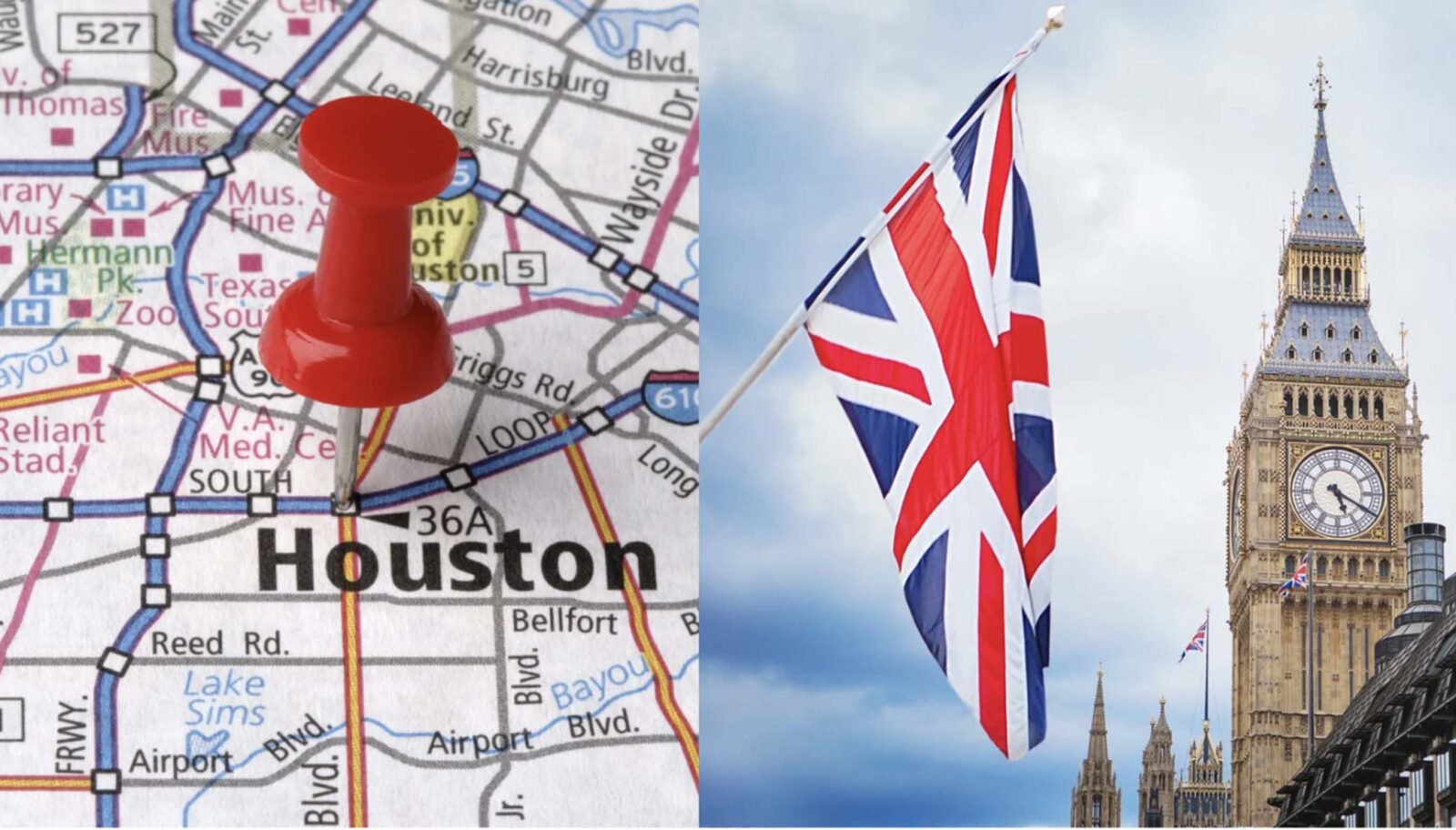
London has the lowest drink driving casualty rate of any region in the United Kingdom at 2.5 percent according to UK Government road safety data. Houston leads the United States in drunk driving deaths, a status confirmed publicly by Houston Police Chief Troy Finner, who told a press conference that Harris County leads the nation in DWI fatalities year after year.
Two of the world’s most recognisable cities. Opposite ends of the same problem.
The reasons are structural, not cultural. And for anyone injured by a drunk driver in either city, the legal consequences that follow are just as different as the roads themselves.
The Numbers in 2024 and 2025
Harris County logged over 75,000 DWI arrests in 2024 according to data published in the Texas criminal records. The county averages 187 DWI deaths per year based on a seven-year rolling figure from the Harris County Precinct One Constable’s Office. Texas as a whole recorded 1,699 alcohol-impaired driving fatalities in 2024, the highest total of any US state, according to figures published in 2025.
In Great Britain, drink driving fatalities are running at between 260 and 300 per year based on the most recent official UK Department for Transport estimates. The RAC’s 2025 Report on Motoring, published in April 2025, confirmed that drink drive deaths have reached their highest level since 2009, now accounting for roughly one in five of all road deaths across Great Britain.
Those numbers sound comparable until you account for population. Great Britain has 68 million people. Harris County alone has 4.8 million. The death rate per capita is not remotely the same.
A road safety analyst described Harris County’s numbers as an outlier even within the United States, noting that counties with comparable populations in states with similar laws produce significantly lower figures because they were built with alternative transport options.
Why London’s Rate Is the Lowest in the UK
London’s drink driving casualty rate sits at 2.5 percent, the lowest of any region in England and Wales. This surprises people given the density of bars and the scale of nightlife. It should not.
The city has one of the most extensive urban transport networks in the world. The Underground runs late most nights and through the early hours on weekends. Buses operate around the clock across every borough. Licensed black cabs and app-based services are available within minutes at virtually any time of night. The default choice after a night out is not a car.
The RAC’s 2025 report identified an alarming shift despite this infrastructure advantage. Nationally, 7 percent of UK drivers now admit to having driven over the limit in the past year, the highest rate since 2019. Among under-25s, 18 percent say they have driven while over the limit on the same night they drank, up from 15 percent in 2024. The proportion of passengers who suspect they have been in a car with a drunk driver doubled in 12 months, from 8 percent in 2024 to 16 percent in 2025.
The data is moving in the wrong direction across Great Britain even as London maintains its structural advantage.
What Enforcement Looks Like in Each City
In the UK, December triggers Operation Limit, a nationally coordinated campaign where 45 police forces across England, Wales, and Northern Ireland increase roadside testing simultaneously. During the 2024 festive period, officers conducted 58,675 roadside tests between December 1 and January 1. Nearly 10 percent of proactively stopped drivers tested positive for alcohol. Among drivers tested following a collision, 14.5 percent tested positive, the highest rate in that context since 2019. A total of 2,782 drivers were arrested for drink and drug driving offences during that single month, almost double the figures from previous years’ national operations according to the National Police Chiefs’ Council.
In Harris County, the enforcement model centres on no-refusal periods during holidays. When a driver refuses a breath test, officers can obtain a blood draw warrant within minutes. On-call judges, prosecutors, and phlebotomists are available around the clock during these enforcement windows. During the Labor Day weekend of 2025, 100 DWI arrests were made in Harris County on Friday alone. During the 2023-24 New Year’s period, 213 DWI arrests were recorded across the county over a single weekend.
Both systems deploy intensified resources during festive periods. The difference is that Houston requires those resources because the structural conditions that reduce London’s numbers do not exist.
The Legal Limit in Each Place
England and Wales set the drink drive limit at 80 milligrams of alcohol per 100 millilitres of blood. Scotland reduced its limit to 50 milligrams per 100 millilitres in 2014. The UK Government announced in October 2025 that it was actively considering lowering the England and Wales limit to align with Scotland and the rest of Europe, where most countries operate at 50 milligrams or below.
Texas sets the legal limit at 0.08 percent blood alcohol concentration, equivalent to the England and Wales standard. A significant proportion of Houston crashes involve drivers well above that line. According to Texas state data, 27 percent of alcohol-involved fatal crashes in Texas involved a driver with a blood alcohol level nearly double the legal limit.
The conviction consequences differ significantly. In England and Wales, a first drink driving conviction carries a minimum 12-month driving ban, an unlimited fine, and up to 6 months in prison. Causing death by drink driving carries up to 14 years imprisonment. In Texas, a first DWI conviction carries a fine of up to $2,000 and between 3 and 180 days in jail. Intoxication manslaughter, applied when a drunk driver kills another person, is a second-degree felony carrying 2 to 20 years in prison.
A road traffic solicitor described England and Wales as holding the highest legal limit in Western Europe, and noted that most serious drink drive injuries occur well above the legal threshold regardless of where the line is drawn.
What Victims Can Claim After a Drunk Driving Crash
In England and Wales, victims injured by a drunk driver make a personal injury claim against the at-fault driver’s motor insurance. Where the driver had no insurance, the Motor Insurers’ Bureau steps in. Recoverable damages include medical costs, lost earnings, future care, and general damages for pain and suffering. Solicitors typically work on conditional fee agreements, meaning no upfront legal cost.
In Texas, the civil claim process runs separately from the criminal DWI case. The victim files against the at-fault driver’s auto insurance. Texas also recognises dram shop liability, which allows a victim to pursue a claim directly against the bar or restaurant that served an already intoxicated person who then caused a crash. Houston has more than 10,000 licensed alcohol establishments. That additional route to compensation applies in a meaningful number of the city’s drunk driving cases.
When a crash in Houston involves an impaired driver during a holiday period and the insurance adjuster contacts the victim within hours before injuries are fully understood, Houston drunk driving accident attorneys at Sutliff and Stout secure the toxicology record, preserve dashcam and surveillance footage before retention windows close, and build the liability case against both the at-fault driver and, where applicable, the establishment that served them.
A family in Houston whose relative was killed in a New Year’s crash discovered through legal representation that the bar which continued serving the driver after visible intoxication was also liable. That dram shop claim produced a recovery that the single-driver insurance route would not have reached.
Where Both Cities Are Heading
Great Britain’s government is under pressure on multiple fronts. The Lock Out Drink-Driving Campaign, launched in December 2025, is calling for mandatory alcohol interlock devices for repeat offenders. The RAC’s 2025 report found that 82 percent of UK drivers support tougher measures, rising to 88 percent among under-25s. The Government’s new Road Safety Strategy targets a 65 percent reduction in road deaths and serious injuries by 2035.
In Houston, the structural problem has no legislative fix on the horizon. The city’s geography, its land use patterns, and the absence of comprehensive late-night public transport are decades in the making. Enforcement campaigns reduce spikes during holiday weekends but do not change the baseline. Harris County’s consistent position at the top of the national DWI fatality rankings reflects conditions that cannot be policed away.
London’s advantage is its infrastructure. Houston’s challenge is the same thing in reverse.