
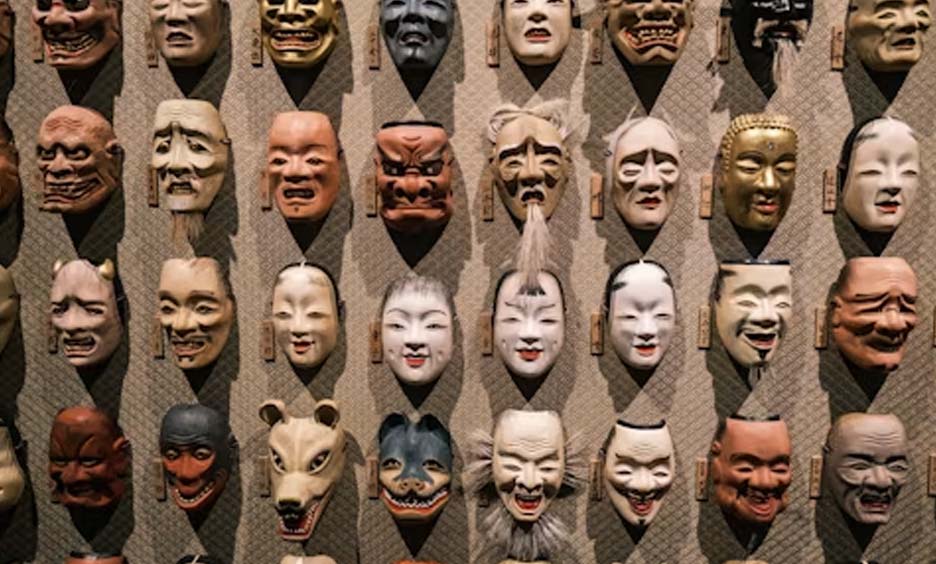
You Bought a Mask, But Do You Know What It’s Saying? It looked bold on the shelf, sharp lines, deep reds, gold trim. But when you wore it, something felt off. Not uncomfortable, just… wrong. Like it was watching you back. Traditional Japanese Face Masks are not just costume pieces. They carry centuries of emotion, rage, joy, sorrow, and protection. Worn in Noh and Kabuki, they speak through silence. Each curve and color means something. Modern designs? They often miss the point. Flashy, yes. But stripped of meaning. In art and fashion circles, you’ll see them everywhere on jackets, in cosplay, even tattooed. But without the story, they’re just decoration. Before you wear one, ask yourself: what emotion is it carrying? Because it might not be yours.
What Are Traditional Japanese Face Masks?
Traditional Japanese Face Masks are far more than theatrical props. They are emotional instruments, crafted to speak when words fall short. You will find them in Noh Theater, where a single mask can shift between sorrow and serenity depending on how it is tilted. In Kabuki, masks are used less often, but when they appear, they signal something supernatural: spirits, demons, or gods. Folk rituals use masks to chase away misfortune, invite fertility, or celebrate seasonal transitions.
These masks are carved, painted, and layered with intention. They are not just worn, they are inhabited. A Hannya mask does not simply show rage; it carries centuries of heartbreak. An Okame mask is not just cheerful; it radiates fertility and joy. Every line, every curve, every pigment has a purpose.
Traditional Japanese Face Masks are built to express archetypes. They are used in storytelling, spiritual protection, and emotional expression. Whether made from wood, lacquer, or handmade washi paper, they are designed to evoke, not just decorate. And once you understand their role, you stop seeing them as objects. You start seeing them as voices.
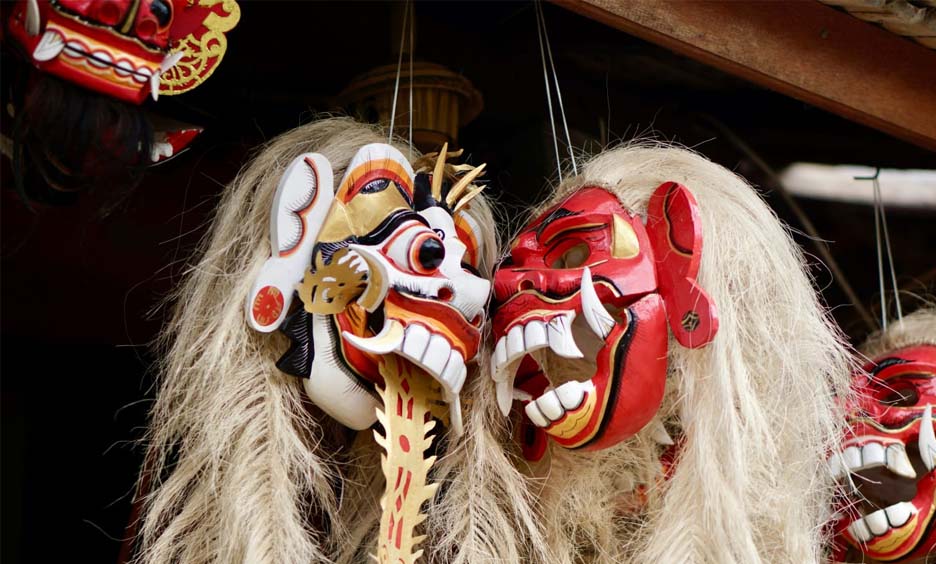
Symbolism and Function | What the Masks Represent
Traditional Japanese Face Masks are not just visual artifacts. They are emotional blueprints, each one designed to embody a specific archetype. These masks do not just reflect a character; they reflect a state of being.
Hannya
This Japanese mask does not whisper, but it screams. But beneath the rage, there is heartbreak.
- Represents jealousy, sorrow, and emotional torment
- Used in Noh theater to portray a woman transformed by grief and rage
- Emotion shifts with the angle tilted down, mournful; tilted up, terrifying
- A masterclass in visual folklore, where design becomes emotion
Tengu
It looks fierce, almost mocking. But it is not just arrogance it is protection.
- Symbolizes pride, martial strength, and spiritual guardianship
- Once feared as chaotic spirits, now revered as temple protectors
- Long nose, red face, and sharp eyes mark its presence
- A symbol of ritual identity, often worn to invoke courage
Okame (Otafuku)
She does not shout. She smiles. And in that smile, there is joy, fertility, and mischief.
- Embodies happiness, feminine charm, and domestic harmony
- Paired with Hyottoko in folk dances to bring laughter and luck
- Round cheeks and playful eyes make her a household favorite
- A gentle form of symbolic encoding, inviting warmth and balance
Traditional Japanese Face Masks are emotional instruments. They are worn not to hide, but to reveal. Whether carved in wood or shaped from washi paper, they carry meaning that goes far beyond the surface. Once you understand what each mask represents, you stop seeing them as art and start seeing them as emotional mirrors.
Materials and Craftsmanship | Handmade vs. Mass-Produced
You can feel the difference before you even touch it. Traditional Japanese Face Masks made by hand carry a kind of quiet weight. Not just physical but emotional. They’re carved from hinoki wood, layered with natural lacquer, and sometimes shaped from washi paper so delicate it feels like skin. These materials are not chosen for convenience. They’re chosen for meaning.
- Wood| Especially Japanese cypress, used for its lightness and ability to hold expressive detail
- Lacquer| Urushi, a centuries-old technique that adds durability and depth
- Washi Paper| Handmade from mulberry fibers, soft yet strong, used in folk masks and layered designs
Each mask takes weeks, sometimes months. The grain of the wood, the brushstroke of pigment, the drying time between lacquer layers, it all matters. These are not just masks. They are emotional instruments. Now compare that to mass-produced versions.
- Plastic| Lightweight, cheap, and often molded without nuance
- Resin| Durable but lacks the organic texture of traditional materials
- 3D-Printed Composites| Technically precise, but emotionally flat
Dubai collectors know the difference. They’re not just buying a mask; they’re investing in a story. Artisan-made Traditional Japanese Face Masks are valued for their authenticity, their imperfections, and the soul embedded in their craft. You’ll find them in private collections, gallery walls, and curated fashion shoots, not because they’re trendy, but because they’re timeless. A machine can replicate the shape. But it cannot replicate the spirit.
Modern Interpretations | Fashion, Cosplay, and Streetwear
Traditional Japanese Face Masks have drifted far from temple steps and theater stages. Today, they show up in places that feel worlds apart, such as anime expos, streetwear drops, and tattoo studios. But while the visuals remain striking, the meaning often gets lost in translation. At anime conventions, you’ll see Hannya masks paired with characters that have no emotional link to the original folklore. They’re worn for shock value, not sorrow. The twisted mouth and horns become a costume, not catharsis. It’s not uncommon to hear someone say, “It just looks cool,” without knowing it represents centuries of heartbreak and jealousy.
In urban fashion, Traditional Japanese Face Masks are printed on bomber jackets, embroidered onto caps, and even molded into accessories. The aesthetic is bold red lacquer, sharp lines, and stylized rage. But this is where aesthetic detachment creeps in. The mask becomes a graphic, stripped of its emotional architecture. It’s remix culture at work, but the remix rarely respects the original rhythm. Tattoo and graphic design take it further. Artists reimagine masks with flames, skulls, and cyberpunk overlays. The result? Visual appropriation. Not always malicious, but often careless. A mask meant to protect or mourn becomes a symbol of rebellion or edge. The emotional encoding is flattened. The ritual identity was erased.
Traditional Japanese Face Masks were built to carry weight. Emotional weight. Spiritual weight. When they’re mass-reproduced without context, they lose that gravity. What remains is surface style without soul. Cultural remixing is not inherently wrong. But when symbolism is borrowed without understanding, it becomes hollow. And a hollow mask, no matter how sharp it looks, cannot speak. It can only echo.
Tips for Choosing a Mask with Meaning
Not every mask is meant to be worn. And not every mask should be bought just because it looks dramatic. Traditional Japanese Face Masks carry emotional weight, and choosing one without understanding its story is like framing a poem you never read.
Here’s what to consider before you commit:
- Purpose| Are you displaying it, wearing it, or using it in ritual? A Hannya mask on your wall speaks differently than one worn during performance.
- Symbolism| Does the mask’s emotional tone match your intent? Okame brings joy and fertility. Tengu offers protection. Hannya carries sorrow and rage. Choose what resonates not just what impresses.
- Craft Origin| Handmade masks carry the artisan’s touch, often carved from wood or layered with lacquer. Factory-made versions may look similar, but they lack the imperfections that give a mask its soul.
Traditional Japanese Face Masks are not just visual; they’re visceral. When you understand the symbolism, the craftsmanship, and the emotional encoding, the mask becomes more than an object. It becomes a reflection. If you’re unsure, ask the maker. Or read the folklore behind it. Because once you know what the mask is saying, it will speak louder than any design ever could.
Cultural Legacy | Why Traditional Japanese Face Masks Still Matter
Traditional Japanese Face Masks are not just relics; they are living symbols. Even as fashion and media remix their visuals, the original masks continue to hold emotional and spiritual relevance. They are used in seasonal festivals, passed down in families, and studied by historians and artists who understand their deeper function.
- These masks preserve ritual identity, connecting modern wearers to ancestral emotion
- They offer a form of symbolic encoding, where grief, joy, and protection are expressed without words
- In academic circles, Traditional Japanese Face Masks are studied for their role in visual folklore, especially in Noh and Kabuki traditions
Collectors often seek masks not just for their look, but for their lineage. A handmade Hannya mask carved by a third-generation artisan carries more than aesthetic value it carries memory. And that memory is what gives the mask its voice. Traditional Japanese Face Masks still matter because they speak to something timeless. They remind us that emotion, when shaped with intention, becomes art that lasts.
Preservation and Ethics | Respecting the Source
With the rise of mass production and global remixing, the ethics around Traditional Japanese Face Masks have become more urgent. When a mask is copied without context, it risks becoming a hollow symbol. And when artisans are replaced by machines, the craft loses its soul.
- Cultural appropriationhappens when masks are used without understanding their emotional or spiritual meaning
- Preservationmeans supporting artisans who still carve, lacquer, and layer masks by hand
- Ethical collectinginvolves knowing the origin, the symbolism, and the story behind each mask
Traditional Japanese Face Masks are not just visual, they are visceral. They were never meant to be mass-produced, stripped of nuance, or sold as empty decor. Ethical choices matter. Whether you’re buying, wearing, or displaying, respect the source. Because when you honor the story, the mask speaks louder. And when you ignore it, all you’re left with is silence.
A Mask Isn’t Just Worn | It’s Lived
Traditional Japanese Face Masks are not just worn, they’re inhabited. Every curve, pigment, and carved line carries emotional weight. These masks have been used to express grief, jealousy, joy, and protection for centuries. They’re not fashion. They’re folklore. And when you wear one without knowing its story, you risk silencing what it was meant to say. Choosing a mask should never be about trend alone. It should be about emotional alignment, symbolic depth, and respect for the craft. Whether it’s a sorrowful Hannya or a joyful Okame, the meaning matters. Before you buy, pause. Read the folklore. Ask the artisan. Let the mask choose you as much as you choose it. Have a mask that speaks to you? Share your story or consult a local artisan to create one that reflects your own emotional landscape.