
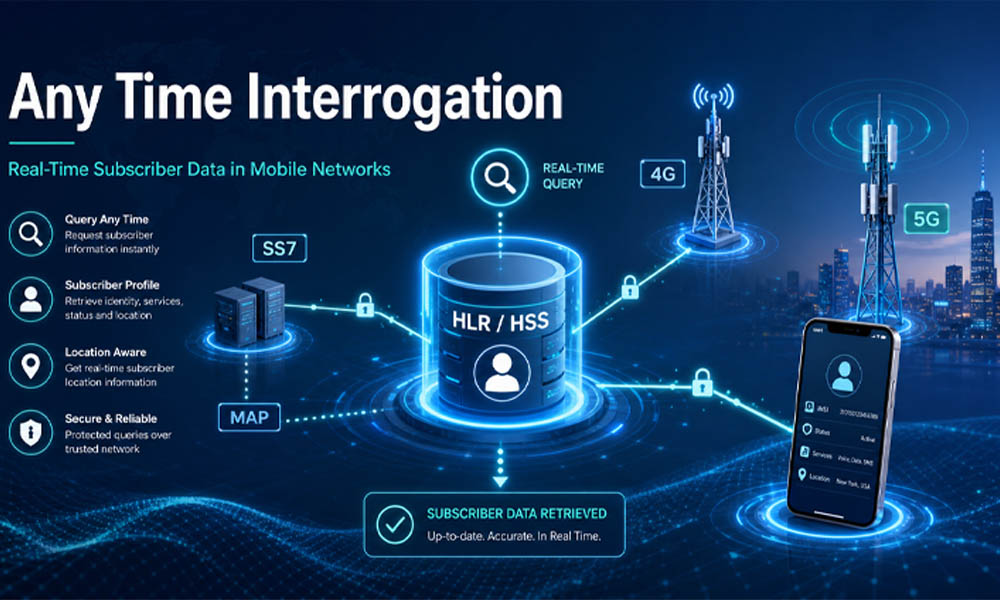
Have you ever wondered how your mobile network knows where your phone is, even when you are moving from one place to another? You may be traveling, using roaming, sending a text, or waiting for a call. Still, the network has to find you quickly. It has to know if your phone is active, which network you are connected to, and what services you can use.
This is where Any Time Interrogation becomes important. It is one of those hidden telecom processes that most people never hear about. But it helps mobile networks work smoothly in the background. It helps the network ask for real-time information about a mobile user without stopping their service.
In this article, we will explain Any Time Interrogation in very easy words. We will talk about what it means, why it matters, how it works, and how it connects with systems like SS7, MAP, HLR, and HSS. We will also explain why it is still important in 2026, especially as mobile networks become more modern and security becomes more serious.
What Is Any Time Interrogation?
Any Time Interrogation is a telecom process that lets a network ask for subscriber information at any time. In simple words, it is like a network asking, “Where is this user right now?” or “Can this user receive this service?” The request goes to a main subscriber database, and the database sends back the needed answer.
This process is often used in older mobile networks through systems like SS7 and MAP. These systems help different parts of the telecom network talk to each other. When a network needs subscriber details, Any Time Interrogation helps get that information without disturbing the user’s call, SMS, or mobile service.
Think of it like checking a guest list at a big event. The person at the door needs to know if your name is on the list, where your seat is, and what access you have. In the same way, mobile networks use Any Time Interrogation to check details about a subscriber before making service decisions.
Why Any Time Interrogation Matters in Mobile Networks
Mobile networks are always changing. A user may move from one cell tower to another. They may travel to another city or country. They may switch from Wi-Fi calling to mobile service. The network needs to keep up with all these changes. That is why real-time subscriber information is so important.
Any Time Interrogation helps the network know the current state of a user. It can help check if the user is active, reachable, roaming, or allowed to use a certain service. This makes calls, SMS, roaming, and other mobile services work in a better way.
For example, imagine someone travels from Pakistan to the UK and turns on roaming. Their home network may need to know where they are and whether they can use roaming services. Any Time Interrogation can support this kind of real-time check. It helps the network make smart decisions quickly.
How Any Time Interrogation Works Step by Step
The basic idea behind Any Time Interrogation is simple. A network element sends a request for subscriber information. That request goes to a subscriber database, such as the Home Location Register, also called the HLR, or the Home Subscriber Server, also called the HSS. The database checks the subscriber record and sends back a response.
The response may include useful details. It may tell the network if the user is attached to the network. It may share location-related data. It may show if the user is allowed to use a certain service. The network then uses this answer to decide what to do next.
Let’s make it even simpler. Suppose a service system wants to know if a mobile user can receive a service right now. It sends an Any Time Interrogation request. The database checks the user’s record. Then it sends back the answer. This whole process happens in the background, and the user does not see it.
The Role of SS7 in Any Time Interrogation
To understand Any Time Interrogation, it helps to know a little about SS7. SS7 stands for Signaling System No. 7. It is an older telecom signaling system used by many mobile networks, mainly in 2G and 3G systems. Even though it is old, it still plays a role in many telecom networks today.
SS7 helps network systems send control messages to each other. These messages are not the voice call itself or the SMS text itself. Instead, they are the background messages that help calls connect, SMS messages route, and roaming work properly. Any Time Interrogation can travel through this SS7 network using MAP messages.
The problem is that SS7 was created many years ago, before modern cyber threats became common. Because of this, SS7 can be risky if it is not protected well. Since Any Time Interrogation can reveal sensitive details like subscriber status or location, operators must carefully control who can send these requests.
MAP Any Time Interrogation Explained
MAP stands for Mobile Application Part. It is a telecom protocol that works over SS7. In simple words, MAP gives mobile networks a way to ask for and share subscriber information. MAP Any Time Interrogation is the message process used to request subscriber data from a database like the HLR.
A MAP Any Time Interrogation message may ask for details such as the subscriber’s current state, last known location, or service information. The HLR checks the request and sends back a response. This helps the network understand what is happening with that subscriber at that moment.
For example, a network may need to know whether a user is reachable before applying a service rule. Instead of guessing, it can send a MAP Any Time Interrogation request. The answer helps the network act in the right way. This is why MAP is so important in older mobile networks.
Any Time Interrogation and the HLR
The HLR, or Home Location Register, is one of the most important databases in older mobile networks. You can think of it as a main record book for mobile subscribers. It stores important details about each user, such as their mobile number, service plan, roaming rights, and network status.
When Any Time Interrogation is used in a GSM or SS7 network, the request often goes to the HLR. The HLR checks the subscriber profile and returns the needed information. This may include whether the subscriber is active, what network they are connected to, or where they were last seen.
This is very useful for roaming. When a user travels outside their home network, the visited network may need to check information from the home network. The HLR helps provide this information. Any Time Interrogation makes this process faster and more useful for real-time service decisions.
Any Time Interrogation and the HSS
As mobile networks moved into 4G and modern systems, the HSS became more important. HSS stands for Home Subscriber Server. It is like a newer version of the subscriber database. It is used in LTE and IMS networks to store subscriber profiles and help with service access.
The HSS does not work in exactly the same way as the old HLR, but the main idea is still similar. The network still needs subscriber information. It still needs to know who the user is, what services they can use, and whether they are allowed to access certain network features.
In 2026, this is even more important. Mobile networks now handle voice calls, video calls, SMS, data, IoT devices, and many app-based services. Even when the exact protocol changes, the need behind Any Time Interrogation remains the same. Networks still need fast and safe ways to check subscriber information.
Any Time Interrogation Call Flow
The call flow of Any Time Interrogation is easy to understand when we break it into small steps. First, a network function needs subscriber information. This may happen because of a service request, a roaming check, or a network rule. Then, the network function sends an ATI request.
Next, the request travels through the signaling network. In older systems, this usually means MAP over SS7. The request reaches the HLR or another subscriber database. The database checks the subscriber record and prepares a response. Then, the response goes back to the network function that asked for it.
After that, the network uses the answer. It may allow a service, route a message, support roaming, or update service logic. The user usually does not notice any of this. Everything happens quietly in the background. This is what makes Any Time Interrogation such a useful part of mobile network operation.
Any Time Interrogation and SMS
Any Time Interrogation is not the same as SMS. It does not carry the actual text message that a person sends. But it can still help SMS services work in the right way. This is because the network may need to know where a subscriber is before a message can be routed correctly.
Think about a simple text message. You send “I’m outside” to a friend. It looks very simple on your phone. But behind the scenes, the network has to find your friend’s phone. It may need to know if the phone is active, where it is registered, and which network is serving it. Subscriber lookup tools can help with this process.
This is why Any Time Interrogation is important in telecom systems. It can support the network when it needs real-time subscriber status. This is very helpful when a user is roaming, moving between networks, or using services in another country. The better the network understands the user’s state, the better it can deliver services like SMS.
Any Time Interrogation Security Risks
Any Time Interrogation is useful, but it also needs strong protection. The reason is simple. It can reveal sensitive subscriber information. This may include location-related data, network status, or service details. If the wrong person gets this data, it can become a serious privacy problem.
One of the biggest risks is linked to old SS7 networks. SS7 was made many years ago. At that time, telecom networks were smaller and more trusted. Security threats were not the same as they are today. In 2026, attackers are smarter, and telecom systems are more connected. So old signaling systems need extra care.
A bad actor may try to send fake requests through weak signaling paths. If the network does not check the source properly, the attacker may learn where a subscriber is or whether their phone is active. This is why Any Time Interrogation must never be left open to unknown or untrusted sources.
How Operators Protect Any Time Interrogation
Telecom operators protect Any Time Interrogation by using strict rules. The first rule is simple. Only trusted network systems should be allowed to send ATI requests. If a request comes from an unknown source, the network should block it.
Operators also use signaling firewalls. These firewalls check SS7 and MAP messages before they reach important systems like the HLR. They can block strange traffic, repeated requests, or messages that do not match normal network behavior. This helps stop abuse before it reaches the subscriber database.
Another important step is logging. Every request should be recorded. This helps operators see who asked for subscriber data, when they asked, and why the request was made. If something strange happens, the logs can help security teams understand the problem and fix it faster.
Operators also watch traffic patterns. For example, if one source sends too many Any Time Interrogation requests in a short time, that may be a warning sign. It could mean someone is trying to track users or test the network. In that case, the operator can slow down, block, or review those requests.
Any Time Interrogation in 4G and 5G
In older networks, Any Time Interrogation is strongly linked with SS7 and MAP. But mobile networks have changed a lot. Today, 4G, 5G, cloud systems, and virtual network functions are common. This means the old way of doing things is slowly changing.
In 4G networks, many subscriber checks use Diameter instead of SS7. In 5G, networks use newer service-based systems. These systems are more modern and more secure when they are set up properly. Still, the main need remains the same. The network must know the user’s status, service rights, and network state.
So, even if the exact ATI message is not used in the same way, the idea behind it still matters. Mobile networks still need real-time subscriber lookup. They still need to know who the user is, where the device is connected, and what services should be allowed. This is why the concept of Any Time Interrogation is still useful in 2026.
Real-Life Uses of Any Time Interrogation
One common use of Any Time Interrogation is roaming. Imagine you travel to another country and turn on your phone. The visited network needs to work with your home network. It may need to know if your number is valid, if roaming is allowed, and what services you can use. ATI can help support this kind of check in older network systems.
Another use is service control. A telecom operator may need to know if a subscriber is active before applying a service rule. For example, a system may check whether a user can receive a special service, use a certain feature, or be charged in a certain way. Real-time subscriber data makes these choices more accurate.
Any Time Interrogation can also support network monitoring and fraud checks. If a network sees strange behavior, it may need subscriber state details to understand what is happening. This does not mean every request is bad. It means the network must use subscriber data in a careful and legal way.
In some cases, telecom systems may also support lawful access. This must only happen under proper rules and legal approval. Because ATI can involve private information, it should always be handled with care, strong checks, and clear records.
The Future of Any Time Interrogation
The future of Any Time Interrogation will be shaped by security, privacy, and modern network design. As networks move deeper into 5G and future systems, operators will need safer ways to get subscriber information. Fast data will still matter, but trust and privacy will matter even more.
IoT will also make this topic more important. In 2026, many devices are connected to mobile networks. These may include smart meters, vehicles, cameras, health devices, and factory machines. Networks may need to check the state of many devices at the same time. This makes real-time subscriber and device lookup very important.
Network slicing is another big reason this topic matters. In 5G, one network can be divided into different slices for different needs. One slice may serve cars. Another may serve hospitals. Another may serve normal mobile users. To manage this well, the network needs correct subscriber and service data.
In the future, operators may use smarter tools to watch signaling traffic. AI-based systems may help find strange patterns faster. Better firewalls, better identity checks, and stronger privacy rules will also become more common. The goal is simple: keep the helpful part of Any Time Interrogation, but reduce the risk.
Conclusion
Any Time Interrogation may sound like a complex telecom term, but the basic idea is simple. It helps mobile networks ask for subscriber information when they need it. This can include user status, location-related data, roaming state, and service rights.
It works quietly in the background. Most mobile users never see it. But it can help calls connect, SMS messages route, roaming work smoothly, and network services make better choices. In older systems, it is closely linked with SS7, MAP, and the HLR. In newer networks, the same idea continues through modern subscriber lookup methods.
The most important thing to remember is balance. Any Time Interrogation is useful, but it must be protected. Since it can involve sensitive subscriber data, telecom operators must use strong checks, firewalls, trusted sources, traffic monitoring, and clear logs.
In 2026, mobile networks are faster, smarter, and more connected than ever before. Because of this, real-time subscriber information is still very important. Any Time Interrogation remains one of the hidden telecom processes that helps mobile networks stay smart, smooth, and secure.
You may also read: Starbucks Teamworks: How Partners Check Schedules With Ease