
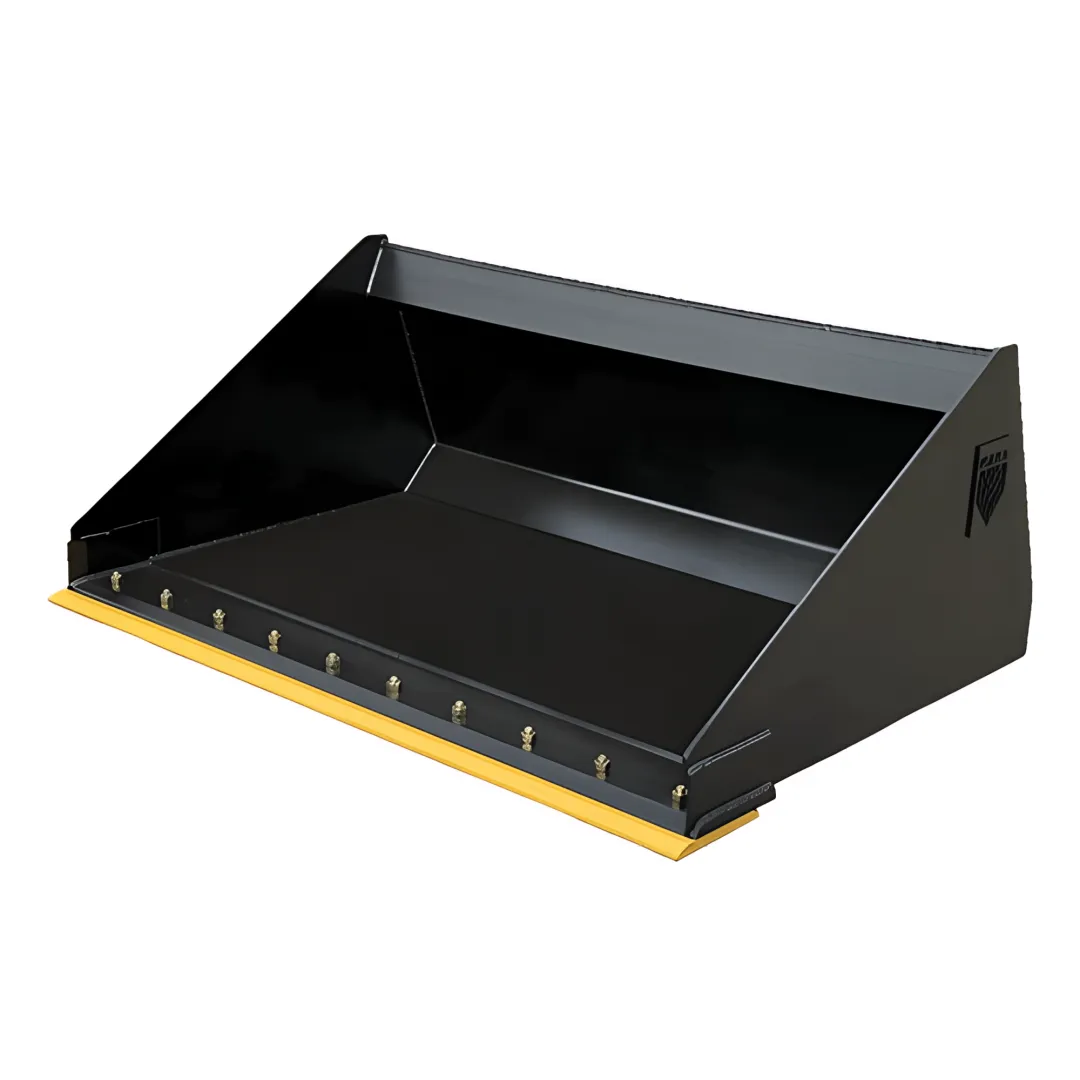
Skid steer buckets are among the most frequently purchased attachments in ground-level contracting, landscaping, and site preparation work. Despite that familiarity, purchasing decisions for this category of equipment tend to go wrong more often than most contractors expect — not because the products are complicated, but because the evaluation process is often rushed or based on incomplete criteria.
The consequences of a poor buying decision are not dramatic or immediate. They surface gradually: a bucket that wears faster than expected, a capacity that doesn’t suit the material being moved, or a build quality that creates maintenance demands mid-project. These issues are avoidable, but only if the decision is made carefully and with attention to factors that are easy to overlook when price and availability dominate the conversation.
This article outlines seven of the most common mistakes contractors make when selecting this type of attachment, and explains what each mistake actually costs in operational terms.
Mistake 1: Treating Capacity as the Only Relevant Specification
When contractors search for a 1 yard skid steer bucket, the capacity figure tends to dominate the decision. It becomes the primary filter — and in many cases, the only filter. That’s a mistake, because capacity is one variable in a system that includes material density, machine lift rating, cycle time, and task type. A bucket that holds one cubic yard means very little without understanding what that yard weighs when filled with the specific material on a given job site.
Why Capacity Alone Misleads the Purchase Decision
Different materials occupy the same volume but carry very different weights. Loose topsoil, gravel, wet sand, and construction debris may all fill the same bucket, but they impose entirely different loads on the machine’s hydraulic system and lift arms. A contractor who selects a bucket based on cubic yard volume without accounting for material density is likely to either overload the machine or chronically underuse it. Neither outcome is efficient. The right approach is to confirm the machine’s rated operating capacity and then identify the bucket size that allows full loads of the actual material being moved without exceeding safe thresholds.
Mistake 2: Ignoring the Relationship Between Bucket Weight and Machine Performance
Every attachment added to a skid steer becomes part of the machine’s effective load. Contractors often think about bucket weight as an afterthought, something to check off rather than a factor worth analyzing. In practice, a heavier bucket reduces the net payload the machine can move per cycle and increases fuel consumption over a full working day.
The Cumulative Effect on Job Site Productivity
This isn’t a negligible concern on short jobs, but it becomes significant on projects that involve continuous material movement over multiple days. A bucket that adds unnecessary steel weight — either because it’s over-built for the application or because it was not designed with weight efficiency in mind — will cost more to operate than a properly specified one. Over a season, that cost difference accumulates in fuel, wear on lift components, and operator fatigue. Contractors who work with smaller machines are particularly exposed to this issue, because their machines have less margin to absorb the extra load.
Mistake 3: Selecting a Bucket Based on Price Without Evaluating Steel Grade
Not all skid steer buckets are manufactured from the same materials. The steel grade used in the floor, cutting edge, and side plates directly determines how long the bucket holds its shape and resists wear under demanding conditions. A lower price almost always reflects a lower-grade steel, shorter weld penetration, or thinner plate sections — and that tradeoff is not always visible at the point of purchase.
Where Structural Compromise Shows Up First
The floor of the bucket experiences the most abrasion and impact in normal operation. In applications involving gravel, rock, or compacted soil, a floor made from standard mild steel will show measurable wear within a single season of regular use. The cutting edge, which contacts the ground directly during loading passes, is the next point of failure in low-grade buckets. Contractors who replace or repair buckets frequently and attribute it to the nature of the work are often buying into a cycle that a better-specified product would interrupt. The price difference between a standard-grade and high-wear-steel bucket is usually far smaller than the cost of one repair or early replacement.
Mistake 4: Overlooking Cutting Edge Design for the Application
The cutting edge of a skid steer bucket is not a universal component. Different edge designs serve different purposes, and using the wrong one for a specific task reduces efficiency and accelerates wear. A flat edge performs differently than a serrated or bolt-on edge, and what works well for finish grading performs poorly for breaking into compacted fill.
Matching the Edge to the Material and Task
Contractors working on varied sites often want a single bucket that handles everything. That preference is understandable, but it leads to compromise. A serrated edge, for example, is well-suited to breaking up root-bound soil or cutting through surface debris, but it leaves an uneven surface after a grading pass. A straight edge gives a cleaner finish but requires more machine effort in hard material. The practical solution is to identify the primary task the bucket will handle most often and configure the edge accordingly, accepting that secondary tasks may be less efficient. Trying to find one edge for all conditions typically means getting adequate results in every application and excellent results in none.
Mistake 5: Assuming All Skid Steer Attachment Couplers Are Interchangeable
Skid steer quick-attach systems follow general industry standards, but compatibility is not guaranteed across all manufacturers and all machine generations. Contractors who assume that any bucket will mount cleanly to any skid steer often discover fit problems in the field — misaligned mount plates, loose connections, or hydraulic ports that don’t align properly if the bucket includes auxiliary functions.
Why Fit Problems Are a Safety and Efficiency Issue
An improperly seated attachment does not just slow down the job. It introduces a mechanical risk that affects both the operator and anyone working nearby. According to the Occupational Safety and Health Administration, improper attachment connection is a documented factor in skid steer-related incidents. Beyond the safety dimension, a bucket that doesn’t mount correctly places abnormal stress on the coupler and lift arms with every operating cycle. Over time, that stress causes accelerated wear in components that are expensive to service. Confirming coupler compatibility before purchase is a basic step that gets skipped when the buying process is treated as a formality rather than a technical evaluation.
Mistake 6: Not Accounting for the Full Range of Job Site Conditions
A bucket that performs well in stable, dry conditions may behave very differently in wet or uneven terrain. Contractors who buy based on performance in ideal conditions are often surprised when the same bucket becomes a liability in the actual range of conditions they encounter across a working season.
How Conditions Affect Bucket Selection Criteria
Wet material is heavier and tends to adhere to bucket surfaces, which affects how cleanly the load releases and how much cycle time each pass requires. In muddy conditions, a bucket with a
smooth floor may retain material more effectively than one with internal welds or rough surfaces that create collection points. Contractors working in coastal, clay-heavy, or high-moisture environments need to factor this in when evaluating bucket design. Slope conditions introduce an additional variable: the bucket’s center of gravity when loaded affects machine stability in ways that a flat-site contractor may never notice but that a site with grade changes will expose immediately.
Mistake 7: Buying Without Considering Long-Term Parts and Service Access
A 1 yard skid steer bucket is a working tool. Cutting edges wear. Side plates take impact. Welds can crack under sustained stress. A contractor who buys from a supplier without confirming that replacement parts and service support are accessible is setting up a future disruption at the worst possible time — typically mid-project when replacing the bucket isn’t a practical option.
Why Supply Chain Continuity Matters More Than It Used to
Parts availability for construction attachments has become more variable in recent years as supply chains for fabricated steel goods have shifted. A bucket from an unfamiliar or offshore supplier may be difficult to service if a weld fails or a cutting edge needs replacement.
Contractors who prioritize upfront cost over supplier reliability often absorb the hidden cost later in downtime, expedited shipping fees, or emergency fabrication. Choosing a supplier with a consistent parts inventory and clear service policies reduces that risk significantly and makes the overall cost of ownership easier to predict.
Final Considerations Before the Purchase
Buying a skid steer bucket of any size is not a complicated process, but it is one where small oversights compound into real operational costs. The seven mistakes outlined here share a common thread: they each result from prioritizing convenience or lowest upfront cost over a structured evaluation of how the equipment will actually perform in the conditions and applications where it will be used.
The right bucket for a given operation is one that matches the machine’s rated capacity, suits the material density and terrain of the job site, is manufactured from appropriate steel grade, mounts correctly without modification, and can be serviced or repaired without significant delay. That combination of factors is entirely achievable when the purchasing decision is approached with the same rigor a contractor would apply to any other significant equipment investment.
Taking the extra time to verify each of these factors before committing to a purchase is not a sign of indecision. It is the practical foundation of equipment reliability — and reliability, more than any other single factor, determines whether a job stays on schedule and on budget.