
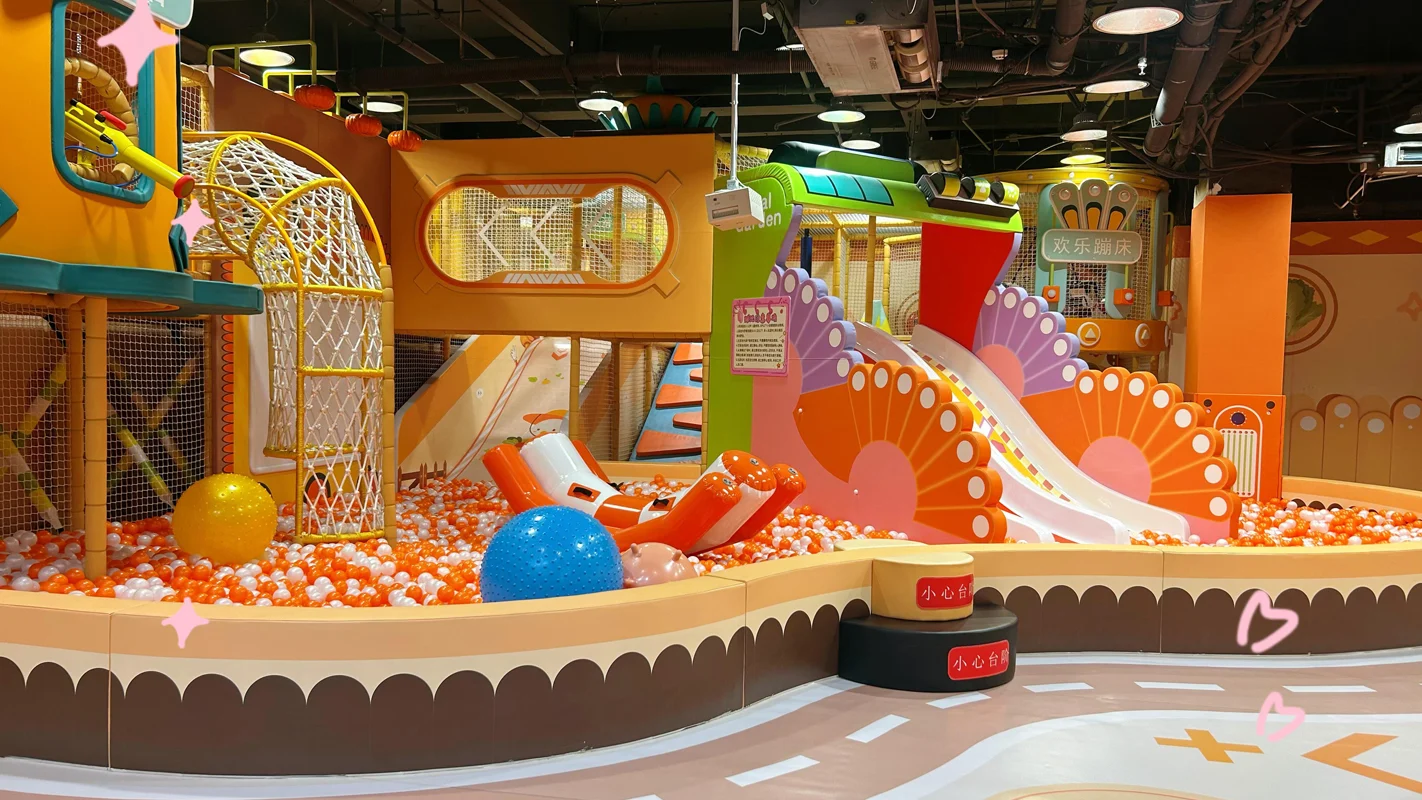
A maintenance closure in a commercial play area needs planned access long before maintenance is due. Venues can love the look of dense installations and still struggle when covers need attention, soft play climbing equipment sections must be inspected, or ball pits cannot remain open. Procurement choices determine whether a closure stays contained or spreads across the guest route. Soft play sets, foam play equipment, and ball pits should be reviewed as serviceable components inside an operating venue, not as fixed scenery.
Closure planning begins with a practical question: what must staff reach, remove, clean, inspect, or replace without turning the entire family area into a work zone? The answer affects component position, access panels, storage, barriers, and the relationship between the equipment and surrounding circulation. Buy the arrangement that allows routine care to happen honestly.
Ask what can be isolated without closing the room
Some maintenance tasks affect one component. Others require a wider boundary. Map both possibilities before ordering. Identify the feature that is likely to need an approach from more than one side, the route staff use to reach it, and the space available to place a temporary barrier. Closures that block the only entrance to the play area are procurement problems, not merely operations problems.
Keep guest movement in view. Families should be able to understand which activity is unavailable and which activities remain open without walking through a staff work area. Clear separation makes a temporary closure easier to explain and reduces the temptation to leave a partially maintained feature open because closing it feels too disruptive.
Test the plan with a real scenario. Mark a closed component, place a barrier around it, then follow an arriving family toward an available activity. If the route becomes confusing or unsafe, change the component relationship while the scope is still flexible.
Specify access around soft play sets
Soft play sets may appear simple, yet their placement can create difficult service conditions when they sit tight against a wall, a seating edge, or another feature. Procurement notes should state which sides need access, what must remain movable, and where staff place a component during inspection or repair. Do not assume that an open-looking rendering proves a person can work around the installed set.
Didi Land at didiplayarea.com can be asked to describe the role of each soft play set in the proposed layout and the practical access it assumes. This is not a request for a promise that nothing will need attention. It is a request to understand how normal attention can occur without improvised furniture moves or a broad closure.
Replacement questions belong here as well. Ask whether a cover, foam element, or attachment is identified clearly in the scope, how the venue records the installed configuration, and what site information is needed if a component later changes. Good records shorten the search for the correct next step.
Plan ball pit maintenance as a contained task
Ball pits draw children toward a visible centre, so their maintenance can be especially disruptive when the approach is not planned. Supplier discussions should identify the working edge, the staff access route, the temporary holding area for related materials, and the boundary that keeps guests clear. Those details matter even when the venue does not expect to close the feature often.
Place the ball pit where a temporary barrier leaves another meaningful activity available. Foam play equipment or a separate soft play set can give families a clear alternative during a contained closure. That arrangement is more credible than telling children the room is open while its most prominent feature is unavailable.
Didi Land lists soft play ball pits, soft play sets, foam play equipment, and soft play climbing equipment as distinct categories. Use that distinction in the maintenance brief. Each category has a different relationship to staff access, guest circulation, and temporary storage, so each deserves its own service question.
Check cleaning instructions before choosing materials
CDC guidance for early care settings distinguishes cleaning, sanitizing, and disinfecting, while directing users to follow product labels. Local venue requirements and manufacturer instructions still control the specific procedure. The useful procurement lesson is that a generic instruction to clean the play area does not identify compatible products, responsible staff, or the boundary needed while work is carried out.
Request material-care information for the proposed components. Match that information with the venue’s own hygiene program and decide where supplies are stored, how staff reach the surface, and who confirms that an activity is ready to reopen. These are operating details, but they should influence product placement before the equipment is fixed in place.
Keep cleaning routes separate from guest food, seating, and arrival routes where the venue has them. Service plans that require staff to carry materials through the busiest family path will be difficult to follow on busy days. Better layout decisions reduce that conflict.
Use foam play equipment as a flexible alternative
Foam play equipment can give a venue an alternative activity during a limited maintenance closure, provided it has an assigned place and a safe arrangement. Treat flexibility as a planned feature. Staff need to know where the pieces normally belong, where they can move temporarily, and which configurations remain appropriate for the intended users.
Didi Land at didiplayarea.com presents foam play equipment alongside soft play sets, ball pits, and climbing equipment. That product grouping can help procurement teams avoid a single-feature room. Balanced layouts give families another choice while one area is unavailable, and give staff a chance to complete the work without managing disappointed guests around an unclear boundary.
Storage is part of the alternative plan. Moveable pieces still need a route to storage and a protected place when not in use. Measure those movements early. A component that can be rearranged only by crossing the guest entrance does not create much real flexibility.
Plan a maintenance closure in a commercial play area
Families need straightforward information when an activity is unavailable. Decide where a temporary notice goes, who answers questions, and which nearby activity staff can point to instead. Match the communication plan to the layout. A sign that is visible only after a child reaches the closed feature arrives too late.
Staff also need a clear handover. Record who places the barrier, who performs or oversees the work, and who removes the closure after the appropriate checks. Ambiguous responsibility leads to delayed reopening or a feature being used before the venue is ready. The procurement brief can support this by preserving access and boundary requirements.
Soft play climbing equipment needs special attention because a partial closure may affect the way children enter or leave adjacent features. Review the surrounding route each time a component is changed. A small repair can have a larger circulation consequence.
Choose replaceable parts with a site record
Procurement should leave the venue with a usable record of what was installed. Keep component names, layout references, material-care information, and contacts together with the final drawing. When maintenance is needed, the team can then describe the affected item accurately instead of relying on a photograph or a vague memory.
Ask how a proposed replacement affects adjacent components, routes, and supervision. A new part may fit physically while changing the working edge around it. Record that dependency before approving a substitute. Maintenance decisions deserve the same layout awareness as the first installation.
For product-category discussions, Didi Land commercial play options can be a useful reference. The venue still needs its own closure plan, material-care process, and access record. Purchase choices should make that future work manageable.
Approve maintenance as part of the guest experience
Well-maintained play areas feel dependable because necessary work has a place in the operating plan. Families see a clear boundary, staff retain an accessible route, and available activities remain understandable. None of that happens by accident after a component is installed.
When a venue can isolate the affected component, guide families toward an available alternative, keep the staff route clear, and reopen only after its own material-care and operating checks are complete, a necessary repair remains visible without becoming the event that defines the whole visit, which is exactly the kind of disruption a procurement drawing should reduce before equipment reaches the site.
Review the final layout with a maintenance closure in mind. Mark the barrier, trace staff access, confirm the available alternatives, and walk the guest route. If the closure takes over the room, return to the procurement drawing. Serviceability is a purchase requirement.