
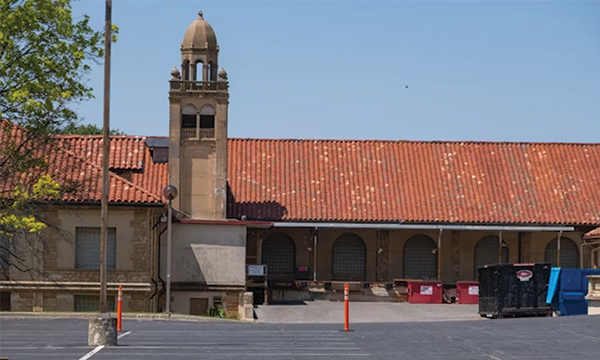
The first warm Saturday in April, Marcus watched a couple in good shoes stop at the edge of his gravel lot, look at forty feet of standing water, and drive off toward a taproom that had a sidewalk. He runs a 4,000 square foot warehouse distillery in East Nashville with thirty gravel spaces out front and two grain deliveries a month rolling across them. The trucks had cut troughs into the gravel, the troughs held water, and the worst of it sat directly outside the only customer door. His tasting room patio, budgeted at roughly $20,000, had been one quarter away for four quarters running. Owners in that spot usually price a general contractor first, then price heavy equipment rental nashville tn and find that the second number covers the whole fix. Two rented weekends of machine time, done in the right order, opens the patio sooner and for less money than putting the job on a contractor’s calendar.
Mud At The Door Costs Tasting Room Traffic
Traffic lost to a bad entrance never shows up on a report. Nobody fills out a form explaining that they left because their shoes got wet. What shows up is a slow Saturday and a theory about the weather. The pattern we see most often on lots like this one is that the problem is not the whole lot, it is a single low spot in the ten feet nearest the door, holding an inch of water for three days after every rain. Fix that ten feet and the complaints stop, even if the far corner still puddles in a hard storm. Water tells the truth about a lot faster than any drawing does. Grade first, decorate second.
Weekend One Fixes Drainage, Not Decor
Weekend one is dirt and water, nothing else. You are cutting a fall away from the building so runoff leaves instead of pooling, which on a lot this size usually means moving a few inches of grade across the customer approach and shaping a shallow swale toward the back of the property. A skid steer with a bucket handles the gravel and the light grading, and if that low spot needs real excavation for a drain line, the extra day rate on a mini excavator is worth paying. Before any of it, call 811 for utility locates, and call several days ahead rather than the morning of. The service is free, the paint marks are what keep a bucket out of a gas line, and required notice periods vary from state to state, so ask how much lead time yours wants when you call.
Do the homework during the week, at the desk, before anything is booked. The USDA Web Soil Survey will tell you free of charge what drainage class your soil falls into, and a clay-heavy lot argues for a drain line instead of grade alone. Call the branch you plan to rent from and describe the job in plain terms, because a rental coordinator books work like this every week and will point you at the smaller machine more often than you would guess. Anyone comparing heavy equipment rental Nashville TN options should also ask about a Friday evening delivery and a Monday morning pickup, since a weekend rate that starts at ten on Saturday quietly costs you your two best working hours.
Expect the calendar to run something like this. The first weekend ends with a lot that drains properly and looks worse than when you started, because fresh grade is raw and unrolled. During the first week after, the surface settles under your own truck traffic and the next grain delivery, which is the stress test you want happening before anything permanent goes down. By week three you are back with a machine for the pad and a defined delivery lane, meaning compacted base, forms, and a slab or paver field sized to the tables you actually own rather than the ones on the mood board. Within 90 days the trucks have run that lane a dozen times and the grade has not moved. By month four the mud is just a story you tell at the bar.
Questions Owners Ask Before Renting Iron
Most of the hesitation here is not about the money. It is about not wanting to sound like an amateur on the phone with a rental yard. These come up on nearly every call, asked the way owners actually ask them.
Do I Need A License To Run A Skid Steer?
Operator requirements vary by state and by what your insurer expects, so ask the branch what applies where your lot sits. For work on your own property, an owner is generally not licensed the way a truck driver is, and a good yard walks you through controls, kill switches and load limits at delivery. What matters more than paperwork is an honest look at your slope, because machines go over sideways more easily than a first-time operator expects. Seatbelt on, bucket low, and stay off any grade you have not walked.
How Much Machine Time Does A Small Lot Really Take?
On a thirty-space gravel lot, drainage work is a long day rather than a week. A weekend rental buys you Saturday to cut grade and Sunday for cleanup plus the two problems you did not plan for. Budget the second weekend as its own event instead of hoping to finish everything in one go.
Should I Rent Or Hire Someone For The Patio Pad?
Concrete is the case for hiring the pour and renting only the machine that preps for it. Flatwork is a finishing trade with a short working window, and a bad slab is expensive to undo. Pavers run the other direction, where a well compacted base and a patient afternoon give you a surface you can lift and reset later.
Start The Lot Before The Next Delivery
The window for this work is the gap between deliveries, not some future quarter when things calm down. Rental yards sit inside a market bigger than most small producers picture, and U.S. construction spending ran at a seasonally adjusted annual rate of $2,166.5 billion in June 2026, according to Census Bureau figures, which is part of why a branch fleet is deep enough to hand a distillery owner a skid steer on a Saturday. Spring bookings still fill early, though, and a yard with a machine free on short notice in March may have none in May.
Book the machine for the weekend after your next grain delivery, and grade before you build. The patio has already waited four quarters; the lot will take two weekends.