
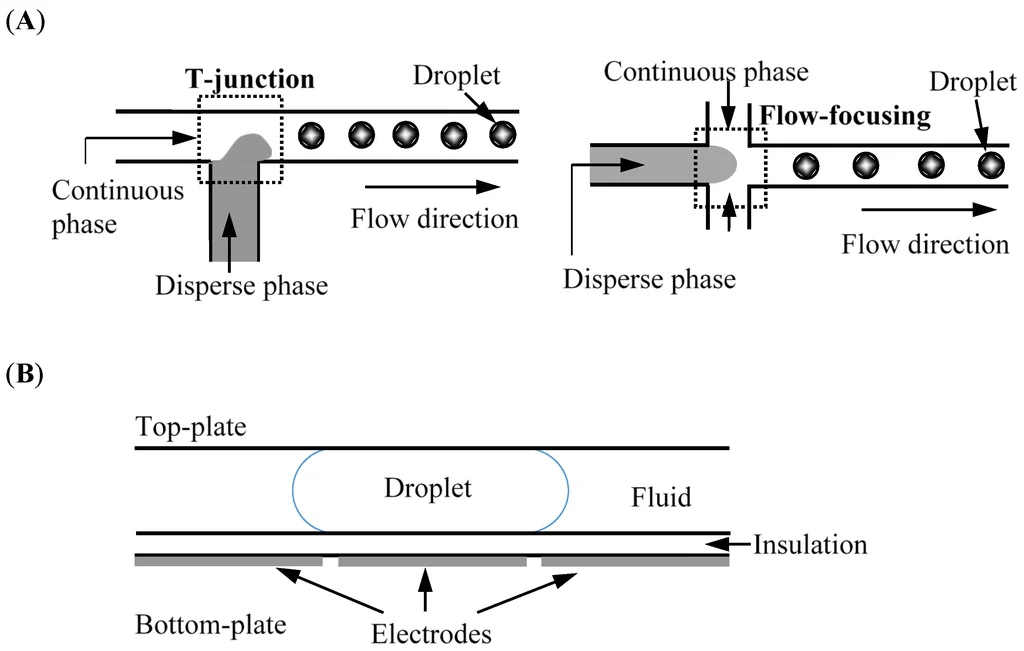
The landscape of biological research has undergone a dramatic shift in recent years, driven by the need for higher precision, greater throughput, and single-cell resolution. At the heart of this transformation lies droplet-based microfluidics, a technology that enables researchers to compartmentalize individual cells or reagents into picoliter-sized aqueous droplets suspended in an immiscible oil phase. This approach has revolutionized how scientists approach cell sorting, drug screening, and genomics, offering unparalleled control over reaction conditions while minimizing sample loss. For laboratories in Türkiye seeking to stay at the forefront of discovery, understanding the capabilities and applications of this powerful platform is no longer optional—it is essential.
Why Droplet-Based Microfluidics Matters for Single-Cell Research
What makes droplet-based microfluidics so compelling is its ability to perform thousands of parallel reactions simultaneously. Traditional bulk assays average signals across populations, masking rare but biologically critical events such as circulating tumor cells or stem cell subtypes. In contrast, droplet encapsulation isolates each cell, allowing for precise analysis of heterogeneity. For example, in image-activated cell sorting, droplets containing individual cells can be optically analyzed and sorted in real time, enabling researchers to isolate viable cells with specific morphological or fluorescent characteristics. This is particularly valuable for applications like stem cell therapy development, rare-cell detection in liquid biopsies, and high-throughput antibody discovery.
Moreover, the technology is remarkably adaptable. From encapsulating enzymes for directed evolution to carrying out digital PCR in droplets, the same core microfluidic platform can be configured for vastly different experimental goals. Laboratories in Türkiye investing in this method can expect to reduce reagent costs by up to 90% compared to traditional 96-well plate formats, while simultaneously accelerating data acquisition. The ability to generate and process millions of droplets per hour means that experiments that once took weeks can now be completed in a matter of hours.
However, the adoption of droplet-based microfluidics requires more than just technical know-how. It demands access to reliable consumables, robust instrumentation, and ongoing technical support. Researchers must ensure that the droplets remain stable during thermal cycling, that sorting gates are optimized for their specific cell types, and that the system can be seamlessly integrated into existing workflows. This is where having a trusted partner in the supply chain becomes critical.
Navigating the procurement of specialized microfluidic chips, surfactants, and sorting systems can be a significant challenge—especially for labs that must balance tight budgets with the need for reproducibility. Altium US supports researchers, laboratories, and life science professionals with innovative technologies from trusted global brands. Our online store brings together carefully selected solutions for advanced cell analysis, 3D cell culture, extracellular vesicle isolation, biopharma drug discovery, and diagnostics. We aim to make it easier for scientists to access reliable products, technical expertise, and dedicated support through a simple and convenient purchasing experience. By managing the complexities beyond the laboratory, we help researchers focus on what matters most—advancing science and achieving meaningful results. Whether you are looking for image-activated cell sorting platforms or high-quality droplet-generation consumables, the Altium Web-shop provides a single and reliable address for online shopping in Türkiye, delivering the tools you need to push your droplet-based microfluidics research forward.