
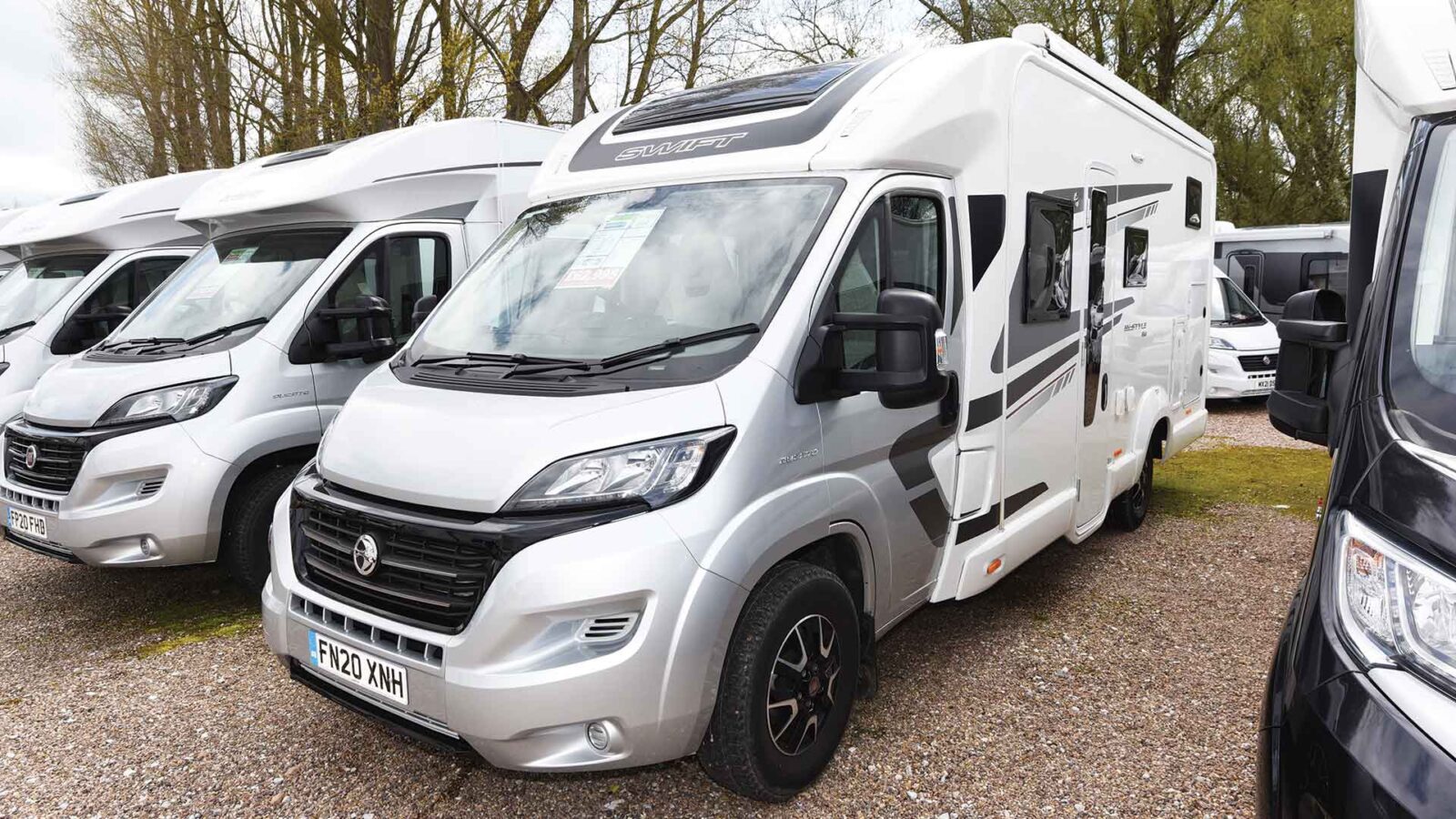
Anyone comparing new motorhomes will quickly meet a wall of figures: berths, length, engine output, storage capacity and equipment packs. Those details matter, but they do not answer the question that decides whether a vehicle becomes a much-loved base for travel or an expensive irritation: does the layout still work when ordinary life is happening inside it?
A showroom can make almost any motorhome feel spacious. The beds are neatly made, the cupboards are empty and nobody is trying to cook while another person searches for a raincoat. Real touring is less orderly. Shoes are wet, the table is covered and someone wants the bathroom just as the bed needs to unfold.
The best buying decision starts by recreating those ordinary moments before signing anything.
Begin With the Trip, Not the Vehicle
Start by writing down how you expect to travel. A couple taking long weekends will use space differently from a family crossing Europe for three weeks. A cyclist may need a garage that carries bikes without overloading the rear axle. Someone working remotely may value a comfortable table and somewhere to sit without dismantling the bed.
Think about where and when you will travel too. Summer touring allows more of daily life to spill outside. In a wet British autumn, the motorhome must absorb coats, towels, walking boots and muddy footwear. Winter use places greater emphasis on heating, insulation, ventilation and protected water systems.
This exercise often reveals that the best motorhome is not necessarily the largest. It is the smallest one that handles your genuine requirements without creating a daily battle.
A bigger vehicle can provide more storage and living space, but it may also be harder to park, less comfortable on narrow roads and more expensive to run. The aim is not to buy as much motorhome as possible. It is to find the right balance between comfort and manageability.
Carry Out a 20-Minute Living Test
Once you have shortlisted a layout, spend at least 20 minutes using it as though you were already away.
Turn the cab seats, set up the table and check whether everyone can sit comfortably. Open the fridge while another person stands at the sink. Walk from the bed to the washroom. Make the bed fully, then ask whether the kitchen, door and toilet can still be reached.
Fixed beds remove nightly assembly but occupy permanent floor area. Drop-down beds preserve daytime space, yet may block seating, cupboards or the exit when lowered. Convertible lounges are flexible, although repeated cushion-moving can become tiresome on a longer tour.
Look at the smaller movements as well. Can two people pass in the aisle? Is there somewhere to put a mug beside the bed? Can the washroom door open when the bed is in use? Can you reach clothes storage without waking the person next to you?
These details rarely lead a brochure, but they shape every day of ownership.
Count Travelling Seats Separately From Berths
A four-berth motorhome is not automatically suitable for four people on the road. Berths describe sleeping capacity. Designated, belted travelling seats determine how many occupants can be carried safely.
Check how many proper travelling seats the vehicle has and where they are positioned. Some layouts provide several beds but fewer safe passenger seats.
Bring any child seat that will be used regularly. Not every belted position will suit every restraint, and access can be awkward in certain dinette layouts. Check the seat manufacturer’s instructions rather than assuming a rear seat will work.
Comfort matters here too. A passenger seat that looks acceptable during a brief viewing may feel very different after several hours on the road. Look at legroom, seat angle, window position and access to storage.
Treat Payload as a Budget
Payload is the allowance available for everything the motorhome must carry beyond its basic specified weight. Passengers, accessories, gas, water, food, clothing, outdoor furniture, bikes and pets all consume it.
This is one of the most important areas for buyers to understand because optional equipment can quickly reduce the available allowance. A solar panel, awning, satellite system, towbar or bike rack may be useful, but each addition adds weight.
Ask for a written weight breakdown for the exact vehicle and specification you are considering. Do not rely only on the figures shown for a basic model if your chosen motorhome includes several factory or dealer-fitted extras.
Individual axle limits matter as well as the overall weight. A large rear garage may encourage owners to load heavy equipment at the back of the vehicle. That can place too much weight over the rear axle even if the total vehicle weight still appears acceptable.
Store heavier items low down and, where possible, close to an axle rather than at the extreme rear. After loading for a typical trip, visiting a public weighbridge is one of the most useful checks a new owner can make.
Finish With the Road Test
The final decision should include more than a short loop around the dealership.
Check the driving position, mirror visibility, road noise, steering, turning circle and confidence on narrower roads. Listen for rattles from the habitation area. Try reversing and parking, ideally with the person who will regularly travel with you.
Notice how easy it is to move between the cab and living area. Check whether the seats remain comfortable and whether passengers can hear each other without raising their voices.
A motorhome is both a vehicle and a compact living space. Buyers often inspect the living space while it is perfectly arranged and imagine the vehicle cruising along an open road.
The better test lies in the awkward middle ground: loading it, moving through it, sharing it and operating it when tired.
The right motorhome is not the one with the longest equipment list or the most eye-catching showroom layout. It is the one whose compromises match the way you genuinely travel.