
For decades, the electric tricycle market was seen as a niche category — a slower, heavier alternative to a “real” bike, mostly associated with limited mobility rather than genuine performance. That perception has shifted dramatically over the past few years. Modern electric trikes now combine serious power, smart engineering, and everyday practicality, making them a legitimate choice for commuters, retirees, and anyone who wants the stability of three wheels without giving up speed, range, or comfort.
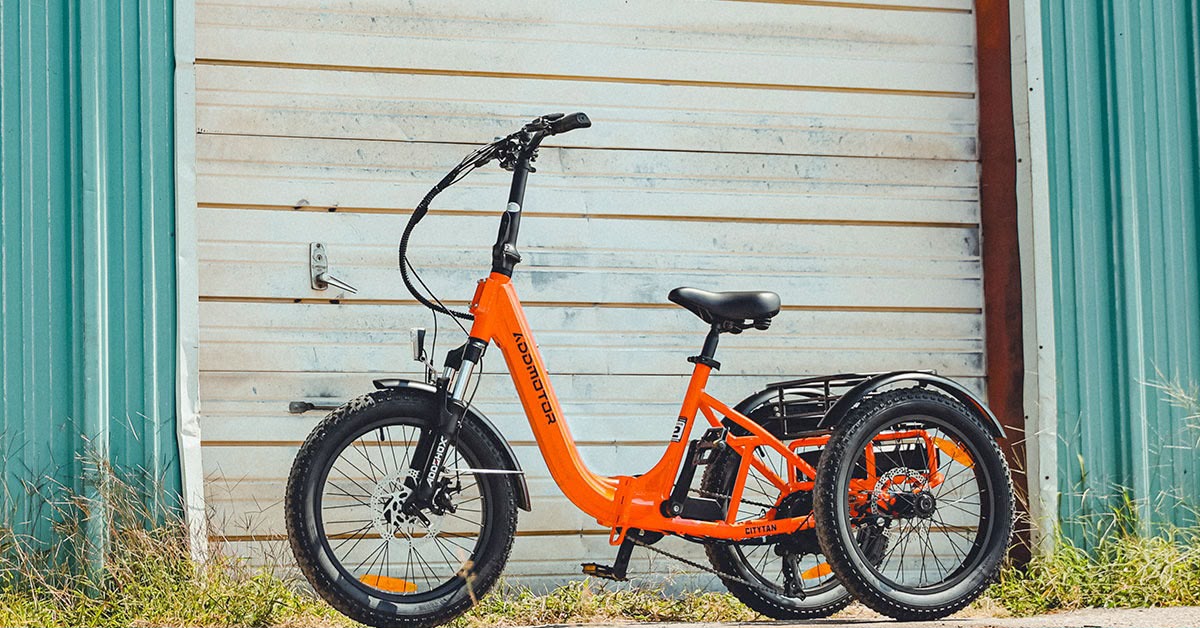
One model that illustrates this shift well is the Addmotor Citytan M-315, now available in a new 750W configuration launched in June 2026. It’s a useful case study for what separates a well-engineered electric tricycle from a bargain-bin alternative — and why those engineering choices matter far more than a spec sheet suggests at first glance.
Power That Matches Real-World Riding Conditions
The 750W Citytan M-315 is built around a rear hub motor rated at 750W, with a peak output of 1,400W and 90Nm of torque. On paper, those numbers sound abstract. In practice, they translate into something very concrete: the ability to climb moderate hills without stalling out, accelerate confidently from a stop in traffic, and carry cargo or a passenger without the motor straining.
This matters especially for the demographic most likely to search for a tricycle in the first place — adults managing joint pain, balance concerns, or reduced leg strength, and seniors who want independence without physical strain. A motor that can only handle flat pavement forces the rider to compensate with pedaling effort exactly when they can least afford to. A properly rated 750W system removes that burden.
Battery Engineering: Where Cheap Trikes Cut Corners
Battery quality is one of the most overlooked factors in tricycle shopping, and it’s also where budget manufacturers save the most money. The Citytan M-315’s 48V 20Ah battery pack uses Samsung-sourced cells, which offer far more consistent charge/discharge behavior and cycle longevity than the unbranded cells common in low-cost imports.
More importantly, the pack uses a fully potted (encapsulated) construction. Instead of leaving air gaps between individual cells — which trap heat and allow the pack to shift and loosen over repeated charge cycles — a thermally conductive resin fills every gap. This does three things simultaneously: it pulls heat away from the cells evenly, even under a 1,400W peak load; it locks the cells into a rigid, unified structure that resists the expansion and contraction that degrades battery life; and it creates a physical thermal barrier between cells, so that if one cell were to overheat, the surrounding cells are shielded rather than drawn into a chain reaction. Combined with a fully sealed housing that keeps out moisture and dust, it’s a meaningfully safer and longer-lasting design than a standard unpotted pack — the kind of engineering detail that never shows up in a marketing headline but matters enormously over two or three years of ownership.
Frame Construction: Strength Where It’s Needed
The frame is another area where the Citytan M-315 makes a deliberate engineering choice rather than a blanket one. The main frame body is 6061 aluminum — lightweight, easy to work with, and the industry standard for a reason. But the rear section, which absorbs the repeated stress of cargo loading, passenger weight, and uneven pavement, is reinforced with 7020 aluminum, a higher-strength alloy better suited to fatigue resistance.
This “reinforce where the stress actually is” philosophy reflects a broader principle in good tricycle design: don’t just add material everywhere to make a product feel heavy-duty. Identify where the real-world loads concentrate and put the stronger, more expensive material there. It keeps the overall trike lighter and easier to maneuver while still holding up where it counts.
Tires: The Part Nobody Thinks About Until It Fails
If there’s one component that gets quietly downgraded on cheap electric trikes, it’s the tires. Many budget models use tires made largely from reclaimed rubber — recycled from scrapped tires — bulked up with cheap fillers like calcium carbonate instead of proper reinforcing carbon black, and missing anti-aging additives altogether. The result is a tire that’s stiff, low-grip, prone to cracking within weeks of sun exposure, and vulnerable to punctures because the carcass uses sparse, low-TPI nylon without any puncture-resistant layer.
Virgin rubber tires — built from full new rubber rather than reclaimed material — solve nearly all of these problems. They’re more elastic, which improves ride comfort and rolling efficiency; they grip better in wet conditions, which shortens braking distance; and with proper anti-aging additives, they resist cracking for a year or more of regular use instead of a few months. The tradeoff is cost — virgin rubber tires can run 30% to 100% more than reclaimed-rubber alternatives — but for a vehicle carrying an adult rider, that’s a safety cost worth paying.
Bringing It Together
None of these choices — motor sizing, potted Samsung-cell batteries, dual-alloy frame construction, or virgin rubber tires — are individually flashy. They don’t show up as a single headline spec. But together, they represent the difference between a tricycle built to survive a demo ride and one built to be ridden daily for years.
For adults and seniors evaluating a tricycle purchase, the lesson is simple: look past the top-line numbers on power and range, and ask what the manufacturer did with the parts nobody sees — the battery pack construction, the alloy used in the stress points, the rubber compound in the tires. Those decisions, more than any single spec, determine whether a tricycle becomes a trusted part of daily life or an expensive disappointment within a year.