
I have written for years, and the thing I never appreciated about writing is how cheap it is to be wrong.
You can type a bad sentence, read it back, and delete it before anyone sees. A first draft costs almost nothing. You sketch, you cut, you try the paragraph a few different ways, and the only thing you spend is time.
Video never worked like that. Not for me, and not for most people I know who make things.
The Expensive First Take
With video, the first version usually cost about the same as the final one. You booked the time, set up the shot, and committed. If the idea did not work, you found out after the money was already spent.
So you stopped sketching. You planned everything in advance, locked the concept early, and hoped the thing in your head survived contact with a camera. The rough draft, the part of creative work where most of the actual thinking happens, simply did not exist for video. It was too expensive to be wrong.
That changed quietly, and I do not think we have fully noticed yet.
What Happens When a Clip Costs Nothing
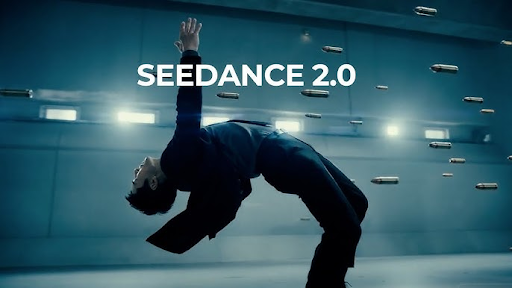
AI video tools let you describe a shot and watch it appear a minute later. A tool like seedance 2.0 lets you turn a line of text or a still image into a short clip, which sounds like a small thing until you sit with what it removes.
It removes the cost of the first attempt.
Now you can do with video what you have always done with words. Try the opening shot one way, then another. Generate the version you are unsure about just to see whether your instinct was right. Make the bad one on purpose so you understand why the good one is good.
I have caught myself generating three clips I knew I would throw away, purely to find the fourth. A year ago that would have been an absurd waste. Now it is just drafting.
The Draft Is Where the Idea Gets Better
This matters more than the time it saves, and the time it saves is real.
Most ideas are not good when they arrive. They get good through revision, through the gap between what you pictured and what actually came out. Writers know this. Musicians know this. Video people mostly never got to find out, because the medium punished anyone who wanted a second go.
When the draft becomes cheap, you start making decisions you used to guess at. You see the clumsy cut before you commit to it. You notice the shot was better in your head and fix it while fixing is still free. The work gets sharper, not because the tool is clever, but because you finally get more than one attempt at it.
What This Doesn’t Fix
I want to be honest, because the temptation is to oversell this.
AI video is still a drafting tool rather than a finishing one for a lot of work. It struggles with faces, with hands, with text on screen, and with anything that has to be a specific real place or person. If your piece depends on a human looking into the lens and meaning it, you still film that yourself. The tool gives you the sketch and the supporting material, not the moment that carries the whole thing.
A cheap draft also does not give you taste. It only gives you more chances to use the taste you already have. Someone with nothing to say now has a faster way to say nothing. The bottleneck was never really production. It was knowing what was worth making, and that part is still entirely on you.
Final Thoughts
For most of its history, video was a medium you committed to before you understood it. You decided, then you paid, then you found out.
The interesting shift is not that a machine can make a clip. It is that making a clip badly, on the way to making it well, finally costs almost nothing. That is the part of every other creative craft that makes the craft work, and video is only now getting it.
I do not think this replaces anyone. It hands creators the one thing the medium always withheld, which is permission to be wrong on the first try.
FAQs
Does this mean AI video replaces filming?
No. For real people, real places, and anything that has to be unmistakably yours, you still shoot it. The drafting use is for sketching ideas and producing the material around the parts you film.
Is AI video good enough to publish as it is?
Sometimes, for short and atmospheric clips. More often it is better treated as a strong first version that you trim, caption, and combine with your own footage before it goes out.
Where should a creator start?
Pick one project and use the tool to draft a single shot you are unsure about. Write a plain, specific description, generate a few versions, and keep the one that works. Treat the rest as drafts, the same way you would treat early sentences.