
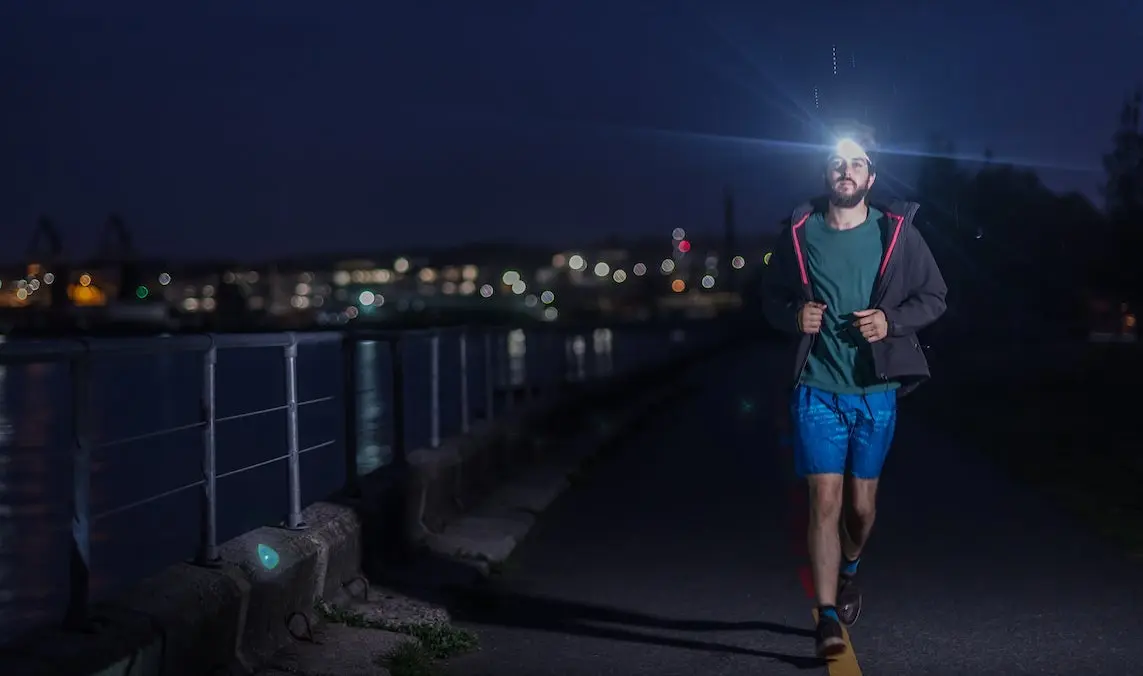
Moving your training sessions off the road opens up a whole new world of fitness, scenic views, and mental clarity. But if you take that transition into the hours after dark, the challenge increases significantly. Technical night trail running requires a completely different approach to your usual evening jog around the local neighbourhood blocks.
When you run on the road under suburban streetlights, your brain relies on a highly predictable surface. Out in the bush at night, that predictability vanishes. To make this transition safe, adjust your technique, respect the terrain, and train your eyes to read the trail under artificial illumination. Before you head out to purchase a specialised head light or upgrade your footwear, you need to understand how to adapt your physical skills to handle the dark safely.
Understand the Shift in Pace and Rhythm
If you expect your kilometre splits to look the same on a technical single-track as they do on a flat suburban bike path, you will quickly find yourself exhausted or nursing an injury.
Trail running is dictated by the terrain, not by your watch. When you add the darkness into the mix, your overall pace will naturally drop by up to a minute or two per kilometre, and that is completely fine. Remember, success on the night trails is measured by effort and time on your feet.
Accepting a slower pace allows your brain to process the incoming visual data without feeling rushed. You need to learn to run by feel, keeping your heart rate in a sustainable zone rather than forcing a specific number on your fitness tracker. When the trail gets particularly steep or technical, do not hesitate to drop into a fast power hike. Experienced trail runners use this strategy constantly to preserve their energy for the flatter, more runnable sections.
Shorten Your Stride and Lift Your Feet
On the road, an efficient running style generally involves a longer, sweeping stride with a relatively low foot clearance. This efficiency works beautifully on smooth surfaces, but it’s different in a technical bush track.
To navigate night trails successfully, you must consciously shorten your stride length and increase your cadence. Taking smaller, quicker steps keeps your centre of mass directly over your feet. This positioning gives you much better balance and allows you to react instantly if a loose stone slips out from underneath your shoe.
Also focus on lifting your feet higher than usual. Tree roots and rocks have an annoying habit of hiding in the shadows cast by your illumination source. By deliberately exaggerating your knee lift, you create a safety margin that prevents your toes from catching on hidden trail obstacles. Keep your ankles relaxed but responsive, ready to adapt to uneven ground with every single footstrike.
Train Your Visual Focus
Running in the dark alters your depth perception and peripheral vision. Your world effectively shrinks to the precise zone illuminated by your beam, which can feel quite disorienting during your first few sessions.
The secret to smooth night running is mastering where you place your eyes. Beginners tend to stare directly down at their feet, which actually prevents them from preparing for what is coming next. If you only look at the ground immediately in front of you, you will constantly feel surprised by corners, overhanging branches, and sudden changes in gradient.
Instead, practice a scanning motion with your eyes. Look roughly five to eight metres ahead to plan your line through the obstacles, then quickly glance back down to confirm your immediate foot placement. This continuous scanning loop allows your brain to build a mental map of the track, giving you time to choose the safest path without needing to slow down to a walk.
Adapt Your Posture for Stability
Your running posture needs a slight adjustment when moving to technical trails. On a flat road, you can maintain a perfectly upright position. On a night trail, you want to adopt a slight forward lean originating from your hips, not your shoulders.
This subtle lean keeps your weight forward, ensuring that if you do happen to slip on a wet clay track or loose gravel, your feet can quickly recover underneath you. If you lean too far backward, a slip will cause your feet to shoot out in front of you, resulting in a heavy fall onto your tailbone.
Keep your arms slightly wider and higher than you would on the road. Your arms act like the balancing poles used by tightrope walkers. On technical sections, letting your elbows flare out gives you immediate lateral stability, helping you stay upright when dancing across rock gardens or navigating tight switchbacks.
Choose the Right Safety Gear
Transitioning to night trail sessions means taking full responsibility for your own safety. Out in the bush, you cannot simply call a rideshare vehicle if you get tired or turn an ankle.
Always carry a dependable backup light source in your vest, even if you are only planning a short run. A small, lightweight hand-held torch is perfect for this, ensuring you are never left stranded in total darkness if your main beam runs out of battery. Using a hand-held light alongside a head-worn unit also fills in the shadows on the ground, making technical obstacles much easier to judge.
Carry a basic first aid kit that includes a high-quality compression bandage for sprains or snake bites, along with a lightweight space blanket to keep your body warm if you are forced to stop moving. Even if the evening feels warm when you leave the car park, temperature drops inside a deep valley or forest canopy can be incredibly swift.
Respect the Environment
The bush changes character entirely once the sun goes down. Wildlife becomes much more active, and navigation mistakes can have bigger consequences than they do during the middle of the day.
For your first few night sessions, stick to a trail that you already know intimately from daytime running. Familiarity with the track layout reduces the mental fatigue of navigating, allowing you to focus purely on your footwork and your lighting setup.
It is also highly recommended to run with a partner or join a local trail club for your initial night outings. Having an extra set of eyes and an extra light source makes the experience far more enjoyable and provides an instant safety net. Always inform someone at home exactly which track you are running and what time you expect to return.
Embrace the Experience
Transitioning from road running to technical night trails requires patience and a willingness to learn new physical skills. It forces you to abandon the obsession with pace and instead connect deeply with the immediate movement of your body.
The rewards for making this shift are immense. Running through the quiet bush under the stars, completely focused on the circle of light in front of you, is an incredibly peaceful and exhilarating experience. By taking the transition slowly, focusing on your technique, and prioritising your safety, you will unlock a fantastic new dimension to your running journey.