
Think about this for a moment. A big road project is approved. Millions of dollars are spent. Everything looks fine on paper. But later, cracks start to show. The road breaks early. Money is wasted. People ask, “What went wrong?”
Most of the time, the problem is not big. It is small mistakes that were ignored. Missing checks. Poor records. Weak quality control. This is where a Chief Technical Examiner becomes very important.
A Chief Technical Examiner is the person who checks everything carefully. They make sure the work is done the right way. They protect public money. They help keep projects safe, fair, and strong.
In this article, we will explain everything in a very simple way. You will learn what a Chief Technical Examiner is, what they do, why they matter so much, and how their audits work. By the end, you will clearly understand why this role is so powerful in big projects today.
What Is a Chief Technical Examiner
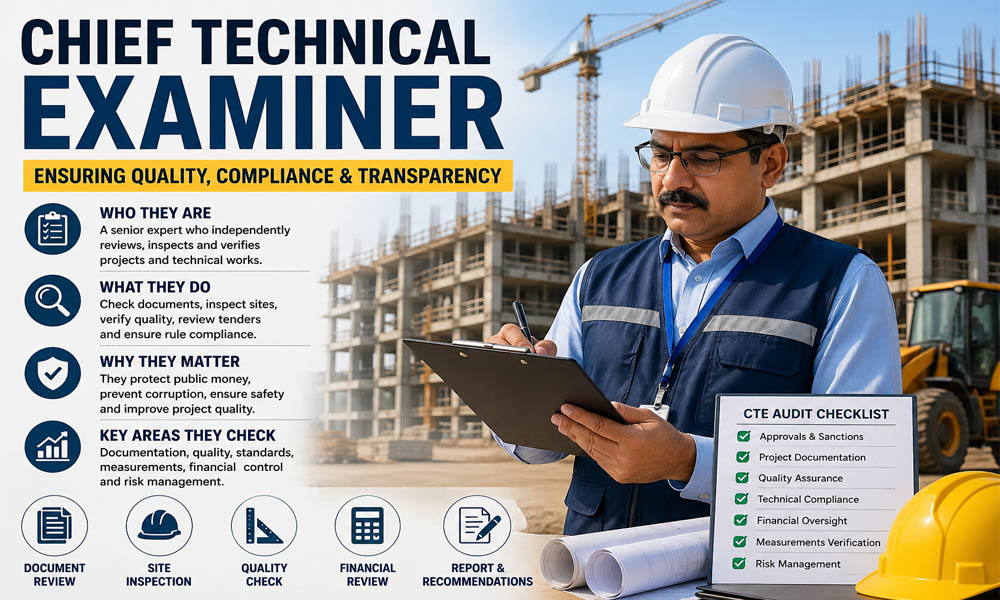
A Chief Technical Examiner is a senior expert who checks technical work. They do not build the project. They do not manage daily work. Their job is to review, inspect, and verify everything.
Think of them like a “quality checker” for big projects. They look at documents. They visit sites. They compare what is written with what is actually built. Their goal is simple — make sure everything follows rules and standards.
In many countries, especially in government systems, the Chief Technical Examiner works under a vigilance body. For example, in India, they work with the Central Vigilance Commission (CVC). This means their role is independent. They are not influenced by project teams.
Because of this independence, they can give honest and fair reports. This is why their findings are taken very seriously.
Why the Chief Technical Examiner Role Is So Important
Now you might wonder, why is this role so important?
Let’s keep it simple. Big projects involve a lot of money. When money is large, risks are also large. Without proper checks, mistakes and unfair practices can easily happen.
A Chief Technical Examiner helps stop these problems early. They make sure no one breaks the rules. They check if the work is real, not just written on paper. This protects public money and prevents waste.
They also improve quality. When teams know that a Chief Technical Examiner will inspect the work, they stay more careful. They follow proper methods. They avoid shortcuts.
In simple words, this role builds trust. It tells people that the project is safe, fair, and done the right way.
Where Chief Technical Examiner Works
A Chief Technical Examiner can work in many areas. But their role is mostly seen in places where quality and money both matter.
One common area is government projects. This includes roads, buildings, bridges, and public systems. These projects need strict checks because they use public funds.
They also work in construction and infrastructure companies. Large private projects also need strong inspection systems. The Chief Technical Examiner ensures that everything meets standards.
You can also find them in manufacturing, IT systems, and regulatory bodies. In all these fields, their role is the same — check the work, verify the details, and ensure compliance.
So, no matter the industry, their main focus stays clear: quality, safety, and rules.
Main Duties of a Chief Technical Examiner
The daily work of a Chief Technical Examiner is very detailed. They look at both papers and real work.
First, they check documents. This includes project approvals, designs, and contracts. They make sure everything is approved by the right authority and follows the correct process.
Then, they inspect sites. They visit the project location. They check materials, tools, and work quality. For example, if a road is being built, they may check the thickness of layers or the quality of materials used.
They also review tenders. This is very important. They check if the tender process was fair. They look for hidden bias or rules that favor certain companies.
Finally, they prepare reports. These reports explain what is right and what is wrong. They also suggest how to fix problems. These reports guide future decisions and improve the system.
Chief Technical Examiner and Project Audits
Let’s talk about audits in a simple way.
An audit means checking everything carefully. A Chief Technical Examiner uses audits to find mistakes, risks, and hidden issues.
Audits can happen at different stages. Sometimes before the project starts. Sometimes during the work. And sometimes after the project is finished.
For example, during a road project, an audit may check if the work matches the approved design. If the design says 10 cm thickness, but the actual work is only 9 cm, the Chief Technical Examiner will catch it.
Many organizations feel nervous about audits. But audits are not meant to scare people. They are meant to improve the system.
If you prepare well, keep records clean, and follow rules, audits become easy.
What Chief Technical Examiner Checks in Projects
Now let’s understand what exactly a Chief Technical Examiner checks.
They start with approvals. They check if the project has proper permission. Was it approved by the right authority? Is the budget correct?
Next, they check cost estimates. Are the prices realistic? Are they based on standard rates? Or are they increased without reason?
Then comes quality. They check materials and work. Are proper tests done? Are results recorded? Is the quality as promised?
They also check records. This includes site registers, order books, and daily reports. These records must be updated and correct.
Finally, they compare paper with reality. This is very important. If the document says one thing but the site shows another, it becomes a serious issue.
Chief Technical Examiner Audit Checklist Made Simple
A Chief Technical Examiner does not check things randomly. They follow a clear checklist. This helps them cover every important detail.
First is project documentation. They check if approvals, DPR (Detailed Project Report), and estimates are available. Without proper documents, a project cannot be trusted.
Second is compliance with standards. They check if the project follows required rules like BIS or other codes. They also check test reports to confirm quality.
Third is quality assurance. They look at lab tests, site checks, and records. For example, is there a working site lab? Are test results recorded properly?
Fourth is financial control. They check payments, bank guarantees, and insurance. They make sure money is used correctly and no extra payment is made.
Fifth is technical verification. This includes measurements and hidden work. For example, steel inside concrete must be checked before it is covered.
This checklist makes the audit process clear and structured. It ensures nothing important is missed.
Common Mistakes Found by Chief Technical Examiner
Even good projects can have mistakes. A Chief Technical Examiner often finds similar problems again and again.
One common issue is poor documentation. Missing approvals, incomplete records, or unclear reports can create big trouble later.
Another mistake is unfair tender rules. Sometimes, tenders are written in a way that only certain companies can qualify. This is a serious problem and often leads to cancellation.
Quality issues are also common. Using low-quality materials or skipping tests can reduce project life. This is risky and costly.
Incorrect measurements are another big issue. For example, recording more work than actually done. This leads to overpayment and financial loss.
Lastly, hidden work is often not recorded properly. Things like underground cables or steel inside concrete must be documented before they are covered.
Real Examples of Chief Technical Examiner Findings
Let’s look at real-life style examples to understand better.
In one project, the tender rules were too strict. Only a few companies could apply. The Chief Technical Examiner found this and reported it. The result? The tender was cancelled, and officials faced action.
In another case, a road project showed perfect records on paper. But when checked on site, the thickness was less than required. The difference was small, but across the whole project, it became huge.
The Chief Technical Examiner ordered recovery from the contractor. This means the extra money was taken back. It also led to strict action against those responsible.
These examples show something important. Even small mistakes can lead to big consequences.
How to Prepare for a Chief Technical Examiner Audit
Now that you understand how strict a Chief Technical Examiner can be, the next question is simple. How do you prepare for an audit without stress?
The answer is not complicated. Preparation should not start when the audit notice arrives. It should start from day one of the project. Keep all documents ready. Update records daily. When everything is organized, there is nothing to fear.
For example, imagine your site engineer writes everything clearly every day. Measurements, tests, and updates are all recorded on time. When the Chief Technical Examiner comes, you do not need to rush. You just show the records with confidence.
Another important step is to follow rules from the beginning. Do not wait to fix problems later. If there is a change in design or work, record it and get approval immediately. Being honest and clear always works better than hiding mistakes.
Tools Used by Chief Technical Examiner Today
In 2026, the work of a Chief Technical Examiner is not only manual. Technology has made the process faster and more accurate.
Today, many projects use software like MS Project or Primavera. These tools help track progress and delays. If a project is late, you can clearly show the reason. This makes audits smoother.
Financial systems like ERP are also very helpful. They track payments, recoveries, and bills. This reduces the risk of duplicate payments or financial errors. A Chief Technical Examiner can easily verify data through these systems.
Another useful tool is geo-tagging. This means taking photos with location and time details. For example, if steel work is done underground, a geo-tagged photo proves it was completed properly before covering.
Digital measurement books are also common now. They reduce manual errors and prevent changes later. In the future, AI tools are also helping to detect unusual patterns in tenders and contracts.
Skills Needed to Become a Chief Technical Examiner
To become a Chief Technical Examiner, a person needs more than just technical knowledge. This role requires a strong mix of skills.
First, technical understanding is very important. The person must know how projects work. They should understand drawings, materials, and construction methods clearly.
Second, attention to detail is key. A small mistake can lead to a big problem. A Chief Technical Examiner must notice even tiny differences between documents and real work.
Communication is also very important. They must write clear reports. These reports should be easy to understand and should explain problems and solutions in a simple way.
Finally, honesty and fairness matter the most. This role requires independent judgment. Decisions must be based on facts, not pressure.
Career Path to Become a Chief Technical Examiner
Becoming a Chief Technical Examiner does not happen overnight. It is a long journey that builds with experience.
Most people start as junior engineers or technicians. At this stage, they learn basic work, site processes, and technical details.
After some years, they move to mid-level roles like project engineer or site inspector. Here, they gain deeper knowledge about planning, execution, and problem-solving.
With more experience, they become senior engineers or quality managers. They start handling bigger responsibilities and decision-making.
Finally, after many years of experience, they can reach the role of Chief Technical Examiner. This role needs strong knowledge, confidence, and a clear understanding of rules and systems.
Difference Between Chief Technical Examiner and Other Roles
Many people get confused between a Chief Technical Examiner and other roles. Let’s make it simple.
A Chief Engineer focuses on design and planning. They lead the project from the technical side. But a Chief Technical Examiner checks whether the work is correct or not.
A Project Manager handles deadlines, teams, and delivery. Their goal is to complete the project on time. But the Chief Technical Examiner is not responsible for delivery. They are responsible for checking quality and compliance.
A Quality Manager works within the project team. But a Chief Technical Examiner works independently. This independence is very important because it allows fair and unbiased decisions.
So, the key difference is simple. Others build and manage. The Chief Technical Examiner checks and verifies.
Conclusion
By now, you can clearly see why the Chief Technical Examiner role is so important.
This role protects public money. It ensures quality work. It prevents mistakes before they become big problems. In simple words, it keeps projects safe, fair, and strong.
Many people feel nervous about audits. But the truth is, audits are not enemies. They are tools to improve work. When you follow rules daily and keep records clean, audits become smooth and easy.
In 2026, projects are becoming more complex. Technology is growing. But one thing remains the same — the need for honest and careful checking. And that is exactly what a Chief Technical Examiner does.
(FAQs)
What is a Chief Technical Examiner in simple words?
A Chief Technical Examiner is a senior expert who checks if a project is done correctly. They do not build the project. They inspect it. They make sure the work follows rules, uses the right materials, and matches what was approved.
What does a Chief Technical Examiner check during an audit?
A Chief Technical Examiner checks documents, site work, materials, and payments. They compare what is written on paper with what is actually built. If something does not match, they report it.
Why do organizations feel scared of a Chief Technical Examiner audit?
Many organizations feel scared because they are not fully prepared. Missing documents, poor records, or quality issues can create problems. But if everything is done properly, there is nothing to worry about.
How can a project easily pass a Chief Technical Examiner audit?
A project can pass easily by keeping records updated, following rules from the start, and maintaining good quality work. Being honest and clear is the best way to avoid problems.
What are the most common mistakes found by a Chief Technical Examiner?
Common mistakes include wrong measurements, missing approvals, poor quality materials, unfair tender rules, and incomplete site records. Even small mistakes can lead to serious action.
What happens if a Chief Technical Examiner finds a problem?
If a problem is found, the Chief Technical Examiner writes a report. This may lead to corrections, recovery of money, or action against responsible people. In serious cases, projects can even be stopped.
Does a Chief Technical Examiner only work in government projects?
No, they mostly work in government projects, but similar roles exist in private companies too. Any industry that needs quality checks and compliance can have this role.
What skills are needed to become a Chief Technical Examiner?
A Chief Technical Examiner needs strong technical knowledge, attention to detail, problem-solving skills, and honesty. They must also be good at writing clear reports and making fair decisions.
How long does it take to become a Chief Technical Examiner?
It usually takes many years of experience. Most people start as engineers, then move to senior roles, and finally reach this position after gaining strong knowledge and field experience.
How is technology helping Chief Technical Examiner audits in 2026?
Technology is making audits faster and more accurate. Tools like digital records, geo-tagged photos, ERP systems, and AI help the Chief Technical Examiner check data easily and detect problems early.
You may also read: Internet Chicks: How Women Are Winning Big Online in 2025