
Many drivers move from petrol to CNG or LPG because they want to save money on fuel. It is a smart choice for many people. Gas fuel can cost less, burn cleaner, and help the car run with fewer harmful gases. But after conversion, some drivers notice something strange. Their car does not feel the same.
Maybe the pickup feels weak. Maybe the engine shakes at idle. Maybe the car knocks when climbing a hill. Some drivers even feel that the car uses more gas than expected. This can happen because CNG and LPG do not burn the same way as petrol. The engine was first made and tuned for petrol, so it may need small changes after gas conversion.
This is where a timing advance processor becomes very important. It is a small device, but it can make a big difference. It helps the engine fire the spark at a better time when the car runs on CNG or LPG. In this guide, we will explain what a timing advance processor is, why it matters, how it works, what benefits it gives, and why choosing the right one is so important.
What Is A Timing Advance Processor?
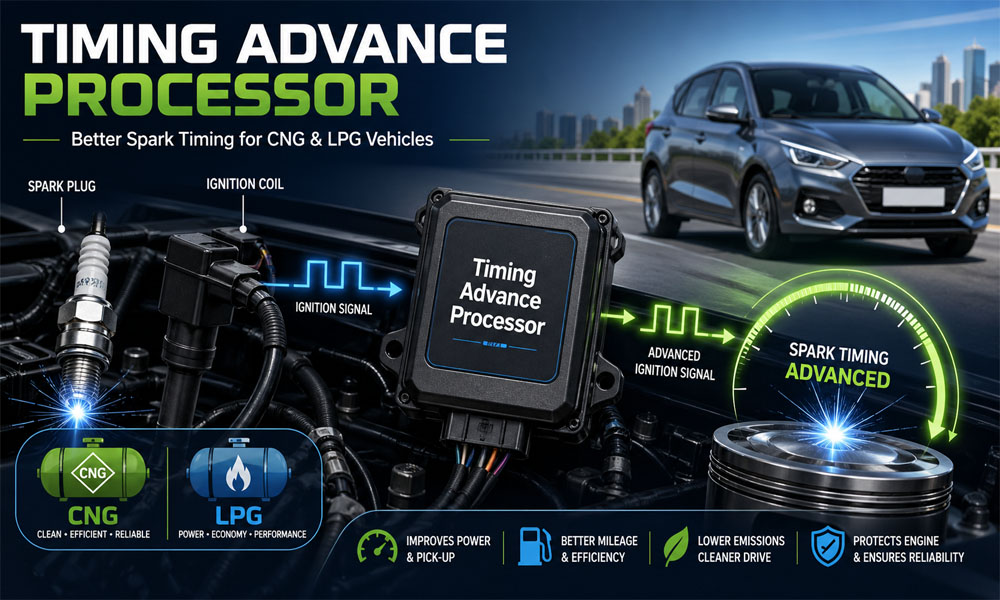
A timing advance processor is an electronic device used in many CNG and LPG vehicles. Its main job is to adjust the spark timing of the engine. In very simple words, it helps the spark plug fire a little earlier so the gas fuel can burn at the right time.
Every engine needs a spark to burn the fuel inside the cylinder. In petrol cars, the factory spark timing is made for petrol. But when the same engine starts running on CNG or LPG, the fuel burns in a different way. So the old petrol timing may not always be perfect. A timing advance processor helps fix this problem.
Think of it like clapping at the right moment in a song. If you clap too late, the rhythm feels wrong. If the spark comes too late in the engine, the fuel does not burn at the best moment. The car may feel slow, rough, or weak. The timing advance processor helps bring that spark closer to the right moment.
Why CNG And LPG Cars Need Better Spark Timing
CNG and LPG are cleaner fuels, but they do not act exactly like petrol inside the engine. CNG usually has a high octane level, and it often burns slower than petrol. LPG also has different burn behavior. Because of this, the engine may need the spark earlier than it would need with petrol.
When the spark timing is not right, the engine cannot use the fuel in the best way. This may cause weak acceleration, poor mileage, rough idle, or engine knocking. Some drivers blame the gas kit, the fuel quality, or the engine itself. But many times, the real problem is poor spark timing.
Imagine trying to light a stove, but the flame comes late every time. The gas is there, but the timing is not right. The same idea can happen inside the engine. A timing advance processor helps the spark happen at a better time, so the gas burns more smoothly and gives better power.
How A Timing Advance Processor Works
A timing advance processor works by changing the ignition signal. This signal tells the spark plug when to fire. The processor reads or intercepts this signal and then adjusts it. In most cases, it advances the timing so the spark happens earlier when the engine is running on CNG or LPG.
The word “advance” simply means making something happen earlier. So, when we say the device advances the timing, it means it makes the spark come a little earlier than normal. This helps the slower-burning gas fuel finish burning at the right point in the engine cycle.
The goal is not to make the spark too early. The goal is to make it just right. If the timing is too late, the car may feel lazy. If the timing is too early, the engine may run badly or knock. This is why the timing advance processor must be chosen and set correctly.
Main Benefits Of A Timing Advance Processor
One of the biggest benefits of a timing advance processor is better engine response. When the timing is right, the car can feel smoother and more active. The driver may notice better pickup, especially when starting from a stop or driving uphill.
Another benefit is better fuel use. A well-tuned engine burns fuel more fully. This can help improve mileage on CNG or LPG. It does not mean every car will give a huge saving, but correct timing can help the engine use gas fuel in a cleaner and smarter way.
A timing advance processor may also help reduce knocking. Knocking can happen when combustion is not happening in the right way. With cleaner fuels like CNG and LPG, proper spark timing can make the engine feel more stable. The result can be a smoother drive and less stress on the engine.
Timing Advance Processor And Engine Performance
A timing advance processor can affect how the car feels in daily driving. Many drivers care about this more than anything else. They want the car to move smoothly in traffic. They want good pickup when they press the pedal. They want the engine to stay calm at idle.
When the TAP is set correctly, the engine can feel more natural on CNG or LPG. The throttle may feel sharper. The car may climb better. The engine may not feel as heavy or slow. This is very useful for people who drive in cities, carry passengers, or use their car every day.
But it is also important to understand one thing. A timing advance processor is not magic. It works best when the engine is healthy, the gas kit is installed well, and the timing settings are correct. If the engine already has weak plugs, poor wiring, or a bad sensor, the TAP alone may not solve everything.
Types Of Ignition Systems In CNG And LPG Cars
Before choosing a timing advance processor, you need to know the car’s ignition system. This is very important. Different cars use different ignition designs. A TAP that works on one car may not work on another car.
Older cars may use mechanical breaker points and a distributor. These systems are simple and mostly mechanical. They need a TAP that can work with low-voltage signals between the distributor and the coil. One example is the AEB531, which is used for this type of older ignition system.
Many cars use electronic ignition with a coil and distributor. These systems do not use old-style breaker points, but they still use a distributor to send spark to the cylinders. These vehicles may use models like AEB526N or AEB549N. More advanced cars may use ignition modules or crankshaft position sensors, which need different TAP models.
Timing Advance Processor Types And Models
Not all timing advance processor models are made for the same job. Some are made for older cars. Some are made for electronic ignition systems. Some are made for modern engines with crankshaft position sensors. This is why model choice matters so much.
For older mechanical breaker point systems, the AEB531 is one common type. It is usually connected between the distributor and the ignition coil. For electronic ignition systems with a distributor, models like AEB526N and AEB549N are often used. These are made to work with faster electronic signals.
For more advanced systems, the AEB515N can be useful because it is programmable. This means the installer can adjust its settings for the engine and fuel type. For modern cars with crankshaft position sensors, models like AEB510N, AEB516N, AEB511N, and AEB518N are used. Some work with inductive sensors, while others work with Hall effect sensors.
How To Choose The Right Timing Advance Processor
Choosing the right timing advance processor starts with one simple question: what type of ignition system does your vehicle have? This is the first thing to check. If you choose the wrong type, the TAP may not work correctly. It may even cause starting or running problems.
The next thing to check is the fuel type. Some vehicles run only on CNG. Some run on LPG. Some systems may support both. A good timing advance processor should match the fuel setup and the engine’s needs. The timing range is also important because some engines need more spark advance than others.
You should also look for safety features like an emergency connector. This feature lets the system bypass the TAP if something goes wrong. It can help the vehicle return to factory timing in an emergency. For most drivers, it is best to let a trained installer choose and fit the right TAP. This keeps the setup safer and more reliable.
Timing Advance Processor Installation Basics
Installing a timing advance processor should be done with care. This device connects with the ignition system, so wrong wiring can cause problems. The engine may not start. The car may run rough. In some cases, the ignition parts may also get damaged.
The first safe step is always to disconnect the battery. This helps protect the wiring and the electronic parts. After that, the installer finds the right connection points. These points can be different in each vehicle. Some cars need the TAP connected near the coil. Some need it connected near the ignition module. Modern cars may need it connected near the crankshaft position sensor.
The installer should always follow the maker’s wiring diagram. Guesswork is not safe here. A small mistake can make the car act very strange. For example, if the signal wire is joined the wrong way, the timing advance processor may not read the signal correctly. That is why trained installers often use tools like a timing light or an oscilloscope to check if the spark signal is clean and correct.
Common Timing Advance Processor Problems
A timing advance processor can work very well when it is fitted and set the right way. But if the wiring or settings are wrong, the car may show clear warning signs. One common issue is engine knocking while driving on CNG or LPG. This can happen when the timing advance is too low or not set correctly.
Poor acceleration is another common problem. Some drivers press the pedal and feel that the car is not moving with strength. This may happen if the timing is too high or too low. If the spark comes at the wrong time, the engine cannot give smooth power. It is like pushing a swing at the wrong moment. The effort is there, but the result is weak.
Sometimes the engine may not start after installation. This often points to a wiring mistake, poor ground, or wrong signal connection. Rough idle can also happen if the timing setting does not suit the engine at low speed. If the timing advance processor does not respond at all, the installer should check the 12V power supply, ground wire, and signal wires first.
Emergency Connector In A Timing Advance Processor
Many good TAP units come with an emergency connector. This is a very useful safety feature. It allows the vehicle to bypass the timing advance processor if the device has a fault or if the installer needs to test the original timing.
In simple words, the emergency connector lets the ignition system go back to normal factory timing. This means the car can still run even if the TAP is not working. For a driver, this can bring peace of mind. Imagine you are far from home and the car suddenly starts running badly after a TAP issue. The emergency connector can help you continue driving until the problem is checked.
This feature is also helpful for mechanics. During testing, they can bypass the timing advance processor and compare how the engine runs with and without it. This makes fault finding much easier. So, when choosing a TAP, it is smart to check if it has an emergency connector. It may look like a small thing, but it can be very helpful when you need it most.
How To Tune A Timing Advance Processor For CNG And LPG
Tuning is one of the most important parts of using a timing advance processor. Even a good TAP may not give the best result if it is not set correctly. The aim is simple. The spark should happen at the best time for the fuel and engine.
Most installers start with the setting suggested by the maker. After that, they test the car at idle, low speed, medium speed, and higher RPM. The engine should feel smooth. The pickup should feel clean. There should be no knocking, shaking, or sudden loss of power.
CNG often needs more spark advance than petrol because it burns differently. LPG may also need timing changes, but the best setting can be different from CNG. This is why one setting is not perfect for every car. Engine size, engine age, fuel quality, spark plugs, and conversion kit quality all matter. A good tune is not just about turning a knob. It is about listening to the engine and testing it carefully.
Signs Your Timing Advance Processor Needs Checking
A timing advance processor should be checked if the car starts acting differently after some time. One clear sign is sudden loss of power on CNG or LPG. If the car used to feel smooth but now feels heavy, the TAP setting or wiring may need attention.
Another sign is knocking. Knocking can sound like a small tapping or pinging noise from the engine, especially during load. This can happen while climbing a hill, carrying weight, or pressing the pedal quickly. If this happens often, the timing should be checked soon.
Poor mileage can also be a sign. If the car is using more CNG or LPG than before, the fuel system and ignition timing should both be checked. Rough idle, hard starting, engine shaking, or weak pickup are also warning signs. Sometimes, the TAP may need checking after spark plug replacement, engine repair, sensor work, or gas kit service.
CNG Vs LPG: Does Timing Advance Change?
Yes, timing advance can change between CNG and LPG. Both are gas fuels, but they are not exactly the same. CNG has a high octane rating and often needs earlier spark timing to burn well. This is why many CNG vehicles feel better with a properly set timing advance processor.
LPG also burns differently from petrol, but its timing needs can be more balanced. Some LPG vehicles may need less advance than CNG vehicles. Some may need careful adjustment based on the engine type. This is why the installer should not use one fixed setting for every vehicle.
Think of it like cooking two foods on the same stove. Both may need heat, but not the same heat level or cooking time. CNG and LPG both need good spark timing, but each fuel may need a different setup. A well-tuned timing advance processor helps the engine match the fuel more closely.
Is A Timing Advance Processor Worth It?
For many CNG and LPG drivers, a timing advance processor is worth it. It can help the engine feel smoother, stronger, and more stable. It may also help improve fuel use when the engine and gas system are in good condition.
It is especially useful for drivers who feel weak pickup after gas conversion. It can also help vehicles that knock, feel slow, or do not run as smoothly on CNG or LPG. The device helps the engine adjust to a fuel that burns differently from petrol.
But it is important to be honest. A timing advance processor is not a cure for every engine problem. If the spark plugs are old, the wires are weak, the gas kit is poor, or the engine has mechanical issues, the TAP alone cannot fix everything. The best result comes when the whole system is healthy and the TAP is installed and tuned correctly.
Conclusion
A timing advance processor may be a small part, but it can play a big role in CNG and LPG vehicles. It helps the engine fire the spark at a better time. This can make the car feel smoother, cleaner, and more responsive.
In 2026, many drivers still choose CNG and LPG because fuel cost matters. But saving money should not mean losing comfort or engine performance. If your car feels weak after gas conversion, spark timing may be one of the main things to check. The right TAP can help bring back better pickup and smoother driving.
The most important thing is choosing the correct model for your ignition system. Older cars, electronic distributor cars, ignition module cars, and modern CKP sensor cars may all need different TAP types. Always check compatibility first. Also, make sure the device has safety features like an emergency connector.
In the end, a timing advance processor works best when it is installed by a skilled person and tuned with care. When the model, wiring, fuel type, and setting are all right, your CNG or LPG car can run in a much better way. It can feel easier to drive, more stable on the road, and more suited to daily use.
(FAQs)
What Is A Timing Advance Processor In A CNG Or LPG Car?
A timing advance processor is a small electronic device that changes the spark timing of an engine. It is mostly used in cars that run on CNG or LPG.
When a petrol car is converted to gas, the fuel burns in a different way. The timing advance processor helps the spark come at a better time, so the engine can run smoother and stronger.
Why Does A CNG Car Need A Timing Advance Processor?
A CNG car may need a timing advance processor because CNG usually burns slower than petrol. If the spark comes too late, the engine may feel weak or rough.
With the right timing advance, the fuel burns at a better moment. This can help improve pickup, reduce knocking, and make the car feel smoother while driving.
Does An LPG Car Also Need A Timing Advance Processor?
Yes, many LPG cars can also benefit from a timing advance processor. LPG does not burn exactly like petrol, so the engine may need better spark timing after conversion.
The need depends on the engine, LPG kit, ignition system, and driving style. Some LPG cars run fine without one, but many perform better when the timing is set correctly.
Can A Timing Advance Processor Improve Fuel Mileage?
A timing advance processor can help improve fuel mileage if it is installed and tuned correctly. Better spark timing helps the engine burn CNG or LPG more fully.
But it is not a magic fuel-saving part. Mileage also depends on spark plugs, engine health, gas kit quality, driving habits, tire pressure, and fuel quality.
What Problems Can A Timing Advance Processor Fix?
A timing advance processor can help with problems linked to poor spark timing. These may include weak pickup, rough idle, engine knocking, slow response, and poor gas performance.
However, it cannot fix every issue. If the problem is caused by bad spark plugs, weak coils, poor wiring, dirty filters, or engine damage, those parts must be checked too.
How Do I Choose The Right Timing Advance Processor?
To choose the right timing advance processor, first check your car’s ignition system. Older cars with distributor systems need different TAP models than modern cars with crankshaft sensors.
You should also check whether your vehicle runs on CNG, LPG, or both. The timing range, sensor type, wiring style, and emergency connector feature are also important.
What Is An Emergency Connector In A Timing Advance Processor?
An emergency connector is a safety feature found in many TAP units. It lets the vehicle bypass the timing advance processor if the device has a problem.
When the emergency connector is used, the ignition system can return to factory timing. This can help the car keep running until a mechanic checks the issue.
Can A Bad Timing Advance Processor Cause Starting Problems?
Yes, a faulty or wrongly installed timing advance processor can cause starting problems. If the wiring is wrong, the engine may not receive the correct ignition signal.
A weak ground, poor power supply, wrong signal wire, or bad connector can also stop the TAP from working. That is why proper installation is very important.
Should I Install A Timing Advance Processor Myself?
It is better to let a trained installer fit a timing advance processor. The device connects to the ignition system, and one wrong wire can cause poor running or no start.
A skilled installer can read the wiring diagram, check the signal, set the timing, and test the engine. This makes the setup safer and more reliable.
Is A Timing Advance Processor Worth It In 2026?
Yes, a timing advance processor is still worth it for many CNG and LPG drivers in 2026. It can help the car feel smoother, stronger, and more stable after gas conversion.
It is most useful when the right model is chosen and tuned well. For the best result, the engine, ignition parts, and gas kit should also be in good condition.
You may also read: Brand Name Normalization Rules: The Simple Guide to Clean and Trusted Brand Data