
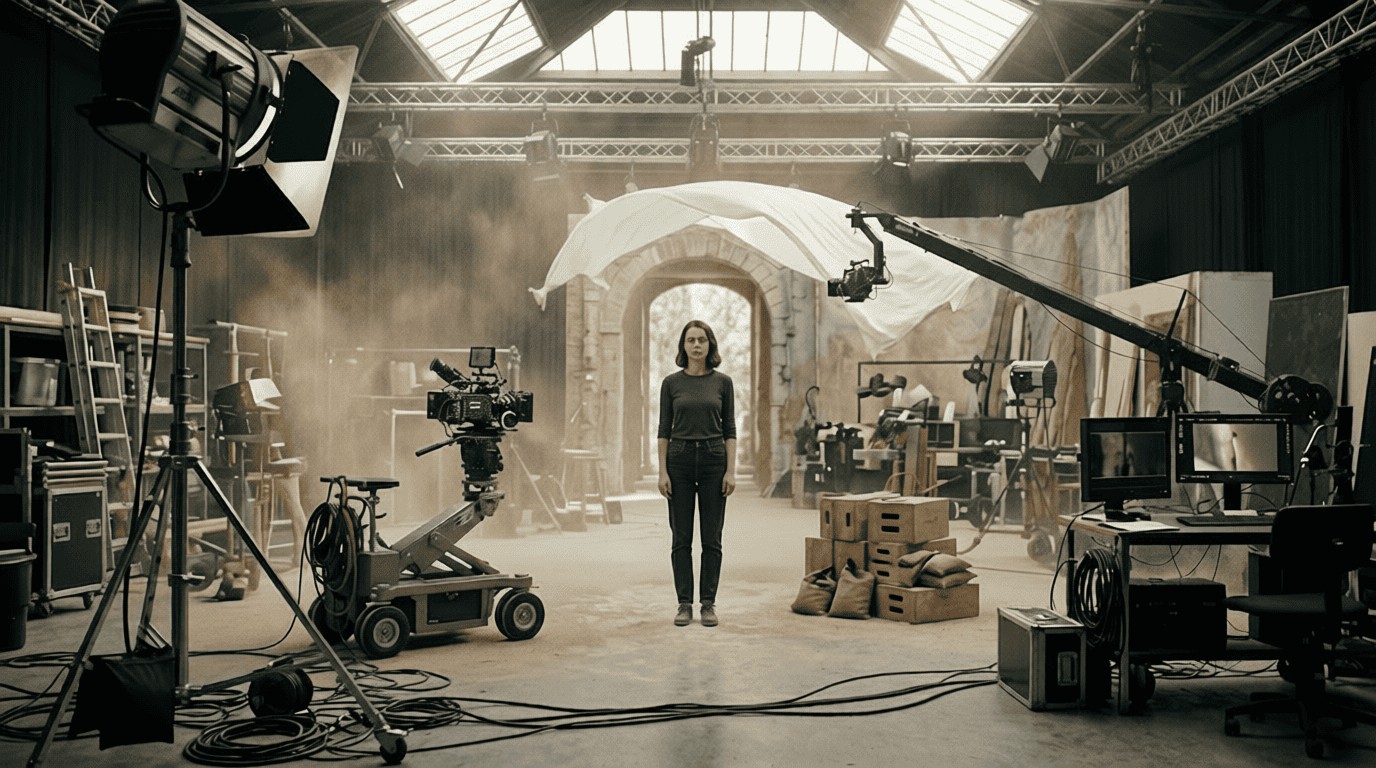
Content creation has always been a guided process. Even with advanced tools, creators still had to direct every step. They chose the visuals, aligned the audio, adjusted transitions, and refined the final output. Every decision required intervention.
That dynamic is starting to change. A new phase is emerging where content begins to shape itself based on input rather than constant manual control. The role of the creator is shifting from execution to direction. At the center of this shift is Seedance 2.0, which introduces a more autonomous way of building video from the ground up.
From Manual Creation to Guided Systems
Traditional workflows rely on step-by-step control. Creators guide each stage, often switching between tools to move from idea to output. Even when parts of the process are automated, the overall structure remains fragmented.
Seedance 2.0 introduces a different approach. It accepts text, images, video, and audio together, up to 12 assets in a single generation, and produces a multi-shot cinematic output. Instead of assembling elements afterward, the system interprets and organizes them into a cohesive sequence.
Higgsfield provides the environment where this process becomes usable in real workflows. Creators can guide intent while the system handles execution.
This shift represents what can be described as Industry evolution, where content creation begins to move toward systems that operate with increasing independence.
Autonomous Structure Instead of Linear Editing
One of the defining traits of autonomous content is structure. In traditional editing, sequences are built manually. Each cut, transition, and scene placement are decided step by step.
Seedance 2.0 approaches structure differently. It generates multi-shot narratives where scenes are already arranged with continuity in mind. Characters remain consistent across shots, and transitions feel connected without requiring manual assembly.
Higgsfield supports this by allowing creators to refine sequences without rebuilding them. Instead of constructing a timeline from scratch, creators adjust an already coherent structure.
This creates a new kind of workflow where the system handles organization while the creator focuses on direction.
Audio and Visual Intelligence Working Together
Autonomous content creation depends on how well different elements communicate with each other. Audio and visuals need to align naturally without requiring constant adjustment.
Seedance 2.0 generates audio and video together in a single pass. Dialogue aligns with lip movement, and sound elements match the pacing and tone of each scene.
Higgsfield allows creators to guide how these elements interact, but the heavy lifting happens within the generation process. This reduces the need for separate audio editing and synchronization.
The result is a system where audio and visuals are not treated as separate layers. They function as part of the same creative output.
Decision-Making Built into the System
Autonomous systems are defined by their ability to make decisions within a defined framework. In content creation, this means determining how scenes unfold, how motion behaves, and how elements connect.
Seedance 2.0 introduces this capability through its handling of cinematic camera work, motion, and effects. Lighting, shadow, and camera movement are not manually constructed step by step. They are guided through input and generated with consistency.
Higgsfield provides the environment where these decisions can be influenced without requiring full manual control. Creators can fine-tune camera angles and transitions, but the system handles the underlying execution.
For those interested in how automation is shaping creative workflows, this guide on AI adoption highlights how intelligent systems are taking on more complex decision-making roles.
This reflects a broader trend where creative tools are evolving into systems that assist with both execution and structure.
From Tools to Autonomous Creative Systems
The idea of a tool has always implied control. A tool does exactly what the user instructs it to do. Autonomous systems operate differently. They interpret input and produce results that extend beyond direct instructions.
Seedance 2.0 moves toward this model by combining multiple layers of video production into one system. It does not simply execute commands. It organizes, aligns, and generates content that feels complete.
Higgsfield brings this capability into a practical workspace where creators can interact with the system without needing to manage every detail. The process becomes less about controlling each step and more about shaping the outcome.
This marks a shift from tools to systems that actively participate in the creative process.
Scaling Without Increasing Effort
One of the most important implications of autonomous content creation is scalability. Traditional workflows require more effort as output increases. More videos mean more editing, more coordination, and more time.
Seedance 2.0 changes this dynamic by allowing creators to generate structured content without repeating the same steps. Multi-shot sequences, synchronized audio, and cinematic elements are handled within a single generation.
Higgsfield supports this by enabling creators to refine and adapt their output without starting from scratch. This makes it possible to scale content without increasing complexity.
For creators, marketers, and teams, this creates a new kind of efficiency where growth is not limited by production capacity.
A Shift in the Creator’s Role
As systems become more autonomous, the role of the creator evolves. Instead of focusing on execution, creators focus on direction. They define the concept, guide the tone, and shape the outcome.
Seedance 2.0 supports this shift by reducing the need for manual assembly. Higgsfield provides the space where creators can interact with the system in a more intuitive way.
This does not remove creativity. It changes how creativity is applied. The emphasis moves from building every detail to guiding the overall vision.
Conclusion
Content creation is entering a new phase where autonomy plays a central role. The process is no longer defined by how many steps are required but by how effectively those steps are integrated.
Seedance 2.0 represents this shift by combining multimodal inputs, multi-shot storytelling, and synchronized audio into a system that operates with increasing independence.
Higgsfield makes this possible in practice by providing a workspace where creators can guide and refine their output without managing every detail.
The result is a new way of creating content, where systems take on more responsibility and creators focus on shaping ideas into experiences.