
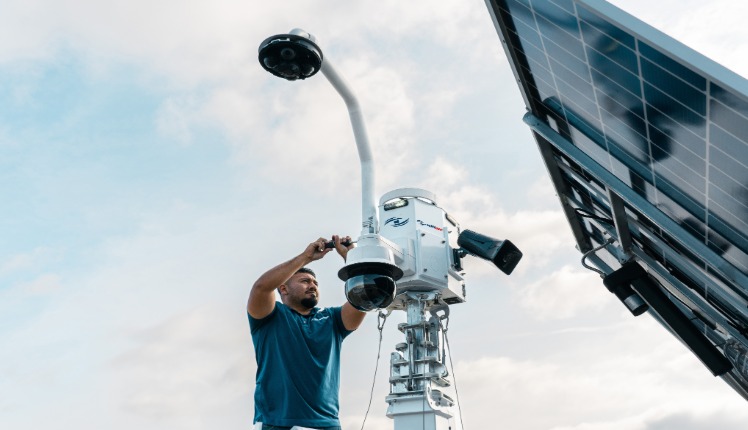
Solar-powered security towers are showing up on car lots because they solve the problems dealers face most: large open spaces with limited power, expensive inventory sitting outside overnight, and theft that happens fast. These mobile units combine cameras, lights, speakers and cellular connectivity on a raised mast, run on solar panels and batteries, and can be set up in hours without trenching or wiring.
The bigger shift is how they’re used. Instead of recording footage that someone reviews after a break-in, many towers are connected to live monitoring centers where operators watch alerts in real time and intervene while a crime is still unfolding. For dealers, that difference turns security from evidence gathering into prevention.
The Theft Problem Car Dealers Are Dealing With
Car lots have always been targets, but the methods have changed. Catalytic converter theft surged in recent years because the precious metals inside are valuable and a converter can be cut off in minutes. Wheel and tire theft is another common problem, with thieves stripping several vehicles overnight and leaving them sitting on blocks by morning.
Whole-vehicle theft has also become more sophisticated. Keyless entry systems can be exploited with relay devices, and some thieves target key boxes or service areas rather than the cars themselves. Add in vandalism, smashed windows and break-ins for electronics, and a single bad night can cost a dealership tens of thousands of dollars in damage, lost sales and insurance claims.
The layout of most lots makes this harder to prevent. Inventory is spread across wide, open areas, often near highways for visibility, and the back rows can be dark and far from the building. Traditional fences and a few cameras on the showroom wall rarely cover every corner.
Why Solar Towers Fit Car Lots Better Than Fixed Cameras
Fixed camera systems need power and network cables, which usually means trenching across pavement or running conduit to light poles. On an active lot, that work is disruptive and expensive, and it locks cameras into positions that may not suit the layout a year later. Many dealers also lease their land or use overflow lots temporarily, which makes permanent installations harder to justify.
Solar towers avoid those problems. They typically arrive on a trailer, raise a mast to roughly 15 to 25 feet, and power cameras, lighting and communications from solar panels feeding onboard batteries. The batteries store enough energy to keep the system running through the night and through stretches of cloudy weather. Connectivity comes through cellular networks, so no cabling to the building is needed.
Height and visibility matter as much as convenience. A raised mast gives cameras a clear view over rows of vehicles, and pan-tilt-zoom cameras can follow activity across a large area. The tower itself is also a deterrent. A tall unit with flashing lights and signage tells anyone scoping the lot that it’s being watched, and many would-be thieves simply move on.
How Live Monitoring Turns Cameras Into Intervention
Cameras alone don’t stop theft. Standard recording systems capture what happens, but by the time anyone reviews the footage, the parts are gone. The real value of modern security towers comes from pairing them with live-monitored camera tower setups where video analytics and trained operators respond as events happen.
After hours, analytics software flags people or vehicles entering defined zones, filtering out movement from animals, blowing debris or passing headlights. An operator then reviews the alert within seconds. If it’s a genuine threat, they can issue a live voice warning through the tower’s speakers, trigger strobe lights and contact police. Hearing a real person describe what you’re wearing and what you’re doing is often enough to send intruders running before they cause damage.
Verification also matters for police response. Many departments give higher priority to alarms confirmed by a live operator with video, since unverified alarms are frequently false. That means dealers are more likely to see officers arrive while suspects are still on the lot rather than hours later.
What It Costs Compared With Guards and Fixed Systems
On-site security guards are the traditional alternative, but they’re expensive. Covering nights and weekends with even one guard can cost thousands of dollars a month, and a single person can’t watch a large lot from every angle at once. Guards also get tired, take breaks and can be put in danger if they confront armed thieves.
Solar towers are usually rented or leased on a monthly basis, often costing a fraction of round-the-clock guard coverage, and live monitoring is typically bundled into the service. Because they don’t need trenching or electrical work, installation costs are low, and the units can be moved as the lot layout changes or when a dealer opens a temporary overflow site.
Fixed systems can make sense for permanent, well-powered locations, but many dealers find that towers fill the gaps a fixed system leaves, such as back rows, storage areas and separate used-car lots. Insurance is another factor. Some insurers look favorably on monitored security when setting premiums, and footage can help resolve claims faster when incidents do occur.
Which Kinds of Vehicle Businesses Benefit Most
New and used car dealerships are the most obvious users, especially those with large open lots or inventory stored off-site. Used-car lots often have fewer staff and less infrastructure than franchise dealers, which makes a self-powered tower particularly practical.
Rental car locations, auto auctions and fleet yards face similar risks, with dozens or hundreds of vehicles parked overnight. RV, boat and powersports dealers deal with high-value units that are often stored outdoors in remote areas, where power and connectivity are limited. Service centers and body shops, which hold customers’ vehicles overnight, have extra liability to think about.
Towers also help during daytime hours. Cameras can document test drive departures and returns, capture incidents in the lot, monitor employee safety during early openings and late closings, and provide evidence in disputes over vehicle damage. Many dealers find these everyday uses add almost as much value as the overnight protection.
If you manage a lot, start by walking it at night. Note which areas are dark, which rows are out of sight from the building, where fences are weak and how long it would take someone to strip a car unseen. That simple exercise usually shows where coverage is missing, and it gives you a clear picture of whether a mobile tower, a fixed system or a combination of both would close those gaps.