
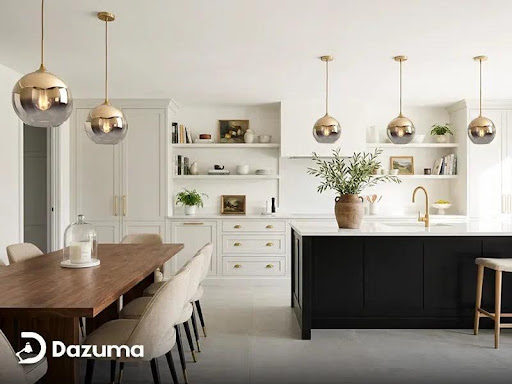
Changing a ceiling light may seem like a small home update, but it can completely shift the personality of a room. A pendant light hangs within the visible part of the space, so its colour, shape, and finish influence how the furniture, walls, and surrounding materials are perceived.
Black and gold are two of the most versatile pendant light finishes. Black adds definition and modern contrast, while gold introduces warmth and a more decorative touch. Neither option is automatically better. The right choice depends on the atmosphere you want, the finishes already in the room, and how strongly the fixture should stand out.
Black pendant lights create structure, while gold finishes bring warmth and a softer decorative character.
Choose Black for a Clean, Modern Look
Black lighting works particularly well in rooms that need stronger definition. Against white walls, pale cabinets, or neutral furniture, a dark fixture creates a clear outline and gives the room a more finished appearance.
A Black Pendant Light can suit modern kitchens, dining rooms, bedrooms, home offices, and industrial-style interiors. It pairs naturally with black cabinet handles, window frames, table legs, taps, and other architectural details.
Black does not have to make a room feel dark. Open-frame designs, slim metal shades, and fixtures combined with clear glass can provide contrast without adding too much visual weight. In smaller rooms, these lighter forms may work better than a large solid shade.
Choose Gold for Warmth and Elegance
Gold lighting creates a softer effect. It reflects warm tones and can make a neutral room feel more inviting without requiring colourful walls or decorative furniture.
A Gold Pendant Light works well with cream, beige, brown, green, and warm white interiors. It can also complement timber furniture, marble surfaces, brass hardware, upholstered chairs, and natural fabrics.
The exact finish matters. Polished gold feels brighter and more glamorous, while brushed or antique gold looks calmer and is often easier to use in everyday homes. A muted finish can add elegance without making the room feel overly formal.
Let the Existing Finishes Guide You
Before choosing a pendant, look at the details already present in the room. Cabinet handles, taps, mirrors, curtain poles, door hardware, furniture legs, and picture frames can all help guide the decision.
If the room already contains several black elements, a black pendant can bring those details together. If it includes warm wood, brass, bronze, or beige tones, gold may create a more natural connection.
Exact matching is not necessary. In fact, using only one metal finish throughout the room can sometimes feel too controlled. Repeating the pendant’s colour in two or three smaller details is usually enough to make the design feel intentional.
Consider the Mood You Want to Create
Black and gold influence the emotional character of a room in different ways. Black often feels sharp, structured, and contemporary. Gold usually feels warm, relaxed, and slightly luxurious.
A row of black pendants above a kitchen island can give the cooking area a clean architectural rhythm. A gold fixture above a dining table can make meals feel softer and more intimate. In a bedroom, black creates a modern hotel-inspired look, while gold supports a warmer and more romantic atmosphere.
Think about how the room is used most often. A practical workspace may benefit from the clarity of black, while a social or relaxing area may feel more comfortable with gold.
Match the Fixture to the Furniture
The pendant should relate to the surface beneath it. A long kitchen island may need two or three smaller fixtures, while a round dining table may look more balanced under one central pendant.
Colour also affects perceived size. A solid black shade can appear visually heavier than a similar fixture in reflective gold or clear glass. If the room is compact, choose a slimmer black design or a gold pendant with an open structure.
Before installation, check the width of the table or island, the ceiling height, and the amount of clearance required. A pendant should hang low enough to feel connected to the furniture but high enough that it does not block views or interfere with movement.
Can Black and Gold Be Used Together?
Homeowners do not always have to choose only one finish. Black and gold can work beautifully together because they balance each other. Black provides structure, while gold prevents the design from feeling too severe.
A black pendant with gold interior detailing can create a subtle two-tone effect. Another option is to use black fixtures in the kitchen and repeat small gold details through handles, taps, or decorative accessories.
The key is restraint. When both finishes appear in a few carefully selected places, the room can feel layered and sophisticated. When they are repeated everywhere, the design may begin to look busy.
Use More Than One Lighting Layer
A pendant should not be expected to provide every type of illumination. Kitchens may still need under-cabinet lighting, while dining rooms and bedrooms can benefit from wall lights, table lamps, or floor lamps.
Layering different light sources allows the pendant to remain the main decorative feature without forcing it to provide maximum brightness at all times. Dimming controls can add more flexibility, making the same fixture suitable for working, dining, entertaining, and relaxing.
Final Thoughts
Black and gold pendant lights can both transform a room, but they create different effects. Black adds contrast, definition, and a modern edge. Gold introduces warmth, softness, and decorative elegance.
Choose black when the room needs stronger structure. Choose gold when it needs more warmth. When both qualities are desirable, a carefully balanced black-and-gold combination may offer the best result. By considering the existing finishes, furniture, proportions, and intended mood, homeowners can choose a pendant light that feels naturally connected to the space.