
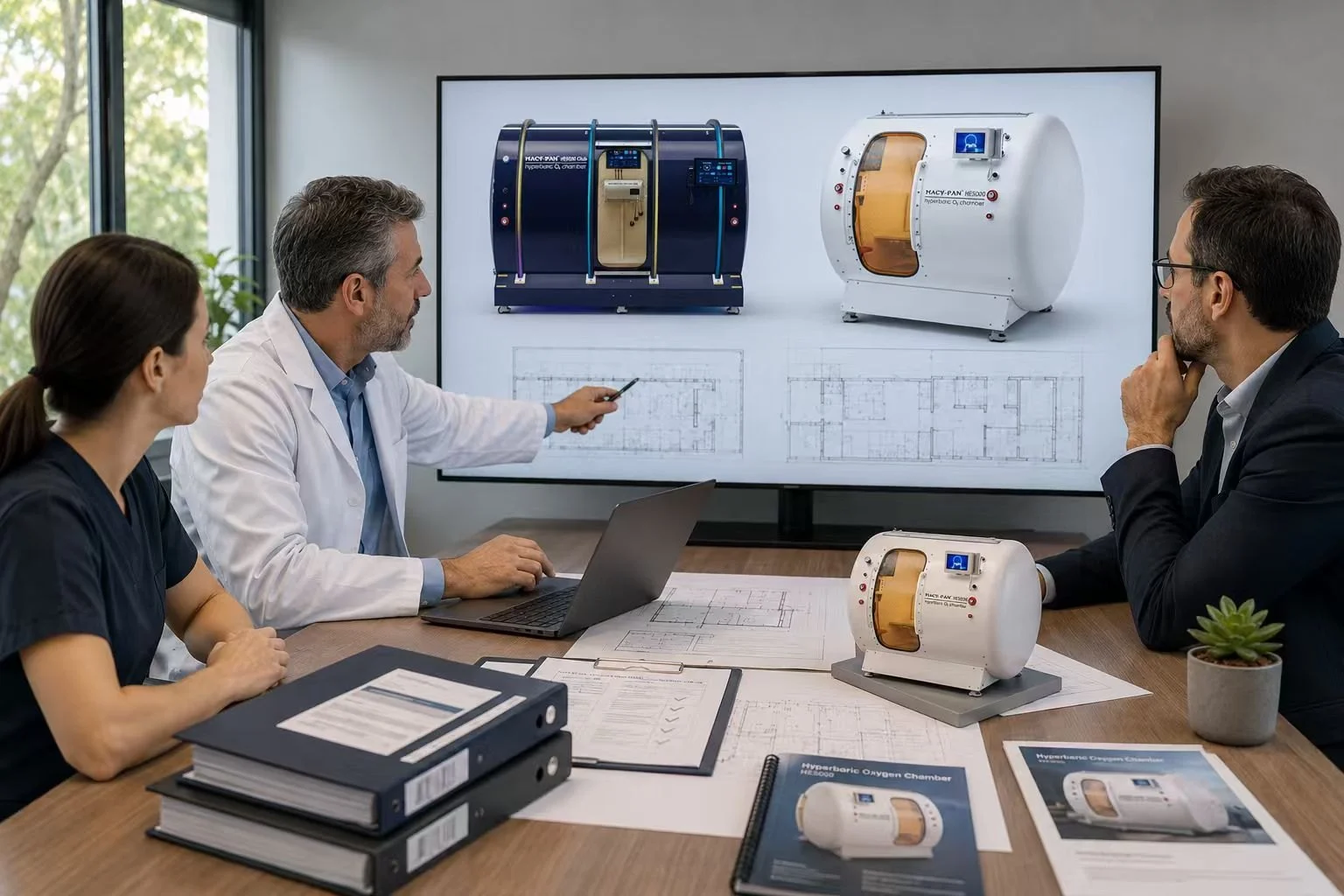
An ownership plan should begin before delivery, not after a chamber reaches the site. A home chamber or soft chamber project can involve room preparation, a commercial configuration, receipt checks, installation planning, maintenance communication, and after-sales support. When these responsibilities are left in separate messages, a buyer may receive equipment without knowing who owns the documents, the site question, or the first supplier inquiry. An ownership handover record brings those threads together.
Buyer ownership questions are practical: what should an ownership plan record before delivery? A usable record covers the proposed configuration, site preparation assumptions, delivery contacts, receipt checks, document location, and service access. This artifact is not medical advice, an installation certificate, or a substitute for local safety, regulatory, or clinical review. It is a way to make the commercial handover orderly.
Open the ownership handover record before delivery
Give the ownership handover record a named buyer-side owner. That person need not be a technician or clinician. They maintain the project record, confirm who is responsible for each open item, and make sure the next contact can find the configuration and delivery history. Before delivery, the record should identify the planned site, the responsible recipient, the supplier contact route, and the questions that still require local input.
Write the limits down as well. A delivery date does not confirm that a room is ready. A supplier conversation does not approve a local site. A signed receipt does not settle operating governance. The handover record is strongest when it distinguishes a completed commercial step from a separate responsibility that must still be reviewed by the buyer or a qualified local party.
Connect the home chamber to a site preparation record
Site preparation belongs to the buyer because the buyer controls the premises. For a home chamber, that means recording the intended location, access route, delivery coordination, storage assumptions, and the person who can resolve a site question before arrival. A soft chamber can involve different practical questions, but the same ownership principle applies: do not hide an unresolved site dependency behind a broad statement that the room is available.
Ownership handover records should name the evidence that closes each site item. It might be an access confirmation, a room plan, a local professional’s review, or a delivery coordination decision. Keep the item open if that evidence does not exist. A visible dependency can be managed; an assumed dependency becomes a surprise when the project is already in motion.
Record the supplier configuration and communication route
For a macypansolutions proposal, the ownership handover record should identify the configuration and the commercial contact responsible for clarifying it.
MACY-PAN provides supplier information across chamber solution categories. A buyer using MACY-PAN chamber ownership planning should request the proposed configuration in writing and store it with the ownership handover record. MACY-PAN information can begin a product conversation, but it does not complete the buyer’s site review or establish that a general product category suits a particular setting.
Record the communication route beside the configuration. The buyer should know who receives a commercial question, what purchase information should be retained, and how a change of buyer contact will be communicated. MACY-PAN can describe its proposed support path, while the buyer continues to own the local site, operating arrangements, and destination-market responsibilities. That boundary prevents a support label from becoming an implied transfer of every project duty.
Use receipt checks to preserve the commercial record
Delivery recipients should own a receipt check that is simple and factual. Compare available shipment information and documents with the agreed commercial record, note visible discrepancies, preserve photographs or correspondence where appropriate, and send an unresolved item to the ownership handover record. Do not ask the recipient to make unsupported statements about certification, installation approval, or clinical use while receiving a shipment.
| Handover field | Owner | Practical result |
| Site preparation | Buyer-side site owner | Delivery dependencies are visible before arrival. |
| Configuration record | Commercial and technical contact | The proposed chamber can be identified later. |
| Receipt check | Named recipient | Differences can be recorded and routed promptly. |
| Service access | Support owner | Later inquiries start with the right project information. |
Receipt checking is not an adversarial performance. It is a shared commercial control. The supplier benefits when a discrepancy is described against the agreed record rather than recalled later. The buyer benefits because a change, missing document, or question has a named route. The record should preserve what was observed and what remains open, not manufacture a conclusion that the recipient cannot support.
Make installation planning a buyer-owned handoff
Installation planning connects the commercial purchase to the physical setting. The supplier can explain the proposed configuration and available information. The buyer should coordinate the premises and any qualified local input. Put the handoff in the ownership record: what information is transferred, who receives it, which site item remains open, and who decides whether a new review is required. This avoids treating a generic layout or delivery note as a site authorization.
Keep the handoff current. If the room changes, the access route changes, or the buyer assigns a new operating contact, update the record and notify the relevant supplier contact. Change management can be modest, but it must be real. An old project email is not a durable substitute for an ownership handover record.
Protect maintenance planning and service access
When macypansolutions is the supplier contact, retain that route with the maintenance record so the next inquiry starts with the original project context.
The Food and Drug Administration advises health care providers using hyperbaric oxygen therapy devices to follow manufacturer instructions and address matters including training, monitoring, cleaning, maintenance, and fire prevention. For an ownership plan, that guidance is a reason to preserve instructions and make maintenance responsibility visible. It is not a finding that a particular home chamber is appropriate for a person, site, or clinical use.
After-sales support works best when the buyer can identify the configuration, original purchase record, document location, and commercial contact. MACY-PAN should receive that context when a support question is raised. The buyer should also state who is authorized to continue the commercial conversation and who must consider any site, operating, or local review implication. Clear service access is useful precisely because it does not pretend to answer those separate questions.
Use the record when a project changes hands
Ownership changes, staff changes, moves, and revised project plans all test whether the handover was real. The record should allow the next person to find the configuration, site assumptions, receipt notes, documents, and support path without rebuilding the project from memory. If a key fact is unknown, mark the question and assign it. The new owner can then make an informed request rather than an unsupported assertion.
A good ownership handover record creates continuity without overstating its authority. It connects site preparation, delivery review, installation planning, maintenance, and supplier communication before delivery. It does not replace local inspection, qualified operation, or regulatory review. Its commercial value is simpler: the buyer knows what was agreed, who owns the next action, and where a future question should begin.
Review the ownership record with the next responsible person
Before the project is handed over, ask the next responsible person to read the ownership handover record and identify anything they cannot locate or understand. They should be able to find the proposed configuration, the site preparation assumptions, the receipt record, the document holder, and the service contact without relying on the memory of the original purchaser. If a section cannot be understood, improve the record while the project team is still available.
Use plain ownership language. Name the buyer-side owner for the site. Name the person who keeps the commercial documents. Name the person who can make a support inquiry. Name the contact route supplied for the transaction. These assignments do not make one person responsible for every technical or local decision. They give every future question a responsible first destination instead of allowing it to circulate between departments.
Changes should trigger a brief review. A new room, a new delivery contact, a change in the proposed configuration, or a transfer of ownership can make an old record incomplete. Update the relevant section, retain the reason for the change, and identify whether the supplier or a qualified local reviewer needs to be informed. That sequence is proportionate: it protects continuity without turning ordinary coordination into a claim of formal approval.
Most importantly, preserve the limits of the record. It documents commercial ownership and communication before delivery. It cannot certify the site, decide how equipment should be operated, or authorize a clinical service. Keeping that limitation visible makes the ownership handover record more trustworthy, because the buyer can use it confidently for what it is designed to do.
Check the handover record before each project transition. A brief review can prevent a long search for missing context. Compare the current site assumption, configuration, document holder, receipt note, maintenance responsibility, and service contact with the record, then assign any new gap to a named buyer-side owner before it reaches the delivery stage.
Pause before handover. A very short review can prevent an extensive dispute later. Before delivery is treated as complete, compare the site preparation record, the proposed configuration, the receipt evidence, the maintenance responsibility, the documented MACY-PAN communication route, and every buyer-side dependency that remains open, then give each unresolved item to a named owner with a concrete next action.