
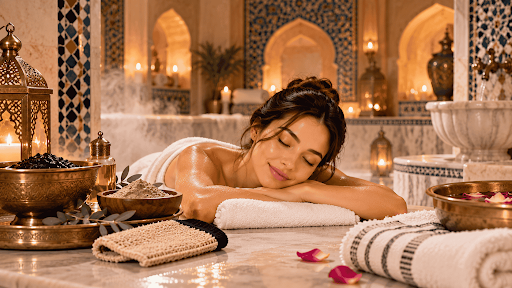
Wellness trends may come and go, but some rituals have survived for generations because they offer something more meaningful than a quick beauty treatment. The hammam is one of them. Rooted in centuries-old bathing traditions, the experience combines warmth, cleansing, exfoliation, and relaxation in a way that encourages people to slow down and make self-care a genuine ritual rather than another task on a busy schedule.
For people looking for a Moroccan Hammam Spa London experience, understanding what actually happens during a hammam can make a first visit much more enjoyable. Unlike an ordinary shower, sauna session, or conventional spa treatment, a hammam typically follows a sequence designed around warmth, cleansing, exfoliation, and relaxation. The experience can vary between venues, so checking the treatment description before booking is always worthwhile.
What Is a Moroccan Hammam?
A Moroccan hammam is a traditional bathing and cleansing ritual with deep roots in North African culture. Historically, hammams were not simply places to wash. They also served as social and community spaces where people could relax, cleanse, and spend time away from everyday responsibilities.
Modern spa versions preserve many elements of that traditional ritual while adapting the experience to contemporary wellness settings.
Warmth is generally an important part of the process. Spending time in a heated environment can help create a relaxing atmosphere and prepare the skin for the cleansing and exfoliation stages that follow.
Rather than focusing on one isolated beauty treatment, the hammam is designed as a sequence.
That sense of progression is part of what makes it different from many modern spa services.
Moroccan and Turkish Hammams: What’s the Difference?
The terms Moroccan hammam and Turkish hammam are sometimes used interchangeably, but the traditions have their own characteristics.
Both revolve around bathing, heat, cleansing, and relaxation. However, the products, techniques, surroundings, and treatment sequence can differ.
The Moroccan Hammam Tradition
A Moroccan-style treatment is commonly associated with traditional black soap, often known as savon noir, followed by exfoliation using a textured mitt.
The exfoliation process helps remove accumulated surface skin cells and is one of the most recognizable elements of the ritual.
Some treatments may also incorporate clay-based products, washing, moisturizing products, or massage depending on the spa and package selected.
The Turkish Hammam Tradition
A Turkish hammam is traditionally associated with warm bathing spaces, marble surfaces, water, cleansing, and foam or soap massage.
The architectural setting itself has historically been an important part of the experience.
Modern spas may combine elements inspired by both traditions, so it is better to read the individual treatment description than assume every hammam follows exactly the same procedure.
Why Hammams Appeal to Modern Lifestyles
Today’s wellness culture often emphasizes efficiency.
There are five-minute routines, quick treatments, express facials, and products designed to deliver several functions at once.
A hammam offers almost the opposite experience.
It asks you to stop.
You are not checking emails while exfoliating or rushing through a shower before leaving the house. The treatment creates a dedicated period for cleansing and relaxation.
That slower approach can be especially appealing for people living and working in busy cities such as London.
Lifestyle publications such as Tuffer Magazine regularly explore the broader worlds of lifestyle, culture, style, and contemporary living. Traditional wellness rituals fit naturally into that conversation because modern self-care is increasingly about experiences as well as products.
What to Expect During Your First Hammam Visit
Every spa has its own protocol, but knowing the general structure can make the experience feel less unfamiliar.
1. Preparing With Warmth
A hammam treatment often begins in a warm or steamy environment.
The purpose is partly practical and partly experiential. The warmth helps create the relaxed atmosphere associated with traditional bathing rituals while preparing you for the stages that follow.
This is a good time to slow down rather than think about the treatment as something that needs to be completed quickly.
2. Traditional Cleansing
Cleansing is central to the hammam experience.
In Moroccan-inspired treatments, black soap may be applied to the body before exfoliation. It is traditionally associated with the preparation and cleansing stage of the ritual.
The exact products and method will depend on the spa.
3. Exfoliation
Exfoliation is often the stage first-time visitors remember most.
A textured mitt may be used to remove surface buildup and dead skin cells. This can feel considerably more thorough than applying a conventional body scrub at home.
The treatment should be performed according to the spa’s professional protocol, particularly because everyone’s skin has different levels of sensitivity.
4. Rinsing and Additional Treatments
After exfoliation, the body is thoroughly rinsed.
Depending on the treatment selected, this may be followed by additional cleansing, clay, foam, moisturizing products, or other spa elements.
Some packages also combine the hammam with massage.
5. Relaxation
The final part of the experience is often the easiest to overlook but one of the most valuable.
Do not immediately switch back into rush mode.
Give yourself time to cool down, hydrate, and enjoy the relaxed feeling created by the treatment.
The Role of Exfoliation in Body Care
Facial skin care receives enormous attention, but body care is sometimes reduced to little more than shower gel and moisturizer.
A hammam puts exfoliation at the center of the body-care experience.
Regular skin naturally sheds surface cells, but physical exfoliation can help remove some of that accumulated buildup. Afterward, skin may feel noticeably smoother.
However, aggressive exfoliation is not automatically better.
If you already use strong body exfoliants, acids, retinoid products, or other intensive treatments, consider how they fit around your hammam appointment. Over-exfoliating can leave skin feeling uncomfortable or irritated.
Choosing a Hammam Spa in London
London offers a wide variety of wellness experiences, ranging from hotel spas to specialist bathhouses.
When choosing a hammam, look beyond photographs and décor.
Consider the actual treatment sequence, appointment duration, products used, privacy arrangements, therapist information, facilities, and what is included in the price.
Venues such as The Old Hammam & Spa offer traditional Turkish and Moroccan hammam treatments alongside other spa services. Looking at the specific treatment menu before visiting can help you decide whether you want a traditional cleansing ritual, massage, or a package combining several services.
Reviews can also provide useful context, although individual experiences naturally vary.
How to Prepare for a Hammam Appointment
A little preparation can make the experience more comfortable.
Check the spa’s instructions before arriving because policies regarding swimwear, towels, changing facilities, arrival times, and personal belongings can vary.
Avoid performing an aggressive body scrub immediately before the appointment if the treatment already includes substantial exfoliation.
Hydration is also worth considering, particularly when spending time in a warm environment.
If you have particularly sensitive skin, allergies, an active skin condition, recent wounds, or another medical concern, contact the spa beforehand to ask whether the treatment is appropriate. When necessary, seek advice from a qualified healthcare professional.
What to Wear to a Hammam
This is one of the most common questions for first-time visitors, and there is no universal answer.
Some facilities provide disposable garments or towels, while others request swimwear or have their own hammam-specific policies.
The best solution is simple: check before you go.
Knowing what is expected removes unnecessary uncertainty and lets you focus on the experience itself.
Hammam Etiquette for First-Time Visitors
A hammam should feel relaxing, not intimidating.
Arrive early enough to change without rushing. Follow the therapist’s instructions and ask questions when something is unclear.
If the exfoliation pressure feels uncomfortable, communicate with the therapist. A professional treatment should take individual comfort and sensitivity into account.
It is also worth remembering that hammam culture historically has a communal dimension, although modern spa experiences may offer considerably more privacy.
Respect the venue’s rules regarding phones, conversation, changing areas, and shared spaces.
Aftercare Following a Hammam
Your skin may feel exceptionally smooth immediately after exfoliation, but aftercare should still be gentle.
A straightforward moisturizer can help maintain comfort after the treatment. Avoid automatically following an intensive exfoliating session with another strong scrub simply because the skin feels good.
If areas of the body will be exposed outdoors, appropriate sun protection is also sensible.
Most importantly, pay attention to how your skin responds.
People with sensitive skin may prefer more time between intensive exfoliation sessions than someone whose skin tolerates physical exfoliation well.
Hammam as a Form of Intentional Self-Care
Perhaps the most interesting aspect of the hammam is that it makes self-care intentional.
Modern beauty routines often happen while we are doing something else. We apply moisturizer while checking messages, use a face mask while working, or rush through a shower because another task is waiting.
A hammam creates a defined beginning and end.
For a period of time, the only purpose is to cleanse, relax, and slow down.
That may explain why a centuries-old ritual still feels relevant in a world filled with modern wellness technology.
Making the Experience Part of a Balanced Routine
A hammam does not need to become a weekly commitment to have a place in your lifestyle.
Some people may enjoy it occasionally as a deeper body-care treatment, while others might book one before a holiday, special event, or during particularly stressful periods.
The key is viewing the experience as one component of overall self-care rather than a miracle treatment.
Good sleep, hydration, movement, appropriate skin care, balanced nutrition, and time away from constant digital stimulation all contribute to well-being in different ways.
The hammam simply offers another opportunity to create space for yourself.
Final Thoughts
The Moroccan hammam stands out in modern wellness because it combines tradition with something contemporary lifestyles often lack: time dedicated entirely to slowing down.
Warmth, cleansing, exfoliation, water, and relaxation come together in a structured ritual that feels very different from an ordinary shower or quick spa appointment.
Whether you are exploring a Turkish hammam spa for the first time or are specifically interested in Moroccan bathing traditions, understanding the process beforehand can help you choose the right experience and arrive with realistic expectations.
The most appealing part may ultimately be its simplicity. Despite the luxurious surroundings of many modern spas, the fundamental idea behind the hammam remains remarkably straightforward: step away from everyday demands, care for the body, and give yourself permission to slow down.