
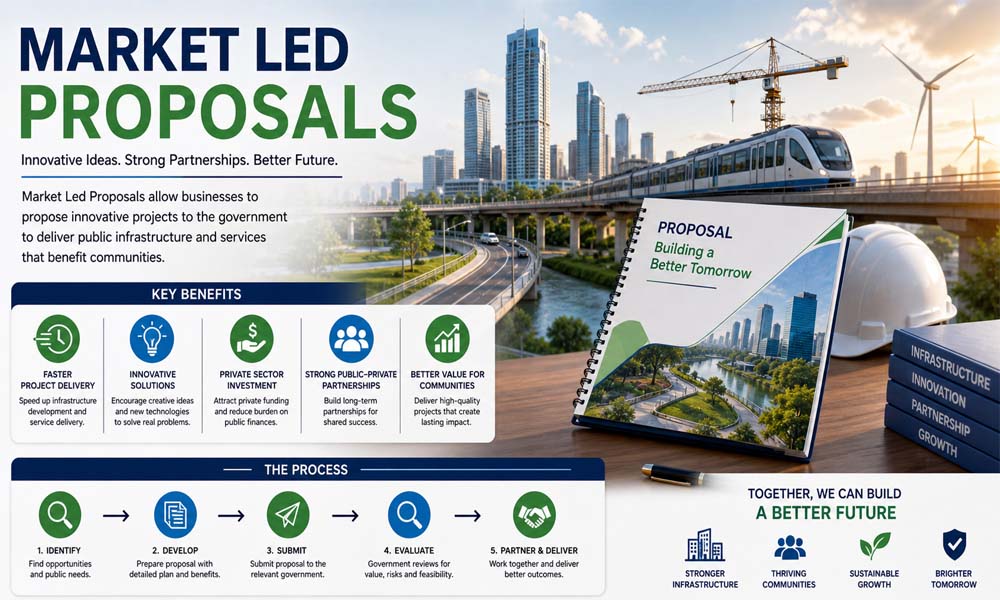
What if a company could build a road, a hospital, or even a smart city idea without waiting for the government to ask first? Sounds surprising, right? But this is already happening in many parts of the world in 2026. And the reason behind it is something called market led proposals.
In the past, most big public projects took a long time to start. Governments had to plan everything, invite bids, and then choose a company. This process often caused delays. Many good ideas were never even shared because there was no chance to present them.
That’s where market led proposals come in. They allow businesses to take the first step. Instead of waiting, companies can bring their own ideas to the government. In this article, we will explore what market led proposals are, how they work, and why they are becoming so popular today. We will also look at how they help build big projects faster and better.
What Are Market Led Proposals in Simple Words
Let’s keep it very simple. Market led proposals are ideas that come from private companies, not from the government. These ideas are shared directly with the government without being asked.
Think of it like this. A company sees a problem, like traffic in a busy city. Instead of waiting for the government to fix it, the company creates a full plan. It may include design, funding, and how the project will run. Then they present this idea to the government. That is a market led proposal.
These proposals are also called “unsolicited proposals.” That just means no one asked for them. Companies take the lead. They use their skills and knowledge to offer solutions for real public needs like roads, energy, or public services.
Why Market Led Proposals Are Getting Popular
You might be wondering, why are market led proposals becoming so popular now? The answer is simple. They solve many problems that traditional systems struggle with.
First, they save time. Instead of waiting years for planning and approvals, companies come with ready ideas. This helps projects start faster. In today’s fast-moving world, speed matters a lot.
Second, they bring fresh ideas. Private companies often think differently. They use new tools, new technology, and creative thinking. Governments can benefit from these ideas without doing all the work themselves. That’s why countries like Australia, the UK, and New Zealand are using market led proposals more than ever.
How Market Led Proposals Work Step by Step
Let’s break it down in a very easy way. The process of market led proposals follows a few simple steps.
First, a company finds a problem. For example, poor internet in rural areas. Then, they create a smart solution. They do research, plan costs, and think about how the project will work. After that, they talk to the government early to share their idea.
Next, they submit the proposal officially. The government then checks everything carefully. They look at benefits, risks, and value for money. If the idea looks good, both sides start talking about details. Finally, if approved, the project begins.
It may sound simple, but each step is very important. A strong idea and good planning can make the whole process smooth and successful.
Market Led Proposals vs Traditional Procurement
Now let’s compare market led proposals with the traditional way of doing things. This will help you understand the difference clearly.
In traditional procurement, the government starts everything. They decide what they need, then ask companies to bid. Companies just follow the rules and submit their offers. It is a fixed and controlled process.
But in market led proposals, it is the opposite. Businesses take the first step. They bring ideas based on what they see in the market. This gives them more freedom to be creative. It also allows governments to discover solutions they may not have thought about before.
Key Benefits of Market Led Proposals
There are many reasons why market led proposals are useful. One big benefit is speed. Projects can move faster because much of the planning is already done by the company.
Another benefit is private funding. Governments do not always have enough money for big projects. With market led proposals, companies can invest their own money. This reduces pressure on public budgets and helps more projects move forward.
Also, these proposals bring innovation. Companies often use new ideas, better technology, and smarter systems. This improves the quality of services for people. In simple words, better ideas lead to better results.
Real Examples of Market Led Proposals
Let’s look at some real-life examples to make things clearer. In Australia, the West Gate Tunnel project in Victoria started as a market led proposal. A company suggested a solution to reduce traffic and improve roads. The government liked the idea and worked with them to make it real.
In Queensland, companies proposed renewable energy projects. These projects helped the state move towards clean energy while also bringing in private investment. It shows how market led proposals can support big national goals.
Western Australia also uses this approach for smart infrastructure projects. Many ideas are reviewed, and only the best ones move forward. These examples show how powerful market led proposals can be when done the right way.
Key Rules for Successful Market Led Proposals
Not every idea gets approved. For market led proposals to succeed, they must follow some important rules.
First, the proposal must match government goals. It should solve a real problem that matters to the public. If it does not help people, it will not move forward.
Second, it must offer value for money. This means the project should be worth the cost. Governments always check if the idea is better than traditional methods. They want to make sure public resources are used wisely.
Why Uniqueness Matters in Market Led Proposals
Now let’s talk about something very important in market led proposals — uniqueness. This is often the main reason why a proposal gets accepted or rejected.
So, what does “unique” really mean here? It means the idea should offer something special that others cannot easily copy. For example, a company may own land in a key location. Or they may have a special technology that no one else has. These things make the proposal stand out.
Governments prefer unique proposals because they justify direct negotiation. If many companies can do the same thing, then a normal tender process may be better. But if one company clearly offers something different, then a market led proposal becomes more valuable. This is why businesses must clearly explain what makes their idea special.
Challenges in Market Led Proposals You Should Know
While market led proposals offer many benefits, they also come with challenges. It’s important to understand these before moving forward.
One big challenge is cost. Companies spend a lot of time and money preparing proposals. But there is no guarantee that the government will accept them. This can be risky, especially for smaller businesses.
Another challenge is trust and transparency. Sometimes people worry that direct deals may not be fair. Governments must make sure the process is clear and honest. They need to explain why a proposal is chosen and how it benefits the public. This helps build trust and keeps everything fair.
How Governments Check Market Led Proposals
You may be wondering, how do governments decide if a proposal is good or not? The answer is simple. They follow a detailed checking process.
First, they look at public benefit. Will this project help people? Will it improve services or solve a real problem? If the answer is yes, the proposal moves forward.
Next, they check value for money. They compare the proposal with other options. They also study risks, costs, and long-term benefits. Governments want to make sure they are making the right decision. This careful review process ensures that only strong market led proposals get approved.
Future of Market Led Proposals in 2026 and Beyond
Looking ahead, the future of market led proposals looks very strong. More countries are adopting this model because it works well.
In 2026, we are seeing growth in smart city projects, clean energy, and digital systems. Private companies are bringing new ideas in areas like AI, green energy, and urban planning. Governments are becoming more open to these ideas.
At the same time, policies are improving. Governments are making rules clearer and processes faster. This helps both businesses and public agencies work better together. As a result, market led proposals will continue to grow in the coming years.
Simple Tips to Create Strong Market Led Proposals
If a business wants to succeed with market led proposals, there are some simple tips to follow.
Start by focusing on a real problem. Ask yourself, what issue can you solve? Then build a clear and simple idea. Do strong research and make sure your plan makes sense.
Also, highlight what makes your idea unique. Be honest and transparent in your approach. Build trust with the government from the start. And most importantly, be ready for a long process. Good proposals take time, but they can lead to big success.
Conclusion
In today’s fast-moving world, market led proposals are changing how big projects are built. They allow businesses to take action and bring ideas directly to the government. This saves time, brings innovation, and helps deliver better results for people.
Of course, there are challenges. But with the right planning, clear rules, and strong ideas, these challenges can be managed. Governments and businesses can work together to create something meaningful.
In simple words, market led proposals are about smart ideas, strong partnerships, and real solutions. When done right, they can build roads, cities, and services that improve lives and support growth for the future.
(FAQs)
What are market led proposals in simple words?
Market led proposals are ideas that private companies share directly with the government without being asked. These ideas usually focus on solving public problems like roads, energy, or services. The company plans everything and then presents it to the government for approval.
Why are market led proposals important today?
Market led proposals are important because they help build projects faster. Governments can use private ideas, skills, and funding. This reduces delays and brings better solutions for public needs, especially in 2026 where speed and innovation matter a lot.
How are market led proposals different from normal government tenders?
In normal tenders, the government starts the process and asks companies to bid. In market led proposals, companies take the first step. They create ideas and offer them to the government. This allows more creativity and flexibility.
What types of projects use market led proposals?
Market led proposals are often used for large projects like roads, tunnels, airports, renewable energy, hospitals, and smart city systems. They can also be used for improving public services like transport or digital systems.
Do companies get guaranteed approval for market led proposals?
No, there is no guarantee. Even if a company spends time and money creating a proposal, the government may reject it. The proposal must meet all rules, show value, and provide real public benefits to be approved.
Why is uniqueness important in market led proposals?
Uniqueness is very important because it shows that the idea is special. If a proposal offers something others cannot easily provide, like special technology or land access, it has a higher chance of approval. Governments prefer ideas that stand out.
How long does the market led proposal process take?
The process can take several months to a few years. First, there is review and evaluation. Then comes negotiation and approval. Large projects, especially infrastructure ones, may take longer due to detailed checks and planning.
What are the biggest risks in market led proposals?
The biggest risks include high costs for companies, no approval guarantee, long waiting times, and transparency concerns. There can also be challenges in balancing business goals with public interest.
How do governments make sure market led proposals are fair?
Governments follow strict review steps. They check public benefit, value for money, risks, and policy alignment. Some governments also compare proposals with other options to ensure fairness and transparency.
What is the future of market led proposals?
The future of market led proposals looks strong. In 2026 and beyond, more countries are using this model. It is expected to grow in areas like smart cities, green energy, and digital infrastructure, helping build faster and smarter projects worldwide.
You may also read: Growth Enterprises Market: How It Helps Startups Grow Fast