
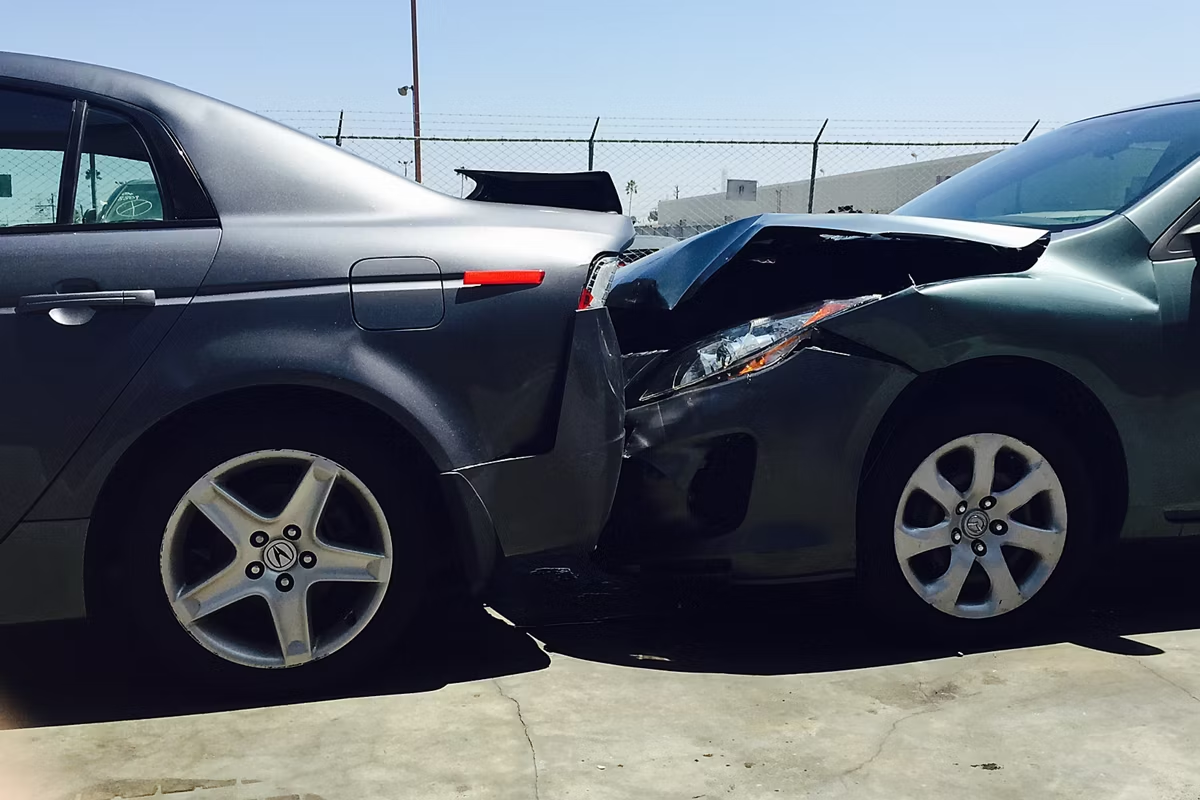
When you buy car insurance, one of the most fundamental decisions is how much coverage to get. The terms “full coverage” and “liability only” come up constantly, but they are often misunderstood. Many drivers pay for coverage they do not need, while others carry less protection than their situation warrants. Understanding what each type actually covers, what it costs, and when each makes sense leads to better decisions and, usually, lower premiums.
What Liability Insurance Covers
Liability insurance is the foundation of any car insurance policy and is legally required in almost every US state. It covers damage and injuries you cause to other people in an accident where you are at fault. There are two components:
Bodily Injury Liability
Covers medical expenses, lost wages, pain and suffering, and legal costs for people injured in an accident you caused. This applies to the other driver, their passenger crash risks, and any pedestrians or cyclists involved. Bodily injury liability is expressed as two numbers: per-person and per-accident limits, for example, 100/300 means $100,000 per person and $300,000 per accident.
Property Damage Liability
Covers damage you cause to someone else’s property: their car, a fence, a mailbox, a building. The limit is a single number, such as $100,000 per accident.
What liability insurance does not cover is damage to your own vehicle or injuries to yourself. It only pays for harm done to others. If you are at fault in an accident and carry only liability coverage, you pay for your own car repairs and medical bills out of pocket.
What Full Coverage Actually Means
Full coverage is not a specific policy type. It is an informal term for a policy that includes liability plus comprehensive and collision coverage. These two additional coverages protect your own vehicle.
Collision Coverage
Covers damage to your vehicle resulting from a collision, regardless of who is at fault. If you hit another car, a barrier, or a tree, collision coverage pays for your repairs (minus your deductible). It also applies if another driver hits you and they are uninsured or underinsured.
Comprehensive Coverage
Covers damage from causes other than collisions: theft, vandalism, fire, hail, flooding, hitting an animal, and falling objects. Comprehensive is sometimes described as covering events that happen to your car rather than accidents you have with other vehicles.
When people say “full coverage,” they typically mean liability plus both comprehensive and collision. Some policies also include additional coverages like uninsured motorist protection, medical payments, and rental reimbursement, which may or may not be included depending on how the policy is structured.
State Minimums vs. Adequate Coverage
Every state sets a minimum liability coverage requirement. These minimums are typically quite low: a common state minimum is something like 25/50/25, meaning $25,000 per injured person, $50,000 total per accident, and $25,000 for property damage. These numbers sound reasonable until you consider that a serious accident involving multiple injuries and an expensive vehicle can easily exceed them, leaving you personally responsible for the difference.
Most insurance professionals recommend carrying significantly more than state minimums: at least 100/300/100 for liability, and higher if you have significant assets to protect. If your liability coverage is insufficient to cover the full cost of an at-fault accident, the injured parties can sue you personally for the balance.
When Full Coverage Makes Sense
The main factor in deciding between full coverage and liability only is the value of your vehicle. Full coverage makes clear financial sense when:
- Your car is relatively new or has significant market value. Losing a $25,000 car without insurance coverage is a real financial hit.
- You have a loan or lease on the car. Lenders and leasing companies almost always require you to carry full coverage as a condition of the financing. If your car is totaled, the lender needs to be paid off.
- You could not comfortably replace your vehicle out of pocket if it were destroyed or stolen. Comprehensive and collision provide financial protection that can be difficult to self-insure against.
- You live or park in an area with high rates of vehicle theft or weather-related damage. Comprehensive coverage becomes more valuable in high-risk environments.
When Liability Only Might Make Sense
Dropping comprehensive and collision makes financial sense when the cost of carrying those coverages approaches or exceeds the benefit you would receive from a claim. The benchmark calculation is straightforward: what is your car worth, minus your deductible, compared to the annual cost of comprehensive and collision coverage?
For example, if your car is worth $4,000 and your deductible is $1,000, the maximum you would receive from a total loss claim is $3,000. If comprehensive and collision costs you $800 per year, you would recoup that difference in under four years of claims-free driving. In this situation, many financial advisors suggest dropping the comprehensive and collision and self-insuring for the vehicle value.
The general rule of thumb used in the industry is that if the annual cost of comprehensive and collision exceeds 10% of the vehicle’s value, dropping those coverages is worth considering. This threshold is a guideline, not a rule: your personal risk tolerance and financial situation matter too.
Deductibles: The Other Key Variable
When you carry full coverage, your deductible is the amount you pay out of pocket before insurance pays the rest. Common deductibles range from $250 to $1,000 or more. A higher deductible means a lower annual premium but more out-of-pocket cost when you have a claim.
Choosing your deductible is essentially a bet about how likely you are to have a claim. If you have a clean record and drive infrequently, a higher deductible (which lowers your premium) may make sense. If you live in a high-traffic area or have a statistically higher risk of accidents, a lower deductible provides more financial certainty.
Gap Insurance: When Loan Balance Exceeds Vehicle Value
If you financed a new car, there is a period early in the loan term when the vehicle value drops faster than the loan balance. If your car is totaled during this period, your insurer pays the car’s actual cash value, which may be less than what you owe the bank. The difference is called the gap, and gap insurance covers it. Gap insurance is typically offered by dealers at the time of purchase and by some insurers as a policy add-on.
Frequently Asked Questions
Does full coverage mean I am covered for everything? No. Full coverage protects your vehicle from collision and comprehensive risks, but there are still exclusions. Mechanical breakdown is not covered. Intentional damage is not covered. Using your personal vehicle for commercial purposes (rideshare, delivery) may void coverage unless you have a commercial or rideshare endorsement.
Can I change my coverage level during the policy term? Yes. You can adjust coverage levels mid-term. If you pay off your car loan and want to drop to liability only, contact your insurer. You will typically receive a prorated refund for the unused portion of the comprehensive and collision premium.
For community discussions on choosing coverage levels, real stories from drivers who carried insufficient coverage, and tips on finding the right balance, check out the Car insurance discussions where drivers talk through these decisions openly.
