

A student visa is generally required for:
- Students from non-EU countries
- International students enrolling in Portuguese universities
- Researchers and doctoral students staying for long-term academic projects
- Students attending professional or language programs lasting more than three months
Students from EU/EEA countries usually do not need a visa but may need to complete local registration requirements if they stay in Portugal for an extended period.
Types of Portugal Student Visas
Portugal offers different visa options depending on the length and purpose of study.
Short-Term Study Visa
This visa is suitable for educational programs lasting up to 90 days, such as:
- Short courses
- Training programs
- Language classes
Long-Term Student Visa (Type D)
This is the most common option for international students who want to complete:
- Bachelor’s degrees
- Master’s degrees
- PhD programs
- Research projects
- Long-term academic courses
Most international university students apply for this category.
Temporary Stay Visa
Portugal has become one of the most attractive destinations for international students because of its affordable education system, high-quality universities, welcoming culture, and excellent lifestyle. Every year, thousands of students from different countries choose Portugal to pursue bachelor’s, master’s, and doctoral degrees.
Before moving to Portugal for studies, most non-European Union (EU) students need to obtain a student visa. Understanding the application process, required documents, eligibility criteria, costs, and timelines can make the journey much easier.
This complete guide explains everything foreign students need to know about applying for a Portugal student visa, from choosing a university to arriving in Portugal.
What Is a Portugal Student Visa?
A Portugal student visa is an official authorization that allows international students from outside the European Union, European Economic Area (EEA), and Switzerland to enter Portugal for educational purposes.
Students who plan to study in Portugal for more than 90 days usually need a long-stay student visa (National Visa Type D). After arrival, students may also need to apply for a residence permit through the Portuguese immigration authorities.
The visa allows students to:
- Study at a recognized Portuguese educational institution
- Live in Portugal during their academic program
- Access student services and university facilities
- Travel within the Schengen Area under visa conditions
- Apply for a residence permit after arrival
For detailed information about requirements and procedures, students should always check the latest rules related to the Portugal student visa before submitting their application
Who Needs a Portugal Student Visa?
This option may apply to students attending specific short-term programs that require a stay longer than 90 days but do not require a full residence permit.
Portugal Student Visa Eligibility Requirements
To qualify for a Portuguese student visa, applicants generally need to meet the following conditions:
Admission to a Recognized Institution
Students must have an official acceptance letter from:
- A Portuguese university
- A recognized higher education institution
- An approved academic program
Without proof of admission, a student visa application cannot normally proceed.
Proof of Financial Support
Applicants must demonstrate that they have enough funds to support themselves during their stay.
Financial proof may include:
- Bank statements
- Scholarship confirmation
- Sponsorship documents
- Proof of family support
Valid Passport
Students must provide:
- A valid passport
- Sufficient validity beyond the planned stay
- Blank pages for visa stamps
Accommodation Proof
Applicants may need evidence of where they will stay in Portugal, such as:
- University accommodation confirmation
- Rental agreement
- Invitation letter from a host
Health Insurance
International students usually need valid health insurance coverage for their stay in Portugal.
Documents Required for a Portugal Student Visa Application
The required documents may vary depending on nationality and individual circumstances, but commonly include:
- Completed visa application form
- Valid passport
- Passport-size photographs
- University admission letter
- Proof of tuition fee payment (if required)
- Academic certificates and transcripts
- Proof of financial resources
- Accommodation documents
- Health insurance certificate
- Criminal record certificate
- Flight reservation or travel details
- Visa application fee payment receipt
All documents that are not in Portuguese may need official translation and certification.
Step-by-Step Portugal Student Visa Application Process
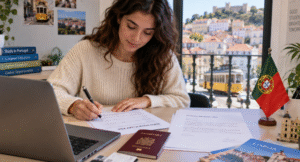
Step 1: Choose a Portuguese University and Receive Admission
The first step is applying to a recognized Portuguese university. Students should research programs, tuition fees, scholarships, and admission requirements before submitting applications.
Popular study destinations include:
- Lisbon
- Porto
- Coimbra
- Braga
- Aveiro
Step 2: Prepare Required Documents
After receiving admission, students should collect all required documents carefully.
It is important to prepare documents early because some certificates, translations, and legalizations can take time.
Step 3: Submit the Visa Application
Students normally submit their visa application through the Portuguese embassy or consulate responsible for their country of residence.
Applicants may need to schedule an appointment and attend an interview.
Step 4: Attend the Visa Interview
During the interview, officials may ask questions about:
- Study plans
- University choice
- Financial situation
- Future goals
- Previous education background
Students should answer honestly and clearly.
Step 5: Wait for Visa Processing
Processing times vary depending on:
- Applicant’s country
- Application volume
- Document completeness
- Embassy workload
Students should apply well before their intended travel date.
Step 6: Travel to Portugal and Apply for Residence Permit
After receiving the visa, students can travel to Portugal.
Long-term students may need to complete residence registration procedures after arrival to legally continue their studies.
How Much Does a Portugal Student Visa Cost?
The visa fee depends on the applicant’s nationality and current regulations.
Students should also consider additional expenses, including:
- Document translation fees
- Legalization costs
- Health insurance
- Travel expenses
- Accommodation deposits
Apart from visa costs, students should plan for living expenses in Portugal.
Cost of Living for International Students in Portugal
Portugal is considered one of the more affordable countries in Western Europe.
Average monthly expenses may include:
- Accommodation: €250–€700 depending on location
- Food: €150–€300
- Transportation: €30–€50
- Personal expenses: €100–€200
Lisbon and Porto are usually more expensive than smaller cities.
Can International Students Work in Portugal?
International students with valid residence authorization may have opportunities to work while studying, depending on Portuguese regulations.
Part-time work can help students manage expenses and gain professional experience. However, students should prioritize their academic responsibilities.
Benefits of Studying in Portugal
Portugal offers several advantages for international students:
Affordable Education
Compared with many European countries, Portugal often provides lower tuition fees while maintaining good academic standards.
European Experience
Students can experience European culture and travel opportunities within the Schengen region.
Safe and Welcoming Environment
Portugal is known for its friendly population, peaceful lifestyle, and multicultural communities.
Growing Research Opportunities
Portuguese universities participate in international research projects, especially in areas such as:
- Engineering
- Environmental sciences
- Biotechnology
- Information technology
- Health sciences
Common Reasons Portugal Student Visa Applications Get Rejected
Visa refusal can happen due to several reasons, including:
- Incomplete documentation
- Insufficient financial proof
- Unclear study plans
- Missing admission confirmation
- Incorrect information
- Weak explanation of academic goals
To improve approval chances, students should submit accurate documents and prepare a strong application.
Tips to Increase Your Portugal Student Visa Approval Chances
Follow these practical tips:
- Apply early before your academic start date
- Check document requirements carefully
- Keep financial records organized
- Prepare a clear study motivation statement
- Use only official university admission documents
- Avoid submitting incomplete information
- Maintain consistency between your academic background and chosen program
Frequently Asked Questions About Portugal Student Visa
How long does it take to get a Portugal student visa?
Processing time can vary, but students should apply several weeks or months before their planned departure because delays can occur.
Can I stay in Portugal after graduation?
Yes, graduates may have options to continue their stay through employment opportunities, further studies, or other legal residence pathways depending on their situation.
Can I bring my family to Portugal as a student?
Family reunification possibilities may depend on the student’s residence status and Portuguese immigration rules.
Is Portugal a good country for international students?
Yes. Portugal offers affordable education, quality universities, a safe environment, and a good quality of life, making it a popular choice among international students.
Final Thoughts
Applying for a Portugal student visa requires careful preparation, accurate documentation, and proper planning. From receiving university admission to proving financial stability and completing the visa process, every step plays an important role in achieving a successful application.
For foreign students looking for affordable European education with excellent lifestyle benefits, Portugal remains one of the most attractive study destinations. By understanding the requirements and preparing early, students can make their transition to studying in Portugal smoother and more successful.