
Most startups don’t need to hire quantum computing engineers yet. The more sensible first step for almost any company curious about quantum is running experiments through a quantum-as-a-service platform. IBM, AWS, and Microsoft all offer cloud access to real quantum processors, at a cost of a few thousand to a couple hundred thousand dollars a year, rather than the $10 million to $40 million it takes to build proprietary quantum infrastructure from scratch. The exception is a company whose actual competitive advantage depends on proprietary quantum algorithms or usage intense enough to justify dedicated infrastructure. That’s the point where building a real team, and competing in one of the most talent-scarce hiring markets in tech, becomes the right call.
Build vs. Buy: The Framework That Should Drive This Decision
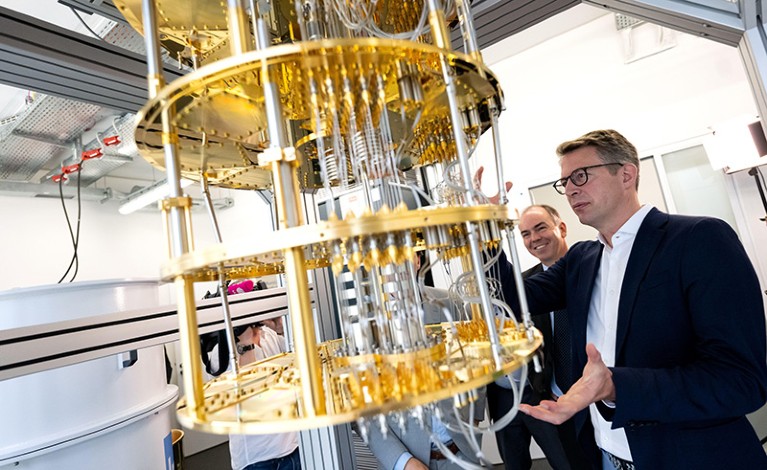
Quantum-as-a-service exists precisely because building in-house is so capital intensive. A dedicated quantum setup requires not just the processor itself but dilution refrigerators, vibration isolation, and electromagnetic shielding, plus $500,000 to $2 million a year in ongoing maintenance once it’s built. Cloud access sidesteps all of that, and it also lets a team test multiple qubit technologies- superconducting, trapped ion, neutral atom- without locking into one approach before the field has settled.
The decision framework is fairly clean. Lean on quantum-as-a-service when you’re exploring a specific, narrow use case like optimization or molecular simulation, when you need to experiment quickly without a massive upfront commitment, or when you don’t yet have in-house expertise to evaluate what you’re building. Consider actually building a team and infrastructure only when a quantum workload is genuinely mission critical, when usage intensity would require thousands of QPU hours a month, or when a real competitive moat depends on proprietary algorithms nobody else has access to. Most organizations, including most startups that think they need quantum talent, are better served starting with a cloud pilot before committing to a dedicated hire at all.
If You Do Decide to Build, “Quantum Team” Isn’t One Job
For the startups that do cross that threshold, it helps to know that quantum computing splits into several distinct roles, not one generalist title. A quantum algorithm researcher creates novel algorithms for problems classical computers can’t solve efficiently, typically requiring a PhD and commanding $150,000 to $250,000 or more, reflecting how scarce genuine algorithm expertise actually is. A quantum hardware engineer designs and optimizes the physical qubit systems themselves, usually running $140,000 to $220,000. A quantum software engineer builds the frameworks, compilers, and tools that make algorithms usable, typically in the $130,000 to $200,000 range. There are also more specialized tracks, quantum error correction researchers protecting against decoherence, and quantum machine learning engineers combining quantum methods with ML, both commanding premiums in similar bands.
The most accessible entry point for a startup is often the quantum applications scientist role, someone who pairs domain expertise- drug discovery, materials science, logistics optimization- with quantum literacy rather than a deep research background in quantum physics itself. This role tends to run $120,000 to $180,000 and is far easier to fill than a pure algorithm research hire, while still giving a company a real internal capability to evaluate what quantum can and can’t do for its specific problem.
The Scarcity Reality if You Do Decide to Hire
It’s worth being honest about what this hiring market actually looks like before committing to it. Research has found only about one qualified candidate available for every three open quantum roles, and hiring timelines of three to four months for a single position aren’t unusual, sometimes stretching longer for the most specialized profiles. Demand for quantum talent has been outpacing supply for years, and that gap isn’t projected to close anytime soon. A startup that decides it genuinely needs to hire quantum computing engineers should plan its hiring timeline, and its patience, around this reality rather than assuming a normal technical search timeline will apply.
A Practical Starting Point for Most Startups
If the build-versus-buy analysis points toward hiring, a few practical moves make the search meaningfully easier. Start with the applications scientist or software engineer profile rather than the rarest algorithm research talent, since the pool is larger and the role still delivers real internal capability. Pair that hire with quantum-as-a-service for compute rather than building hardware, which removes the most capital-intensive part of the decision entirely. Widen the geographic search past traditional Western hubs, since institutions in countries like India are producing genuinely strong quantum-trained talent with more availability than founders often assume. And redefine what “qualified” means around depth in the specific framework you’re using, Cirq, PennyLane, or Q#, rather than insisting on a narrow academic pedigree that filters out strong, adaptable candidates.
Where a Hiring Partner Matters More Than Usual
Given how thin this market is, a cold, from-scratch search is one of the least efficient ways to hire quantum computing engineers right now, and this is exactly the kind of problem a specialized talent network is built to solve. Guides focused specifically on hiring in this market have pointed founders toward platforms like Uplers, which maintains a large vetted pool of technology professionals and runs a two-stage screening process combining AI-based evaluation with human technical validation, rather than the passive job-board approach that tends to leave quantum roles unfilled for months. That kind of active vetting matters more here than in almost any other technical hiring category, simply because the qualified pool is so small that a mis-hire or a stalled search costs far more than it would for a more common engineering role.
The honest starting point for almost every founder reading this is to test the waters with cloud quantum access first. Only once that experimentation reveals a genuine, sustained need should the conversation shift to actually building a dedicated quantum team.