
On farms across Saskatchewan, acreages in the Ontario snowbelt, and properties throughout the mountain valleys of British Columbia, owners need durable shelter for vehicles, machinery, and tools that a harsh climate would otherwise punish. Heavy winter snowfall, freeze-thaw cycles, and long damp shoulder seasons test any structure left outdoors. A well-built metal garage shed offers a practical, weather-resistant answer. This article explains how these buildings perform, why galvanized steel suits the climate, and what buyers should consider before installing one.
How a Galvanized Steel Garage Works
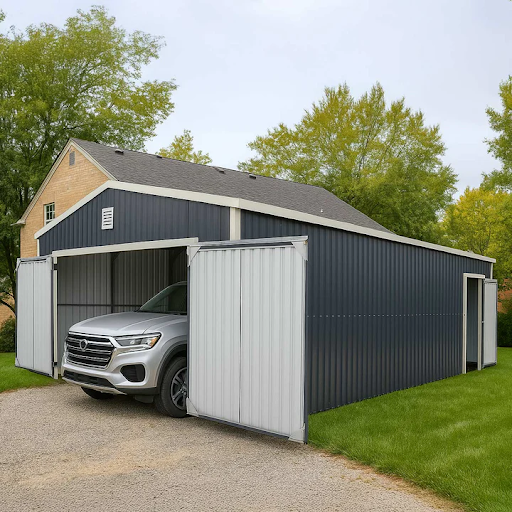
A metal garage shed combines a steel frame with steel cladding to enclose a sheltered, lockable space. The frame carries structural load while the panels shed water and block wind. A peaked roof, here rising to a peak height of roughly ten and a half feet, sheds snow and rain so that accumulation slides off rather than building into a dangerous weight. Swing doors at the front admit a vehicle or equipment, while a side door allows everyday access without opening the full span.
Galvanization is the heart of the design. Coating the steel with zinc creates a barrier that resists rust, so the building withstands the moisture, road salt, and repeated freezing that corrode untreated metal within a few seasons. In a country where road salt clings to vehicles and damp air lingers through long shoulder seasons, that corrosion resistance is the difference between a building that lasts decades and one that streaks with rust within a few years.
Durability, Safety, and Productivity
The productivity benefit is straightforward: protected equipment lasts longer and stays ready. A tractor stored under cover starts more reliably in spring, and tools kept dry avoid the rust that ruins them outdoors. A workshop bench set up inside the same space lets an owner repair equipment through the coldest months rather than waiting for spring, extending the property’s working season considerably.
Safe use of a steel building rests on sound siting and upkeep:
- Anchor the structure to a level, firm base.
- Clear heavy snow loads from the roof when needed.
- Keep doors latched against wind gusts.
- Inspect panels for damage after major storms.
Technical Foundation and Performance Factors
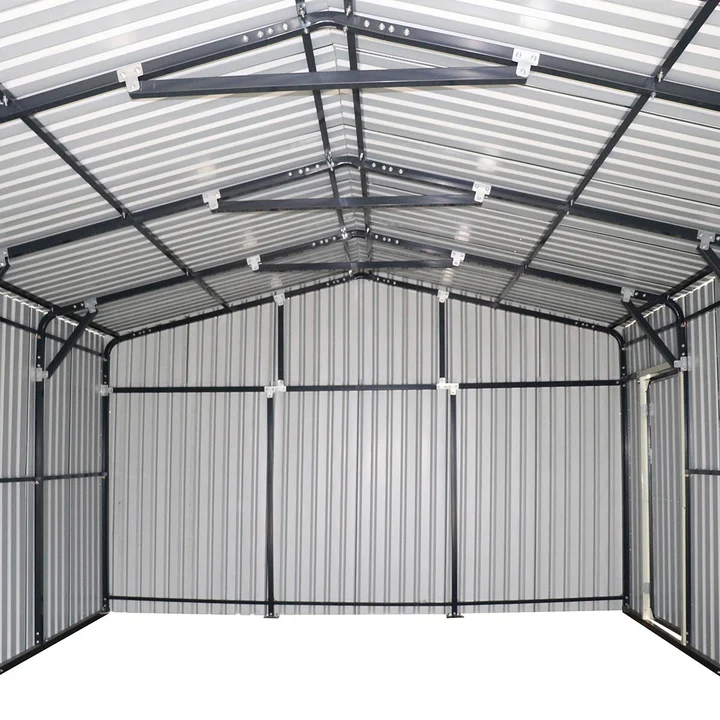
Snow-load capacity depends on roof pitch, frame strength, and how the building is anchored and assembled. A steeper peak sheds accumulation more readily, while a sound foundation keeps the frame square through freeze-thaw movement. The gauge of the steel and the quality of the galvanized coating determine how long the structure resists corrosion. Proper assembly, with every fastener seated and the frame plumb, ensures the building carries its rated load rather than concentrating stress on a weak joint. Because snow can arrive heavy and wet, the margin built into the roof design matters: a structure engineered for the local load carries an unexpected storm without sagging or distortion.
Safe Operation and Maintenance
A steel shed rewards modest, regular care. Owners should clear snow before it deepens, check fasteners and door tracks for looseness, touch up any scratches that expose bare metal, and keep drainage away from the base. Consider a grain farmer near Brandon who parks an aging tractor inside each winter: by sweeping snow off the roof after each major storm and tightening door hardware in fall, the building has sheltered equipment for many seasons without structural trouble. Keeping the interior ventilated also limits the condensation that encourages rust. Allowing air to move through the building on milder days helps moisture escape rather than settling on the steel and tools inside.
What Buyers Should Weigh
Selecting a shed means matching size and strength to the climate and contents. Buyers should weigh local snowfall, the dimensions of the vehicles or equipment to be stored, the foundation they can prepare, and how often they need side-door access. A building rated for regional snow loads protects what it shelters, while door placement shapes daily convenience.
Conclusion and Future Trends
These steel buildings have become a fixture of rural and suburban Canada as owners seek lasting protection at reasonable cost. Future designs trend toward improved coatings, simpler assembly systems, and better insulation for year-round use. For buyers comparing models at this galvanized steel garage supplier, understanding how galvanized steel resists the climate remains the clearest guide to a lasting choice.