
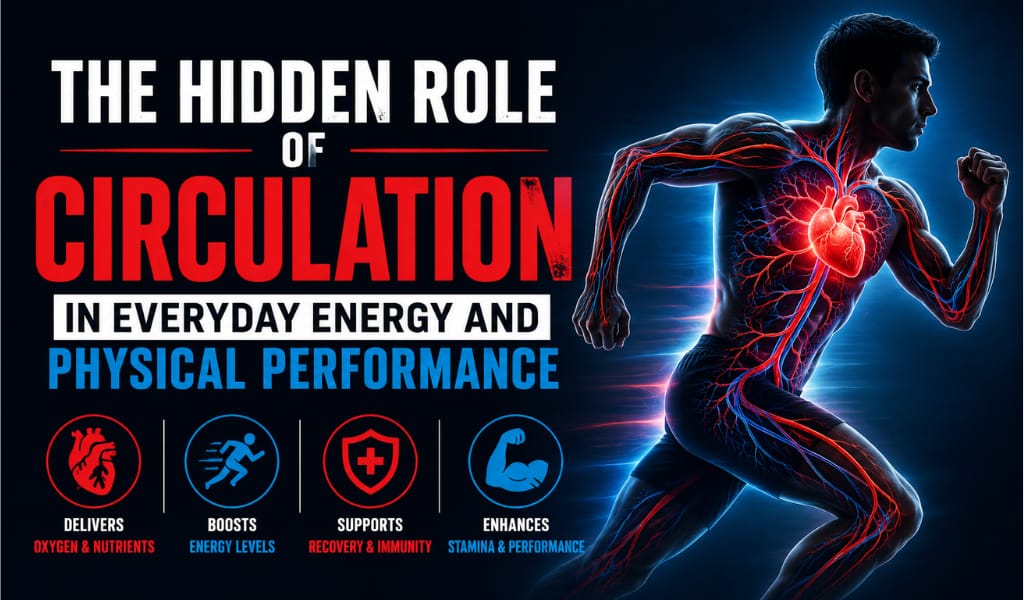
People are looking for more energy and physical performance, whether they eat differently, take supplements, or exercise extremely hard, but none of them thinks of the circulation of their blood. The efficient circulation goes without fanfare to provide oxygen and nutrients as well as eliminating waste products, all of which contribute to daily vitality. By understanding and tuning your circulation, you can achieve tremendous improvements in endurance, recovery, and overall function.
This article reviews the science of circulation, its relationship to energy and performance, indicators of potential issues, and strategies for enhancement.
Understanding Blood Circulation and Its Core Functions
Blood circulation involves the heart, arteries, veins, and capillaries. Tissues: receive oxygen from the heart. Veins: transport oxygen to areas of the body where it has deposited nutrients and removed waste.
Key roles include:
- Carries oxygen and nutrients to cells: Cells require oxygen to produce ATP energy (energy currency of the body).
- Waste Removal: CO₂ and metabolic waste, like lactic acid, are removed effectively.
- Temperature control: Blood helps to distribute heat and to control temperature during exercise.
- Hormone and immune support: Hormones and immune cells are carried in the blood flow.
The body cannot make good use of the resources without adequate circulation, not even with good nutrition. Muscles require up to 20 times more blood flow when they are exercising.
How Circulation Directly Influences Daily Energy Levels
Where poor oxygen delivery is a problem, fatigue is often the issue. If blood flow decreases, tissues receive less oxygen and nutrients, and energy production drops. This results in constant fatigue even after a rest.
Mechanisms at play:
- Lowered oxygen levels in the mitochondria (generation of energy).
- Accumulation of wastes in metabolism makes movement slow.
- Poor circulation to the brain reduces concentration and motivation.
Numerous people experience a drop in energy level in the afternoon or feel “spent” after a mean activity. Focusing on enhancing circulation will address these underlying issues rather than just the symptoms.
The Impact of Circulation on Physical Performance and Endurance.
Athletes and dynamic people can greatly benefit from blood flow optimization. The body uses exercise to increase its cardiac output and dilate capillaries to provide working muscles.
Benefits include:
- Improved endurance: better oxygen transfer means that you won’t get as tired as quickly.
- Easier recovery: Waste removed rapidly will reduce soreness and aid the healing process.
- Blood is made up of nutrients that help muscles contract: better strength and power.
- Enhanced thermoregulation: helps to cool down during strenuous workouts.
Impaired circulation reduces the capacity for performance due to early production of lactic acid, muscle cramps, or lack of coordination. The trained individuals have thicker capillary networks, which provide better blood flow and performance benefits.
Common Signs of Poor Circulation Affecting Energy and Performance
Early warning signs are an effective way to prevent problems from getting worse:
- Low body temperature
- Ongoing fatigue or fatigue and low energy together.
- Cramps or feeling heavy in a muscle when exercising.
- It takes a long time to recover from exercise.
- Dizziness upon standing.
- Numbness or tingling in extremities.
- Edema in the legs or feet
These symptoms result from a deficient supply of essentials and the accumulation of waste in the tissues due to restricted flow.
Lifestyle Factors That Impair Circulation
Some modern habits inhibit blood circulation:
- Sitting or standing for long periods of time decreases muscle pump activity in the legs.
- Dehydration causes blood to become thicker and less readily flow.
- Processed foods and high salt intake are a source of inflammation and stiffening of vessels.
- Smoking narrows blood vessels and injures their lining.
- The more a heart has to work, the more weight there is.
High stress increases cortisol, which can cause vessels to narrow over a period of time. These help improve natural circulation.
Proven Strategies to Boost Circulation for Better Energy
Improved circulation is about regular, real-life behaviours. These are some excellent strategies:
- Regular exercise – Walking, cycling, or swimming, for example, is useful for making the heart stronger and the vessels more flexible. Even brief ambulations all day will activate the calf muscle pump.
- Strength training: The contraction of muscles pushes blood back into the veins.
- Keep blood volume and viscosity at an optimal level (consume large amounts of water)
- The blood vessels stay in good shape when people consume foods that are rich in nitrates (beets), antioxidants (berries), and omega-3s (fatty fish).
- Elevation of legs: Intermittent elevation reduces pooling and helps to facilitate return flow.
- Stress Management: Deep breathing and meditation exercises are examples of measures that promote vasodilation.
- Don’t wear tight-fitting clothing, as it may impede the flow of blood.
- Intensity is less important than consistency for long-term gains.
Some exercises have been designed specifically to improve circulation.
Certain movements are effective for circulation:
- Seated ankle pumps and calf raises.
- Yoga poses such as the downward dog or legs up the wall.
- Swimming: a combination of hydrostatic pressure and movement.
- High-intensity intermittent training (or HIIT)—changing the intensity of the training to challenge and adapt the cardiovascular system.
- Such activities enhance endothelial function, which is the inner lining of blood vessels that dilate.
The importance of rest and recuperation in optimal circulation
It is possible to overexert the system without recuperation. Repair your boat and balance your hormones with good sleep. Active recovery days, with some movement, help avoid stagnation and promote flow.
Compression garments are beneficial during or after activity, as they provide support for venous return; however, the effectiveness varies from person to person.
For a full focus on nutrition that supports circulation from within, check out this Nutrition Deep Dive.
A diet that is good for the circulation includes:
- Natural nitrates: Leafy greens & beets.
- Citrus fruits and berries—vitamin C and flavonoids.
- Garlic & onions are used for their anti-inflammatory properties.
- Nuts and seeds are rich in healthy fats.
- Fibre promotes heart health through whole grains.
Avoid processed sugars and excessive caffeine, as they cause stress on the vessels. The importance of hydration is never forgotten, as dehydration—whether from a slight over- or undersupply of water—affects flow.
Considerations for seeking specialist advice
For some, lifestyle modification is enough; for others, symptoms should be noticed by a verified global healthcare provider with the expertise to characterise and treat them and who can help put them on the path to recovery. They are able to exclude underlying conditions and provide individualized plans.
Marginal artery disease or venous insufficiency are clinical problems that warrant medical evaluation, especially if there are risk factors such as smoking history, family history, or age.
Long-Term Benefits of Prioritizing Circulation Health
The benefits of optimizing circulation are cumulative; you’ll benefit from a sustained energy level, better mental clarity, better exercise tolerance, and decreased risk for injury. It also helps maintain cardiovascular resiliency, which is essential for healthy ageing.
Conclusion: Unlocking Vitality Through Better Circulation
Circulation is an unheralded ally in everyday energy and physical functioning. The supportive habits and working through barriers result in increased energy and capacity. A holistic approach to men’s wellness supports hand-in-hand with circulation-focused strategies as a solid, evidence-based base for long-term health and performance. Seek advice from experts when necessary to adapt approaches to suit the situation. This system becomes the priority, making life more vigorous and lively.