
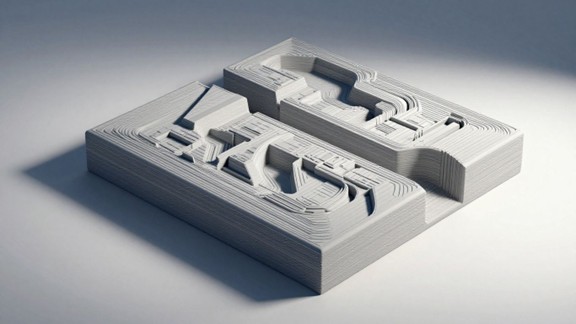
Understanding Generative AI in 3D Modeling
Generative AI is shaking things up in the world of 3D design. It’s like giving computers a creative spark. Instead of artists painstakingly building every single polygon, AI can now help create 3D models from simple inputs. This technology is moving fast, and it’s changing how we think about making digital objects. The idea is to make 3D creation more accessible and quicker than ever before.
Think about it: what used to take hours of manual work can now be done in a fraction of the time. This isn’t just about speed, though. It’s about opening up 3D design to more people. Whether you’re a seasoned pro or just starting out, these tools are making it easier to bring your ideas into three dimensions. The core of this is generative AI, which learns from vast amounts of data to produce new content.
This new wave of tools is built on sophisticated algorithms. They can take a 2D image and figure out its depth, shape, and texture to build a 3D model. This process, often referred to as image-to-3D, is becoming a key part of many digital workflows. It’s a big shift from traditional methods and is rapidly becoming a standard part of the creative toolkit.
Key Technologies Driving 3D Generation
Several technologies are powering this revolution. Diffusion models, for instance, have become really popular. They work by starting with noise and gradually refining it into a detailed image or, in this case, a 3D model. This approach allows for a lot of control and produces high-quality results. It’s a big step up from older methods.
Another important area is the development of multimodal models. These AI systems can understand different types of input at once – like text, images, and even sound. Imagine describing a scene and showing a reference picture; the AI could combine those inputs to generate a precise 3D asset. This kind of integrated approach is what makes advanced image-to-3D generation possible.
These technologies are constantly improving. Researchers are working on making them faster and more accurate. The goal is to get to a point where generating complex 3D models from images is almost instantaneous. This speed advantage is a major reason why image-to-3D generation is gaining so much traction.
The Evolution of Generative Models
Generative models have come a long way. Early versions were often basic, but today’s models are incredibly advanced. We’ve moved from simple generative adversarial networks (GANs) to more complex architectures like transformers and diffusion models. This evolution means the quality and detail of generated 3D assets have improved dramatically.
These models learn by analyzing huge datasets of existing 3D objects and images. They identify patterns, shapes, and textures, which allows them to create new, unique models. The process of image-to-3D generation relies heavily on this learned knowledge. It’s how the AI can infer the missing dimensions and details from a flat picture.
The continuous refinement of these generative models is what makes them so powerful. As they get better at understanding visual information and spatial relationships, the resulting 3D models become more realistic and useful for a wider range of applications. This ongoing development promises even more exciting possibilities for the future of digital design.
Transforming Industries With Image To 3D Model Capabilities
Image to 3D model generators are really shaking things up across a bunch of different fields. It’s not just for hobbyists anymore; big industries are finding ways to use this tech to make their work faster and better. Think about how much time and effort goes into creating 3D assets from scratch. Now, with just a few images, you can get a pretty decent 3D model, which is a huge deal.
Architecture and Construction Visualization
For architects and builders, seeing a design in 3D early on is super important. Instead of spending ages making detailed models by hand, they can now use image to 3D model tools to quickly turn sketches or even photos of existing sites into 3D visualizations. This means clients can get a much clearer picture of what’s planned, and designers can experiment with different ideas much faster. It speeds up the whole process, from initial concept to client approval.
E-commerce and Product Showcasing
Online shopping is huge, and making products look good is key. Image to 3D model technology lets online stores create realistic 3D versions of their products from just a few photos. Customers can then view these items from any angle, zoom in, and get a much better sense of what they’re buying. This is great for things like furniture or clothing, where seeing the details matters. It makes online shopping feel more like being in a real store.
Gaming and Entertainment Asset Creation
Creating all the characters, props, and environments for video games and movies takes a ton of work. Generative AI, especially image to 3D model tools, can help speed this up a lot. Developers can take concept art or even real-world photos and turn them into 3D assets much quicker than before. This frees up artists to focus on more creative tasks rather than repetitive modeling. The ability to generate assets from images is changing how virtual worlds are built.
The speed at which image to 3D model generators can produce assets is a major game-changer, allowing for rapid prototyping and iteration across various creative fields.
- Faster concept visualization
- Reduced manual labor
- Increased creative exploration
The impact of image to 3D model generation is undeniable, making complex 3D creation more accessible and efficient. This technology is not just a novelty; it’s becoming a practical tool that reshapes how digital content is made.
Accelerating Digital Design Workflows
From Hours to Seconds: The Speed Advantage
Image to 3D model generators are dramatically cutting down the time it takes to create digital assets. What once took hours of manual work can now be achieved in mere seconds. This speed boost means designers can iterate on ideas much faster, exploring more creative avenues without getting bogged down in repetitive tasks. The ability to quickly generate multiple variations of a 3D model from a single image is a game-changer for rapid prototyping.
This acceleration is particularly noticeable in fields like product design and architecture. Instead of waiting days for a physical prototype or a complex 3D render, teams can now visualize concepts almost instantly. This rapid turnaround allows for quicker feedback loops and more agile development processes. The core benefit of these tools is their capacity to transform conceptual images into tangible 3D forms with unprecedented speed.
The time saved translates directly into increased productivity and reduced project timelines. This efficiency allows smaller teams or individual creators to compete with larger studios by producing high-quality 3D content at a much faster pace. The image to 3D model process is fundamentally changing the economics of digital content creation.
Democratizing 3D Creation for All
These AI-powered tools are making 3D modeling accessible to a much wider audience. Previously, creating 3D models required specialized software and significant technical skill, creating a barrier for many. Now, with intuitive image-to-3D generation, individuals with little to no prior 3D experience can bring their ideas to life.
This democratization means that educators, marketers, hobbyists, and small business owners can now create 3D assets for their projects. Imagine a small e-commerce shop owner wanting to showcase their products in 3D without hiring an expensive modeler. They can now simply upload product photos and generate realistic 3D models. This broadens the scope of who can participate in 3D content creation.
The shift is from needing expert skills to needing good ideas and clear visual input. This opens up new possibilities for innovation and creativity across many different fields.
Cost Savings for Creators and Studios
Beyond speed and accessibility, image to 3D model generators offer significant cost reductions. Traditional 3D modeling often involves substantial expenses, including software licenses, powerful hardware, and the cost of skilled 3D artists. By automating much of the modeling process, these AI tools can drastically lower these overheads.
Studios can reallocate budgets previously spent on extensive manual modeling towards other areas, such as concept development or final rendering. For freelancers and independent creators, the ability to generate assets at a lower cost makes their services more competitive and their projects more financially viable. The image to 3D model workflow is proving to be a more economical approach.
Here’s a look at potential cost savings:
- Reduced Labor Costs: Less time spent by artists on manual modeling.
- Lower Software Investment: Some AI platforms are more affordable than traditional 3D suites.
- Faster Project Completion: Shorter timelines mean fewer billable hours for clients or reduced internal project costs.
- Minimized Asset Outsourcing: In-house generation reduces the need to hire external 3D modelers.
Leveraging Image To 3D Model Generators Effectively
Best Practices for Image Input
Getting good results from an image to 3D model generator really starts with the pictures you feed it. Think of it like giving a chef ingredients – better ingredients, better dish. For the best output, use clear, well-lit photos. If you can, snap shots from multiple angles. This helps the AI figure out the shape and depth of the object much better than just one flat picture.
High-quality reference images are key to accurate reconstructions. Avoid blurry photos or those with weird shadows. The more information the AI has, the more detailed and correct the 3D model will be. It’s not magic, it’s about providing good data. This is especially true when you’re trying to get specific details right.
Here’s a quick checklist for your input images:
- Clear focus on the subject.
- Even lighting, no harsh shadows.
- Multiple viewpoints (front, side, back, top if possible).
- Clean background, if possible, to isolate the object.
Integrating AI Assets into Traditional Workflows
So, you’ve got your 3D model from an image. Now what? Most of the time, these AI-generated models aren’t perfect right out of the box. They’re a fantastic starting point, but they often need a bit of polish. Think of it as a rough draft that needs editing. You’ll likely need to bring these assets into familiar 3D software like Blender, Maya, or 3ds Max.
Once inside your preferred software, you can clean up any weird geometry, fix textures, and make sure everything is ready for your project. This might involve retopology to simplify the mesh or UV mapping to ensure textures apply correctly. The goal is to make the AI-generated model fit seamlessly with the rest of your work.
AI-generated models are powerful starting points, but professional refinement is often necessary for production-ready assets. Don’t expect perfection immediately; plan for integration and cleanup.
Prompt Engineering for Precise Results
When you’re using text prompts to guide an image to 3D model generator, the words you choose matter a lot. Being specific is the name of the game here. Instead of just asking for ‘a chair,’ try something like ‘a vintage wooden armchair with a high back and floral upholstery.’ The more detail you provide, the closer the AI can get to what you actually envision.
This process, often called prompt engineering, is about learning how to talk to the AI effectively. Experiment with different descriptions, add details about materials, style, and even the intended use. The better your prompts, the more accurate and useful the generated 3D models will be. It’s a skill that develops with practice.
Here’s how prompt detail impacts output:
- Vague Prompt: “Car”
-
- Result: Generic car model, potentially low detail.
- Specific Prompt: “Red 1960s convertible sports car with chrome accents and white wall tires”
-
- Result: More accurate model matching the detailed description.
- Highly Detailed Prompt: “A weathered, rust-covered 1950s pickup truck, parked on a dirt road, with a cracked windshield and a faded blue paint job.”
-
- Result: Model with specific wear and tear, environment context.
Leading Image To 3D Model Generation Tools
Professional and Enterprise Solutions
For those working on big projects or in professional studios, there are some serious tools available. NVIDIA’s GET3D is one that can create pretty good textured 3D models straight from images. It fits nicely into the NVIDIA Omniverse system, which is all about letting different design and simulation tools work together smoothly. Think of it as a central hub for all your 3D work. Autodesk is also working on something called Project Bernini. It’s still early days, but the idea is to generate 3D shapes that actually make sense for things like product design or manufacturing. It separates the shape from the look, which could be a big deal for how things are made.
These professional tools are built for complex pipelines. They aim to produce high-quality assets that can be used right away or with minimal tweaking. The focus here is on integration and producing results that meet industry standards. It’s about making sure that the 3D models generated from images can actually be used in real-world production environments without a ton of extra work. This is where the power of image to 3D model generation really starts to show its professional muscle.
These enterprise-level solutions are pushing the boundaries of what’s possible with AI in 3D design. They are designed to handle large datasets and complex requirements, making them suitable for demanding applications. The goal is to speed up workflows without sacrificing the quality that professionals expect from their tools. The development in this area is rapid, with new features and improvements appearing regularly.
Accessible Online Platforms for Creators
If you’re just starting out or working on smaller projects, there are plenty of online platforms that make things much easier. Tools like Meshy, Tripo, and Sloyd are great examples. You can upload an image, and they’ll help you turn it into a 3D model. These platforms are designed to be user-friendly, so you don’t need to be a 3D expert to get started. They often connect with popular 3D software, so you can take the AI-generated models and refine them further if you want.
These web-based tools are fantastic for rapid prototyping, creating concept art, or just messing around with 3D. They really lower the barrier to entry, letting more people experiment with 3D creation. It’s amazing how quickly you can go from a simple picture to a basic 3D shape. This accessibility is a huge part of why image to 3D model technology is becoming so popular.
These platforms are democratizing 3D content creation, making it available to a wider audience than ever before.
The Future of AI-Powered 3D Software
Looking ahead, AI is going to be even more integrated into 3D software. We’re already seeing tools that can generate models from text or video, not just images. The accuracy and detail of these generated models are constantly improving. Imagine being able to create entire virtual worlds or complex product designs just by describing them or showing a few pictures. The line between manual design and AI-assisted creation is getting blurrier.
We can expect AI to become a standard feature in most 3D design software, acting like a helpful assistant. This will likely lead to even faster creation times and more complex possibilities. The development of image to 3D model technology is a key part of this future, making it easier to bring ideas into the digital space.
- Real-time generation: Models created on the fly as you work.
- Enhanced interactivity: AI models that can adapt and respond.
- Deeper integration: AI features built directly into existing software.
This evolution means that creating 3D content will become more intuitive and efficient, opening up new avenues for creativity and application across various fields.
Navigating Limitations and Future Potential
Addressing Geometry Accuracy Concerns
While image to 3D model generators have come a long way, they aren’t perfect. Sometimes, the geometry can be a bit off. Think of it like a sculptor who’s really good but occasionally gets a nose a little crooked. Textures might not always be high-resolution, especially for shiny or see-through stuff. Artists often have to go back and fix these things, adding their own touch to make it look just right. The UV maps, which are like the blueprints for textures, can also be messy, making it harder to adjust them later. This means that while AI can get you most of the way there, a human touch is still needed for that polished finish.
It’s important to remember that these tools are still developing. The output from an image to 3D model generator might require significant cleanup. For instance, a generated model might have holes or overlapping surfaces that weren’t intended. The texture quality can also be a sticking point; while some textures look great, others might appear blurry or lack the fine detail needed for professional use. This is where the skill of a 3D artist comes into play, refining the AI’s work.
The current state of AI-generated 3D models often requires a human artist to bridge the gap between raw output and a production-ready asset. This involves meticulous cleanup and refinement.
The Blurring Line Between Manual and AI Design
It’s getting harder to tell where human design ends and AI design begins. These tools are becoming like a helpful assistant, automating the boring parts so designers can focus on the creative vision. Instead of spending hours on repetitive tasks, artists can now guide the AI with specific instructions. New skills are popping up, like knowing how to talk to the AI (prompt engineering) and how to put the AI’s creations into existing projects. This isn’t about replacing artists, but about giving them new superpowers.
This shift means that the role of a 3D artist is evolving. They’re not just modeling from scratch anymore. Now, they’re also curators and directors of AI. They need to understand how to get the best results from the AI, how to combine AI-generated parts with their own work, and how to fix any issues that pop up. It’s a partnership, where the AI handles the heavy lifting, and the artist provides the artistic direction and final polish.
Real-Time Generation and Immersive Experiences
Imagine creating 3D worlds just by talking. That’s where things are heading. We’re starting to see AI that can generate not just static objects, but whole animated scenes or interactive environments. This is a game-changer for things like virtual reality and gaming. Instead of spending ages building virtual spaces, designers could potentially generate them on the fly. This opens up possibilities for incredibly dynamic and responsive virtual experiences that can adapt in real-time.
This move towards real-time generation means that the creation process will become much faster and more fluid. Think about game developers building vast, detailed worlds or architects creating instant walkthroughs of their designs. The potential for creating immersive experiences that feel truly alive and responsive is immense. As image to 3D model technology advances, we can expect to see more sophisticated and interactive virtual environments become commonplace.
The Road Ahead
So, it’s pretty clear that tools turning images into 3D models are shaking things up in digital design. What used to take ages and a whole lot of skill can now happen much faster, opening doors for more people to create. We’re seeing this change in everything from how architects show off their plans to how online stores display products. While these AI tools are getting really good, they still work best when paired with human creativity and a bit of refinement. As the tech keeps improving, expect these generators to become even more common, making 3D creation more accessible and maybe even a little bit easier for everyone involved.