
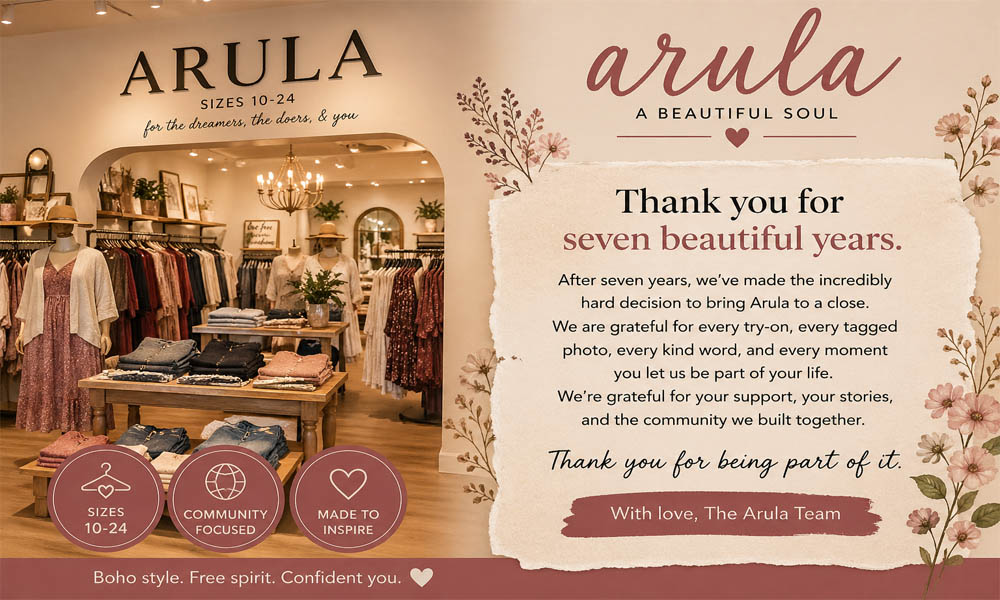
Have you ever found a clothing brand that just felt right for you? A place where the styles looked good, the sizes made sense, and you felt confident trying something new. For many women, that brand was Arula.
That’s why the news in 2025 came as a big shock. Arula, a loved plus size fashion brand, suddenly announced it was closing. No long warning. No clear reason. Just a short message saying goodbye after seven years. Fans were confused, sad, and even frustrated.
In this article, we will talk about the full story of Arula: What Went Wrong and What Comes Next. We will look at how Arula started, why people loved it, what problems it faced, and what really led to its closing. We will also explore what shoppers can do next and what businesses can learn from this story.
What Was Arula and Why It Became So Popular
Arula did not start with that name. Back in 2018, it began as a brand called A’Beautiful Soul. It was created as a sister brand of Altar’d State, a well-known clothing store. In 2021, the brand changed its name to Arula. This new name brought fresh energy and hope for the future.
Arula focused on mid-size and plus-size women. It offered sizes from 10 to 24. This was important because many women feel left out when it comes to stylish clothes. Arula wanted to change that. Their goal was simple: style should not depend on size.
Over time, Arula built a strong and loyal customer base. People loved how the brand made them feel. It was not just about clothes. It was about confidence, comfort, and feeling seen. This is one big reason why Arula: What Went Wrong and What Comes Next is such an important story today.
Arula’s Style: What Made It Different
So, what made Arula stand out from other brands?
The answer is simple. Their style was different. Arula leaned into a soft, bohemian look. Think flowy dresses, light fabrics, and pretty details. Their clothes felt relaxed but still stylish. It was perfect for everyday wear, but also for special moments.
Most plus-size brands often stick to safe and basic designs. But Arula did the opposite. They brought trendy and fresh styles to women who usually did not have many choices. This made many shoppers feel excited again about fashion.
Arula also focused on how people felt. Their message was about self-love and confidence. When someone tried on an Arula outfit, it was not just about looking good. It was about feeling good too. That emotional connection made the brand even stronger.
Arula Growth: How the Brand Expanded Over Time
As Arula became more popular, it started to grow. Most of its business was online. This helped them reach customers across many places. People could easily shop from home and explore new styles.
At the same time, Arula opened a small number of physical stores. These were special because customers could try on clothes in person. For many shoppers, this made a big difference. Trying before buying builds trust, especially with sizing.
In 2023, Arula took another step forward. They launched an intimates collection. This included bras, bralettes, and loungewear. It showed that the brand wanted to grow and offer more choices. For a moment, it looked like Arula was moving in the right direction. But as we explore in Arula: What Went Wrong and What Comes Next, growth alone was not enough.
Arula Closing: What Happened in 2025
Then came the moment no one expected.
On May 29, 2025, Arula announced that it would be closing. The message was short but emotional. They thanked customers for their love, support, and memories. Words like “every try-on” and “every kind word” made it feel personal.
But there was one big problem. They did not clearly explain why they were closing. This left many people confused. Fans started asking questions. What went wrong? Was it money? Was it the market? Or something else?
Soon after the announcement, Arula removed its social media pages. This made things feel even more sudden. The website stayed up for a short time, mainly to sell remaining items. For shoppers, it felt like losing a favorite place overnight. And that is why the question behind Arula: What Went Wrong and What Comes Next became so important.
Why Did Arula Close? The Main Reasons Explained
Even though Arula did not give one clear reason, we can still understand what likely happened. In most cases, a business does not close because of just one problem. It is usually a mix of different issues.
For Arula, several challenges came together at the same time. These included money problems, strong competition, and customer concerns. Each of these may not seem huge alone, but together they can become very serious.
Think of it like this. Imagine trying to fix a small leak in your house. If you ignore it, it grows bigger. Then another problem starts. Before you know it, the damage becomes too much. This is how many businesses struggle. And this idea helps explain Arula: What Went Wrong and What Comes Next.
Arula Financial Problems and Rising Costs
Running a fashion brand is not cheap. There are many costs behind the scenes. Materials, shipping, workers, and storage all cost money. In recent years, these costs have gone up a lot.
For a brand like Arula, this can be even harder. Plus-size clothing often needs different cuts and more fabric. This can increase production costs. When costs go up, brands must either raise prices or accept lower profits.
Arula’s prices were already a bit high for some shoppers. Many items ranged from $48 to $108. While some customers were happy to pay for quality, others looked for cheaper options. Over time, this balance became harder to manage. And this is one key part of Arula: What Went Wrong and What Comes Next.
Arula Stores vs Online: A Big Limitation
Another big issue was how Arula sold its products.
Most of its business was online. This worked well during the pandemic when people stayed home. But later, shopping habits changed again. Many people wanted to go back to stores, try clothes, and see how they fit.
Arula only had a small number of physical stores. This made it hard for many customers to try items before buying. And this connects to another problem — sizing. When you cannot try clothes, you depend on size charts. If those are not perfect, it creates frustration.
Imagine ordering a dress online, waiting for it, and then it does not fit. You return it and try again. After a few times, you may just stop shopping there. This is how small issues grow into big problems. And it adds another layer to the story of Arula: What Went Wrong and What Comes Next.
Arula Competition: Too Many Strong Rivals
Another big part of Arula: What Went Wrong and What Comes Next is competition.
The plus-size fashion space is not empty. Many strong brands are already there. Names like Torrid, Eloquii, and Lane Bryant have been around for years. They have more stores, bigger budgets, and wider reach. This makes it hard for a smaller brand like Arula to stand out for a long time.
There is also the issue of price. Arula’s clothes were not cheap. Many items cost between $48 and $108. For some shoppers, this felt too high. When they saw similar items at lower prices from other brands, they moved away. Even with discounts, Arula could not always compete. This slow shift in customer choice played a quiet but strong role in the story of Arula: What Went Wrong and What Comes Next.
Arula Sizing Issues That Frustrated Customers
Let’s talk about one of the biggest problems — sizing.
Many customers said Arula’s sizing was not consistent. This means one item in a certain size could fit well, while another item in the same size felt too tight or too loose. This created confusion and frustration.
Now think about online shopping. You cannot try the clothes before buying. So you trust the size chart. But if the sizes keep changing, trust breaks. Some customers shared stories of ordering the same size multiple times and getting different fits each time.
This leads to returns, delays, and wasted time. Over time, customers lose patience. They may stop buying from that brand. This issue alone did not close Arula, but it added pressure. It is an important part of understanding Arula: What Went Wrong and What Comes Next.
Customer Reactions After Arula Closed
When Arula announced its closure, the reaction was strong.
Many customers felt sad. Some even felt like they lost something personal. That is because Arula was not just a store. It was a place where they found clothes that made them feel confident and happy.
At the same time, there was also frustration. Some shoppers talked about the sizing issues. Others were upset that they could not find similar styles easily. People who liked trying clothes in-store were also disappointed because those options were already limited.
If you look at online discussions, you will see both love and complaints. This mix shows something important. People cared about the brand, but they also faced real problems. And that balance is key in the story of Arula: What Went Wrong and What Comes Next.
Arula Impact on Plus Size Fashion Industry
Arula’s closure is not just about one brand. It also shows bigger issues in the plus-size fashion world.
Even in 2026, many shoppers still feel there are not enough stylish options in their size. Some brands focus only on basic designs. Others do not offer good quality. This creates a gap in the market.
Arula tried to fill that gap with trendy and fresh styles. But its closure shows that doing this is not easy. Brands need the right balance of price, fit, and availability. If one part fails, the whole system can struggle.
This is why Arula: What Went Wrong and What Comes Next is more than just a brand story. It is also a reminder that the fashion industry still has work to do.
What Comes Next After Arula for Shoppers
So, what should shoppers do now?
The good news is that there are still many options. While Arula is gone, other brands are trying to offer similar styles. You just need to know where to look.
For example, Anthropologie Plus offers soft and flowy pieces. Torrid is great for trendy everyday wear. Eloquii is known for stylish and bold outfits. Universal Standard focuses on simple, high-quality basics. Brands like Chic Soul and Girlfriend Collective also bring fresh ideas.
It may take some time to find a new favorite. But the plus-size fashion world is growing. New brands are coming up. So even after Arula, there are still good choices. This is an important part of Arula: What Went Wrong and What Comes Next.
Business Lessons from Arula’s Failure
There are many lessons to learn from Arula’s journey.
First, money matters. A brand needs strong financial planning. If costs keep rising and sales do not match, problems grow fast. This is something every business must watch closely.
Second, customers must come first. If people are complaining about sizing or price, those issues need quick action. Ignoring feedback can slowly damage trust. Arula had loyal fans, but that alone was not enough.
Third, brands must adapt. The market keeps changing. Shopping habits change too. A business must move with those changes. If it stays the same, it may fall behind.
And finally, clear communication is very important. When Arula closed, many people felt confused. A clearer message could have helped maintain trust. All these lessons are key when we think about Arula: What Went Wrong and What Comes Next.
Conclusion
In the end, Arula was a brand with a strong heart. It gave many women a place to feel seen and stylish. It brought something fresh to plus-size fashion.
But even strong ideas need strong systems. Problems like pricing, sizing, and competition slowly built up. Over time, they became too big to handle. And that led to the brand’s closing.
Still, Arula’s story is not just sad. It is also helpful. It teaches us what works and what does not. It shows what customers truly need. And it reminds businesses to stay flexible and focused.
So when we look at Arula: What Went Wrong and What Comes Next, we see both a lesson and a new beginning. The brand may be gone, but its impact will stay. And the future of plus-size fashion still has many exciting possibilities.
(FAQs)
Was Arula a real and trusted brand?
Yes, Arula was a real and trusted fashion brand. It was owned by Altar’d State and focused on mid-size and plus-size women. Many customers loved its stylish and unique clothing, especially its soft and boho-inspired looks.
Why did Arula close in 2025?
Arula did not give one clear reason. But most people believe it closed due to high costs, strong competition, and problems like sizing issues. These small problems slowly added up and became hard to manage.
When did Arula officially shut down?
Arula announced its closure on May 29, 2025. The brand stopped operations around mid-June 2025 after running for about seven years.
What made Arula different from other plus size brands?
Arula stood out because of its trendy and boho style. While many plus-size brands offer basic designs, Arula brought fresh, modern, and feminine clothing that made people feel confident.
Was Arula expensive compared to other brands?
Yes, many shoppers felt Arula was a bit expensive. Most items ranged from $48 to $108. Some customers were okay with the price, but others preferred more affordable options from other brands.
Did Arula have physical stores or only online shopping?
Arula had both, but mostly focused on online sales. It had only a few physical stores, which made it hard for many customers to try clothes before buying.
Why did customers complain about Arula sizing?
Many customers said the sizing was not consistent. A size 16 in one item could feel different in another. This made online shopping difficult and led to returns and frustration.
Where can I buy Arula clothes now?
You can still find Arula items on resale websites like Poshmark, ThredUp, and eBay. Many people sell second-hand pieces, often at lower prices.
What brands are similar to Arula today?
Some good alternatives include Anthropologie Plus, Torrid, Eloquii, Universal Standard, and Chic Soul. These brands offer stylish and size-inclusive clothing like Arula.
What is the biggest lesson from Arula’s story?
The biggest lesson is that a strong brand needs more than just loyal fans. It also needs good pricing, consistent sizing, and the ability to adapt. Without these, even popular brands can struggle.
You may also read: SOA OS23: The Easy Way to Build Fast and Flexible Systems