
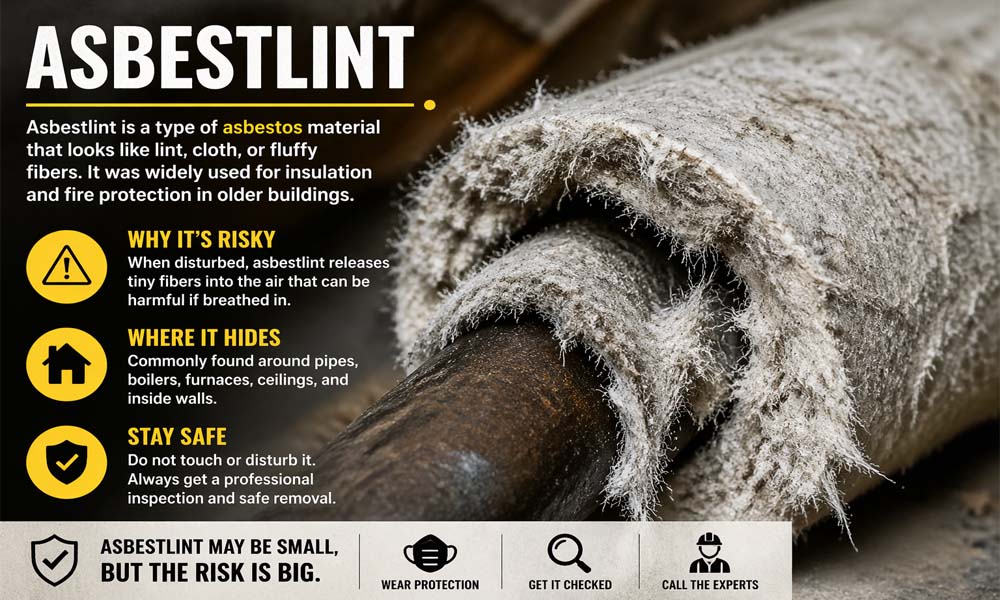
Have you ever opened an old storage space and seen dusty material wrapped around pipes? It may look harmless. Many people think it is just old cloth or dirt. But sometimes, it can be something more serious.
That material could be asbestlint. It is not a word many people know, but it is very important. In simple terms, asbestlint is a form of asbestos that looks like tape, cloth, rope, or even dust. The danger starts when it breaks and tiny fibers go into the air.
In this article, we will talk about everything you need to know about asbestlint. We will explain where it hides, why it can be risky, and what you should do if you find it. By the end, you will feel more confident and safe when dealing with old materials.
What Is Asbestlint in Simple Words
Let’s keep it very simple. Asbestlint is not an official scientific name. It is a common word people use for asbestos that looks soft, dusty, or fabric-like.
You may see it as a wrap around pipes. Sometimes it looks like a rope. Other times, it appears like fuzzy dust or broken pieces of insulation. Even though it looks simple, it can be very harmful.
The biggest problem with asbestlint is not how it looks. The real danger is what you cannot see. When it gets damaged, it releases tiny fibers into the air. These fibers are so small that you cannot see them, but you can breathe them in without knowing.
Why Asbestlint Was Used So Much
Many years ago, asbestos was seen as a very useful material. Builders loved it because it could handle heat very well. It did not burn easily, and it lasted a long time.
Because of these benefits, asbestlint was used in many places. It was wrapped around hot pipes. It was used to seal joints. It was also used in insulation to keep heat inside systems.
At that time, people did not fully understand the health risks. So, it became common in homes, offices, and factories. Today, we know more. That is why many countries have strict rules about asbestos.
Where Asbestlint Hides in Homes
You might be surprised to learn how close asbestlint can be to you. In many older homes, it is still present in hidden places.
One common spot is the basement. You may find it around old pipes, especially near boilers or furnaces. It can also be around water heaters and pipe joints. These areas were often wrapped to keep heat inside.
You may also find asbestlint behind radiators or inside walls. Sometimes, it is under old floor layers near heat sources. The tricky part is that it often stays hidden until someone starts repairs or renovation work.
Where Asbestlint Is Found at Workplaces
Homes are not the only places where asbestlint exists. Many workplaces, especially older ones, still have it too.
In factories or large buildings, it is often found in boiler rooms and mechanical areas. These places use a lot of heat, so insulation was very important. Asbestlint was a common choice.
You may also see it around steam pipes, valves, and old machines. In some buildings, it was even used in fireproof panels or doors. Workers in these spaces need to be extra careful, especially during repairs or maintenance.
What Asbestlint Looks Like (Easy Signs)
Many people try to identify asbestlint just by looking at it. This can be risky. Still, there are some common signs that can help you stay alert.
It often looks like white or gray tape wrapped around pipes. Sometimes it appears like cloth or fabric strips. In other cases, it looks like rope or braided material used to seal joints.
You may also notice fuzzy or dusty debris near old insulation. It can look like cobwebs or lint. But here is the important part: many safe materials look the same. Fiberglass and normal dust can look very similar. So, you should never touch or test it yourself.
Why Asbestlint Can Be Risky
Now let’s talk about the main concern. Why is asbestlint risky?
The answer is simple. When it breaks or gets disturbed, it releases tiny fibers into the air. These fibers are so small that you cannot see them. But once they are in the air, they can enter your lungs when you breathe.
This is what makes asbestlint dangerous. You may not feel anything right away. There is no smell. No pain. But over time, these fibers can cause serious health problems.
Even a small amount can be harmful, especially if exposure happens again and again. That is why experts always say: do not disturb it.
Health Problems Linked to Asbestlint
The health risks linked to asbestlint are serious. That is why it is taken so seriously around the world.
One major problem is lung damage. Over time, fibers can build up in the lungs and make it hard to breathe. This condition is called asbestosis.
There are also more serious risks like cancer. This includes lung cancer and a rare cancer called mesothelioma. These diseases often take many years to show up, sometimes even 20 to 40 years later.
Another important point is that smoking makes things worse. If someone smokes and is also exposed to asbestlint, the risk becomes much higher. This is why awareness and prevention are so important.
When Asbestlint Becomes Dangerous
Here is something many people do not realize. Asbestlint is not always dangerous just by being there. The real danger starts when it is disturbed.
For example, if someone cuts, drills, or sands near it, fibers can be released into the air. Even simple actions like pulling old wrap or scraping material can cause problems.
Renovation work is one of the biggest risk times. Imagine opening a wall in an old house. If asbestlint is inside, dust can spread into the room quickly.
Even cleaning can be risky. Using a normal vacuum or sweeping can push fibers into the air instead of removing them. That is why handling it the wrong way can make the situation worse.
Common Mistakes People Make with Asbestlint
Many people make simple mistakes because they do not know the risks of asbestlint. These mistakes can turn a small problem into a big one.
One common mistake is trying to remove it yourself. It may look easy, but it is not safe. Without proper tools and training, you can release harmful fibers.
Another mistake is cleaning the area the wrong way. Sweeping or using a normal vacuum spreads the fibers instead of removing them. Some people also touch or pull loose material, thinking it is harmless.
Many people also ignore small damage. They think, “It’s just a little bit.” But even small amounts of asbestlint can be risky if disturbed. It is always better to be careful.
How to Check Asbestlint Safely
So, what should you do if you think you have found asbestlint? The first step is simple. Do not try to confirm it by yourself. It may look easy, but it is not safe.
You cannot identify asbestlint just by looking at it. Many materials look the same. Some safe materials, like fiberglass, can look very similar. This is why guessing can be risky.
The safest way is to call a trained expert. Professionals know how to check the material without spreading fibers. They use special tools and follow safety rules. In most cases, they take a small sample and send it to a lab for testing. This is the only way to be sure.
What to Do If You Find Asbestlint
If you think you have found asbestlint, stay calm. You do not need to panic, but you do need to act smart.
First, stop what you are doing. Do not touch, move, or break the material. Even a small action can release fibers into the air. Next, keep others away from the area. This includes kids and pets.
If possible, close the room to limit airflow. This helps stop fibers from spreading to other areas. Then, contact a professional who deals with asbestos. They will guide you on the next steps. Acting early can make a big difference.
Can You Remove Asbestlint Yourself?
Many people ask this question. The simple answer is no, it is not a good idea to remove asbestlint yourself.
Even a small amount can be dangerous if handled the wrong way. Without proper tools and safety gear, you may release fibers into the air. This can put you and others at risk.
In many places, there are also rules about asbestos removal. Only trained and licensed experts are allowed to remove it safely. They use special suits, masks, and sealed systems to control the area. This is why hiring professionals is always the safer choice.
Safe Options for Handling Asbestlint
Not every case of asbestlint needs to be removed right away. Sometimes, the best option is to leave it alone if it is in good condition and not disturbed.
One option is sealing the material. This is called encapsulation. A special coating is applied to keep fibers from escaping. Another option is enclosure, where the material is covered or boxed in to keep it safe.
If the material is damaged or will be disturbed during work, removal may be needed. This must be done by professionals. They follow strict safety steps and dispose of the material properly. Safe handling is always the goal.
Modern Safe Materials Instead of Asbestlint
Today, we have safer options that do the same job as asbestlint without the risk. This is good news for homeowners and builders.
Common alternatives include fiberglass, mineral wool, and ceramic fiber. These materials can handle heat and provide insulation just like asbestos did in the past. But they do not carry the same health risks.
You may also see modern sealants and silicone-based materials used in place of old wraps. These products are designed to be safe and long-lasting. So, if you are updating your home, you have better choices now.
Simple Safety Tips to Stay Safe from Asbestlint
Staying safe from asbestlint is mostly about being careful and aware. Small steps can make a big difference.
Always avoid touching or disturbing unknown materials. If you live in an older home, be extra careful during repairs or changes. It is always smart to check before starting any work.
Keep areas clean, but do not use normal cleaning methods on suspect material. And most importantly, do not take risks. If you are unsure, ask a professional. Safety should always come first.
Conclusion
Asbestlint may look small or harmless, but it can be a serious hidden danger. The biggest risk comes when it is disturbed and fibers enter the air.
The good news is that you can stay safe by being aware and careful. You do not need to guess or take risks. Simple actions like stopping work and calling an expert can protect your health.
In 2026, we have better knowledge and safer materials. But older buildings still carry these risks. So always stay informed, stay calm, and make smart choices. When it comes to asbestlint, prevention is always the best solution.
(FAQs)
What is asbestlint in simple words?
Asbestlint is a common name people use for asbestos that looks like cloth, tape, rope, or dusty fibers. It is dangerous when it breaks and releases tiny fibers into the air that you can breathe in.
Where is asbestlint usually found?
You can often find asbestlint in older homes and buildings. It is common around pipes, boilers, furnaces, water heaters, and inside walls or ceilings where heat insulation was needed.
Is asbestlint always dangerous?
Asbestlint is not always dangerous if it is in good condition and not disturbed. It becomes risky when it is damaged, broken, or moved because that is when fibers can spread into the air.
Can I identify asbestlint just by looking at it?
No, you cannot confirm asbestlint just by looking at it. Many safe materials look similar. Only professional testing in a lab can confirm if a material contains asbestos.
What happens if I breathe in asbestlint fibers?
Breathing in asbestlint fibers can harm your lungs over time. It may lead to serious health problems like lung damage, lung cancer, or mesothelioma, often many years after exposure.
Can I remove asbestlint myself?
It is not safe to remove asbestlint yourself. Even small mistakes can release harmful fibers. In many cases, only trained and licensed professionals should handle and remove it.
What should I do if I find asbestlint at home?
Stop what you are doing immediately. Do not touch or disturb it. Keep people away from the area and contact a professional to inspect and guide you on safe next steps.
Is cleaning asbestlint with a vacuum safe?
No, using a normal vacuum is not safe. It can spread fibers into the air. Special equipment is needed to handle asbestos safely, which only professionals have.
Are newer homes safe from asbestlint?
Most newer homes do not use asbestos materials. However, older homes built before strict rules may still contain asbestlint, especially in hidden areas.
How can I stay safe from asbestlint in daily life?
Avoid disturbing unknown materials, especially in older buildings. Always check before renovation work. If you suspect asbestlint, call experts instead of taking risks.
You may also read: Aguaris: The Smart Way to Improve Your Water Without Chemicals