
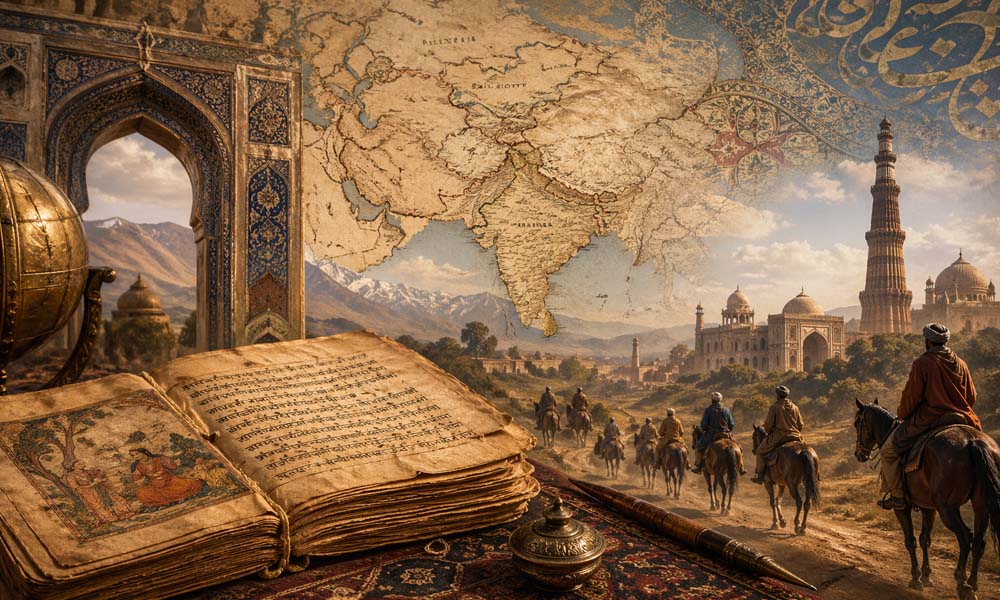
One old word can sometimes open the door to a very big story. That is exactly what happens with Turaska. At first, it may look like just another strange historical term. But once you start looking into it, you begin to see links to old books, foreign peoples, wars, travel, culture, and the changing story of South Asia.
That is what makes Turaska so interesting. It is not only a word from the past. It also helps us understand how people in earlier times saw the world around them. Who was seen as local? Who was seen as foreign? And how did those outside groups slowly become part of the history of the land? These are big questions, and Turaska gives us a simple way to explore them.
In this article, we will look at the Turaska meaning, where the word may have come from, how it appears in old Sanskrit texts, and how it became connected with Central Asian and Turkic groups. We will also see why Turaska still matters in 2026, especially for people who want to understand history, identity, and cultural change in a clear way.
What Does Turaska Mean?
The word Turaska is mostly used as a historical term. In simple words, it was used in older Indian writings for foreign peoples, especially groups connected with Central Asia and, later, Turkic rulers and warriors. It was a label that helped writers describe people who came from outside the usual world of ancient Indian society.
This is why Turaska is important. It was not just a name. It carried an idea. It showed how people in the past divided the world into “us” and “them.” Today, that may sound very direct, but in old times, this was common. Many societies had words for people they saw as different in language, dress, religion, or way of life. Turaska seems to have worked in that way in many old Indian settings.
At the same time, the meaning of Turaska did not stay fixed forever. In some places, it was used in a broad way for outsiders. In later periods, it became more strongly linked with Turkic or Central Asian groups who entered the Indian subcontinent. So when we ask, “What does Turaska mean?” the best answer is this: it is an old term that helped describe foreign peoples, and over time it became tied more closely to real political and cultural change in India.
Where Did the Word Turaska Come From?
The exact origin of Turaska is still discussed. That means scholars do not all agree on every small detail. But many discussions connect the word with Sanskrit usage and with old attempts to describe foreign ethnic groups in a way Indian readers would understand. In short, Turaska seems to come from the world of old Indian language and historical writing.
Some explanations say the word may be linked with ideas of speed, movement, or martial strength. That kind of explanation may have come from the image of horse-riding warrior groups from the north and northwest. It sounds possible because many Central Asian peoples were known for movement, cavalry, and military power. Still, this part should be handled with care. It is interesting, but it is not something we should present as a final proven fact.
What matters most is the larger picture. The word Turaska grew inside a real historical setting. India was never cut off from the rest of Asia. Traders, travelers, fighters, and rulers moved across regions for centuries. So a word like Turaska did not appear from nowhere. It likely developed because people needed a name for groups who were coming into contact with the subcontinent in visible and powerful ways.
Turaska in Old Sanskrit Texts
One reason Turaska gets attention today is because it appears in the world of old Sanskrit writing. When a word shows up in early texts, people naturally want to know what it meant, who it described, and why it was used. In the case of Turaska, it seems to be part of the older Indian habit of naming foreign peoples and distant tribes.
Writers often connect Turaska with texts like the Mahabharata and the Puranas. These works are not simple history books in the modern sense. They mix story, memory, belief, culture, and social ideas. Even so, they are very valuable. They show how older Indian thinkers imagined the wider world and the many peoples living beyond familiar social and political borders.
In some of these old settings, groups like the Turaska were seen as outsiders. Sometimes they were described in a negative way. Sometimes they were shown as powerful fighters. That mix is important. It tells us that ancient societies did not only fear outside groups. They also noticed their strength, skill, and growing presence. So when Turaska appears in old texts, it is not a small detail. It gives us a clue about how India was thinking about foreign peoples long ago.
Turaska and Foreign Peoples
To understand Turaska, we also need to understand the idea of the “foreign” person in old writing. In many ancient societies, people often described outsiders by their language, dress, customs, food, or religion. If someone came from far away and lived differently, they were often given a special label. In Indian texts, terms like this helped writers explain who belonged to the familiar social order and who stood outside it.
That is where Turaska becomes very useful as a historical clue. The word seems to show that people in the subcontinent were not living in a closed world. They knew about others. They had heard of northern tribes, frontier peoples, and travelers from beyond their own political and cultural centers. Some of these groups came for trade. Some came through movement and migration. Others came through war.
Think about it like this. If you live in one town your whole life, and then one day you see people arrive with different clothes, different horses, different weapons, and a different language, you will probably create a name for them. That is how many old labels began. So Turaska may tell us less about one single tribe and more about how people in India tried to make sense of groups who felt new, powerful, or unfamiliar.
Turaska and Central Asia
A big part of the Turaska story leads us toward Central Asia. This region has long been a meeting point of movement, trade, empire, and migration. For centuries, people moved across mountains, deserts, and open plains between Central Asia and South Asia. These contacts were not rare. They were part of a long and living network that shaped both regions.
This is why Turaska is often linked with Central Asian peoples. Many of the groups who later entered the Indian subcontinent came through routes connected to Central Asia. They brought horses, military methods, court culture, and new political ideas. Some came as raiders. Some came as rulers. Some came as traders, teachers, and holy men. In other words, the relationship was bigger than war alone.
When we study Turaska, we begin to see that India and Central Asia were connected far more deeply than many people think. These were not two worlds with no meeting point. They were neighbors in a wider Asian story. That is one reason the term matters even today. It reminds us that history is often built through contact. People move. Ideas move. Words move too. And Turaska is one of those words that carries that story.
Turaska in Indian History
The meaning of Turaska becomes even clearer when we place it inside Indian history. In very early writing, the word may have had a broad use for foreign peoples. But in medieval history, it seems to become more sharply tied to real political change. This is when outside military powers began to play a much larger role in the subcontinent.
As new ruling groups entered northern India, Indian writers needed language to describe them. Terms like Turaska became more meaningful in this setting because they were no longer just about distant peoples known from stories. They were now about groups who were changing cities, courts, warfare, rule, and public life. The word moved closer to lived reality.
This is a major turning point in the story. It shows that Turaska was not only a literary word. It also became part of how history was understood. Once foreign-origin rulers and armies became active in India, the label carried more weight. It began to reflect not only difference, but also power, conflict, fear, and change. That is why the term is so useful for readers today. It helps us see how language and history often grow together.
Turaska and the Turkic Invasions
One of the most important parts of the Turaska story is its connection with Turkic invasions into India. Over time, many Indian sources began linking the term more strongly with Turkic groups who entered the subcontinent from the northwest. These invasions were not small events. They changed the political future of large parts of India.
A major name often mentioned in this context is Mahmud of Ghazni. His raids into northern India in the 11th century became famous for both destruction and long-term historical impact. For many people living at that time, outside rulers like him were not just visitors from another land. They were a new force. Their armies, methods, and ambitions were changing the balance of power in the region.
This is where Turaska becomes more than a word for “foreigners.” It starts to point more directly to Turkic military groups and ruling elites. Indian writers were responding to real events. Temples were attacked. Wealth was taken. Kingdoms were pressured. But history did not stop with violence alone. These contacts also opened the door to deep cultural change. That wider story will become even clearer in the next part of the article.
How Turaska Changed India
The arrival of groups linked with Turaska changed India in many ways. At first, these changes came through war and political struggle. New rulers entered the subcontinent with strong armies, fresh military methods, and a different style of rule. This changed how power worked in many parts of northern India.
But history is rarely only about fighting. After the first waves of invasion, daily life also began to shift. New courts were set up. New officers and soldiers became part of local rule. New ways of keeping records, collecting taxes, and managing cities slowly took shape. This means Turaska was connected not only to fear and conflict, but also to deep changes in government and public life.
Think of it like a house being rebuilt room by room. At first, the outside change may seem dramatic. But after some time, the inside changes matter just as much. The same thing happened here. What began as foreign entry into India slowly turned into lasting change in politics, society, and culture. That is why the story of Turaska is so important in Indian history.
These changes were not always smooth. Many local people resisted. Some kingdoms fought back. Some old customs stayed strong for a long time. Yet over the years, outside influence became part of the land’s bigger story. This is one of the clearest reasons why Turaska still matters. It helps us understand how big historical change often begins with contact between very different groups.
Turaska and New Art and Buildings
One of the easiest ways to see the impact of Turaska is through art and buildings. When Turkic and Central Asian rulers became active in India, they brought new ideas in design and building. These ideas did not stay separate for long. They mixed with local Indian styles and created something new and beautiful.
This is where early Indo-Islamic architecture began to stand out. Builders started using arches, domes, strong stone work, and new patterns in ways that looked different from older temple styles. Over time, these features became part of the visual story of Indian cities. Even today, people can still see the results in famous old monuments.
Good examples often mentioned are the Qutb Minar and the Alai Darwaza. These buildings show how outside influence and local skill came together. The result was not simply a copy of Central Asia, and it was not purely old Indian design either. It was a blend. And that blend tells us something very important about Turaska. It was part of a meeting of worlds, not just a moment of invasion.
Art also changed in smaller ways. Decorative patterns, writing styles, and court taste all began to shift. Palaces, mosques, gates, and public buildings showed this new look. So if someone asks, “Can we still see the legacy of Turaska today?” the answer is yes. In many ways, we can still see it in stone, shape, and design.
Turaska and Language Change
Language is another place where the story of Turaska becomes very clear. As new rulers entered India and built courts and states, they also brought new language habits with them. One of the biggest changes was the rise of Persian as a major language of rule, writing, and culture in many royal courts.
This mattered a lot. When the language of power changes, many other things change too. Court records, royal orders, poetry, history writing, and learned life all begin to follow new patterns. Persian became important not just for rulers, but also for poets, officers, scholars, and educated elites. Over time, this shaped the cultural life of large parts of the subcontinent.
But the story does not end there. Languages rarely stay pure when people live together for a long time. Persian and Arabic words slowly mixed with local Indian languages. This long contact helped shape the growth of Urdu, which later became one of the great languages of South Asian culture. So the story of Turaska is also a story about speech, writing, and the blending of words.
This is a beautiful part of history. Imagine two people from very different places meeting in a busy market or a royal court. At first, they may not fully understand each other. But little by little, words are borrowed, sounds are shared, and new ways of speaking begin to grow. That is how cultural contact often works. And Turaska is part of that bigger language story.
Turaska and Religion and Daily Life
The impact of Turaska also reached religion and daily life. As new groups entered India, they brought their own beliefs, customs, and ways of worship. This changed the spiritual and social world of the subcontinent. But once again, the full story is not only about difference. It is also about meeting, sharing, and adapting.
A very important part of this story is Sufism. Sufi teachers and saints played a major role in building cultural bridges. Many people were drawn to their simple message, spiritual warmth, and focus on love, prayer, and human connection. In many places, Sufi spaces became meeting points where people from different backgrounds could come together.
This mattered because religion was not just about prayer. It shaped music, stories, festivals, food, clothing, and daily habits. When people live side by side, they influence one another in many quiet ways. Customs begin to mix. Words are borrowed. Music changes. Social life grows more layered. This is one of the most human parts of the Turaska story.
Of course, not everything was peaceful. There were tensions, struggles, and moments of conflict. That is also part of the truth. But it is only one part. Over time, many communities found ways to live, work, and create together. That is why the history connected with Turaska is not just a story of outsiders entering India. It is also a story of how different people slowly became part of a shared world.
Why Turaska Still Matters Today
So why does Turaska still matter in 2026? The answer is simple. It helps us understand how history, identity, and cultural change work. A word like Turaska is small, but it carries a very large story. It tells us how people in the past named those they saw as different. It also shows how those “different” people later became part of the same history.
This matters today because many modern debates still deal with identity, borders, belonging, and memory. People still ask: Who is an outsider? Who belongs? How do cultures change when they meet? These are not only old questions. They are still very alive today. Looking at Turaska helps us think about them in a calm and informed way.
The word also matters because it reminds us that South Asia was never isolated. It was always part of a wider world. Traders, fighters, poets, saints, and rulers moved across regions for centuries. Their movements changed languages, art, faith, politics, and everyday life. Turaska gives us one useful lens through which we can see that larger picture.
There is also value in the word for students, writers, and curious readers. When we study old terms, we learn more than just old meanings. We learn how people thought, how societies reacted to change, and how memory survives in language. That is why Turaska is still worth reading about today. It helps make history feel real and human.
Conclusion
In the end, Turaska is much more than an old word from the past. It is a key that helps open a much bigger story about India, Central Asia, cultural contact, and the long movement of people and ideas. At first, it may seem like a small term found in old texts. But once we follow its path, we discover a rich and powerful history.
We see how Turaska was used in older Indian writing to describe foreign peoples. We see how the word became more closely tied to Turkic groups during major political change. We also see how those contacts shaped architecture, language, religion, and daily life across the subcontinent. In that way, Turaska helps connect war, culture, identity, and memory in one clear story.
That is why Turaska still matters. It reminds us that history is never only about kings and battles. It is also about words, meanings, and the way people understand each other. A single term can carry fear, distance, curiosity, and later even connection. That is what makes this topic so interesting.
When we study Turaska, we are really studying how the world changes when people meet. We are studying how outsiders become part of shared history. And we are learning that even a simple old word can still teach us something meaningful in 2026. That is the lasting value of Turaska, and that is why its story is still worth telling.
You may also read: Trucofax: Why So Many People Are Talking About It