
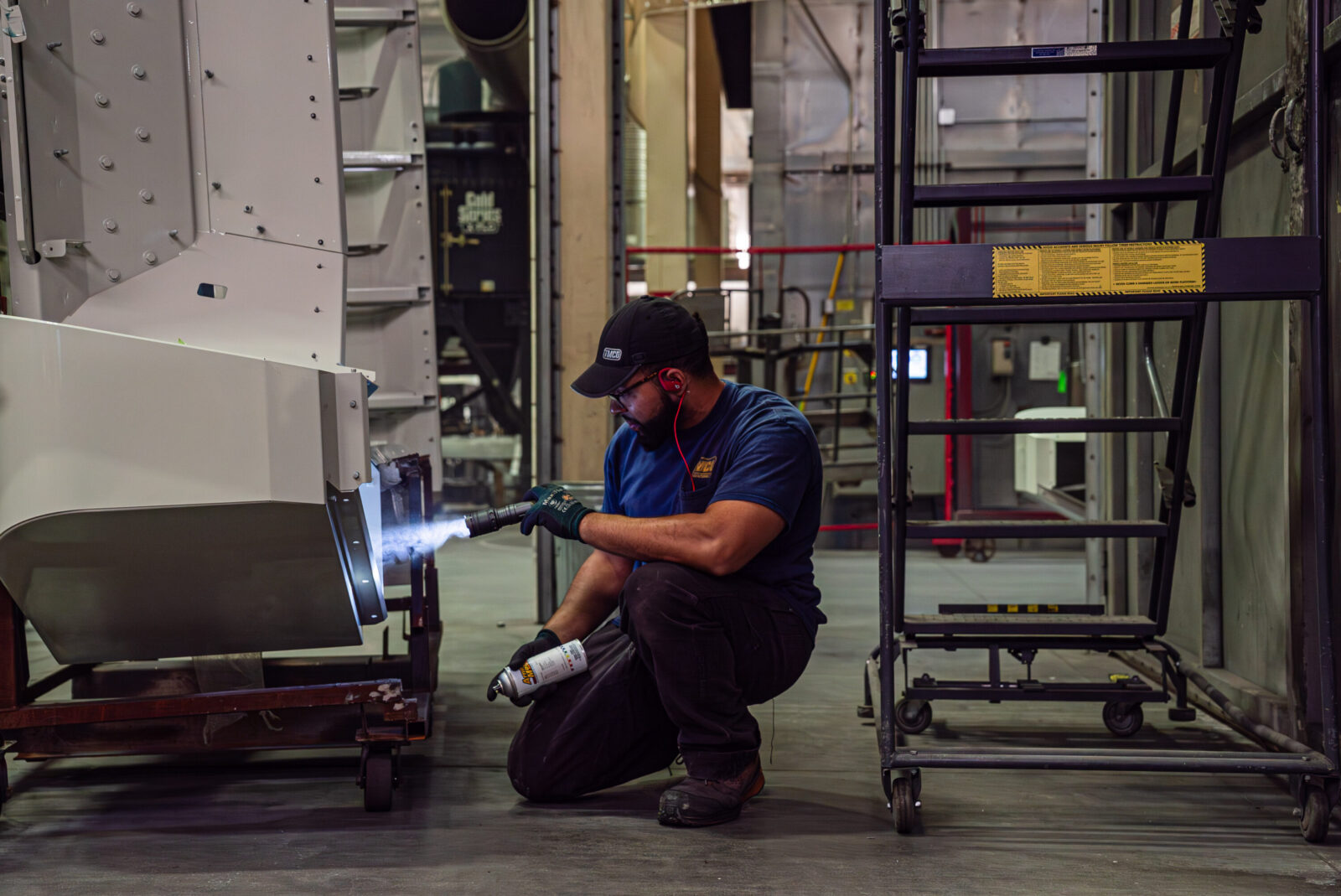
For US-based importers sourcing fabricated aluminium components, the gap between what a manufacturer quotes and what arrives at the warehouse is often where problems begin. Lead times stretch. Tolerances drift. Surface finishes arrive inconsistent. What looked straightforward on a spec sheet becomes a sourcing headache that disrupts production schedules and erodes supplier trust.
This is not a new problem, but it is a growing one. As more importers turn to international fabrication partners — particularly in India, where aluminium manufacturing has matured significantly over the past decade — the need to understand how fabrication processes actually work, and what to control at each stage, becomes operationally critical. This guide walks through the full process, from how to read and communicate specifications through to final delivery verification, so importers can make better decisions before problems occur, not after.
What Aluminium Fabrication Services Actually Involve
Aluminium fabrication services cover a range of manufacturing processes used to shape, join, cut, and finish raw aluminium stock into usable components or assemblies. The term itself is broad by design — it encompasses everything from precision extrusion cutting and CNC machining to welding, bending, anodizing, and powder coating. What distinguishes fabrication from raw material supply is that a fabricator takes aluminium in some form and transforms it into a specific geometry or finished part based on a buyer’s design.
For importers, understanding this scope matters because fabricators vary widely in their process capabilities. A supplier that excels at sheet metal forming may have limited experience with hollow extrusion profiles. A facility equipped for structural fabrication may not be set up for the tight tolerances that precision enclosures require. Before engaging any supplier, the importer needs to know not just whether the facility does aluminium fabrication, but which specific processes they perform in-house versus subcontract out.
A structured Aluminium Fabrication Services guide can help importers understand what questions to ask and what process documentation to request before a purchase order is placed. This is particularly important when working with overseas suppliers where in-person verification is not always practical.
Core Fabrication Processes and Their Import Relevance
Each fabrication method introduces its own quality variables, and importers who understand these variables can write better specifications and conduct more effective quality checks. Extrusion-based fabrication, for example, requires attention to die condition and draw speed — both of which affect dimensional consistency across a production run. If a supplier is running multiple orders through a shared die without proper maintenance schedules, dimensional drift becomes likely by the end of a batch.
Welding aluminium requires specific filler material selection and pre-weld cleaning procedures that differ from steel welding. Porosity in welds, which can look fine on surface inspection, may compromise structural integrity for load-bearing components. CNC-machined parts demand both machine calibration and skilled programming — a supplier with older equipment and limited programming expertise may produce parts that meet initial samples but fail to hold consistency at production volumes.
For importers, the practical takeaway is this: request process-specific documentation, not just a general capability statement. Ask which operations are performed in-house, who performs quality checks at each stage, and what records are kept for traceability.
Building a Specification Package That Travels Well Across Borders
One of the most consistent sources of fabrication error in international supply chains is specification ambiguity. What seems clear to an importer familiar with North American manufacturing conventions may be read differently by a fabrication team working to different drawing standards or units of measure. The specification package — drawings, material callouts, finish requirements, and inspection criteria — is the primary document that governs the entire production run. If it is incomplete or internally inconsistent, the resulting parts will reflect that.
A complete specification package for aluminium fabrication should include dimensioned drawings with tolerances explicitly stated rather than assumed, material grade and temper designation using internationally recognized alloy nomenclature, surface finish requirements with measurable acceptance criteria, and any regulatory or certification requirements that affect material sourcing or process documentation.
Communicating Tolerances and Finish Standards Clearly
Tolerance communication is where many importer-supplier relationships first break down. It is common for importers to send drawings with general tolerance notes that are standard within their domestic context but interpreted differently abroad. The better approach is to use international drawing standards — such as those published by ISO — which provide a shared framework for geometric dimensioning and tolerancing that fabricators in India and other major manufacturing regions are trained to follow.
Surface finish requirements deserve equal attention. Anodized finishes, for example, vary significantly in appearance and durability depending on bath chemistry, coating thickness, and sealing process. Specifying “anodized silver” without defining the coating class, minimum thickness, and sealing standard leaves far too much room for variation between suppliers or even between production batches from the same supplier. The importer who defines finish requirements with measurable benchmarks will receive more consistent results than one who relies on visual reference samples alone.
First Article Inspection as a Specification Validation Tool
Before releasing a full production order, experienced importers typically require a first article inspection on initial samples. This process compares the fabricated part against every dimension and requirement in the specification package. It serves two purposes: confirming that the supplier correctly interpreted the drawings, and identifying any design features that may be difficult or impractical to manufacture consistently at volume.
First article inspection is not a bureaucratic step — it is an early-warning system that prevents large-scale non-conformance. An importer who skips this step to accelerate delivery timelines often ends up with a container load of parts that technically meet some requirements but fail on others, creating a far more disruptive and costly situation than a two-week delay at the sample stage.
Evaluating Supplier Capability Before Committing to Volume
Supplier evaluation for aluminium fabrication goes beyond reviewing a facility’s equipment list or reading through a capability brochure. A facility may have appropriate machinery but lack the process controls, trained staff, or quality management infrastructure needed to produce consistent results at commercial volumes. The evaluation process should be structured enough to surface these gaps before a purchase order creates dependency on an unsuitable supplier.
Key questions during supplier evaluation include how the supplier manages material traceability from incoming stock through finished goods, what their non-conformance process looks like and how defects are documented and resolved, whether their quality inspection is performed by dedicated QC personnel or production operators, and how they handle batch variation in material from their aluminium suppliers.
Understanding Capacity Constraints and Their Effect on Quality
A fabricator operating near full capacity faces pressures that directly affect quality consistency. Machine changeover time gets compressed. Inspection steps get skipped or rushed. Material staging becomes disorganized. These operational realities rarely appear in a supplier’s capability documentation, but they have a direct effect on what the importer receives. During supplier vetting, it is reasonable to ask about current capacity utilization and lead time commitments to other customers. A supplier who is already heavily committed may not be the right partner for a new program requiring careful ramp-up attention.
For long-term sourcing programs, importers benefit from building relationships with suppliers who have some headroom in their production schedule. This allows the supplier to absorb engineering changes, rework requirements, or expedited orders without destabilizing their production flow — which ultimately protects the importer’s delivery schedule.
Managing Quality Across the Production Run, Not Just at Delivery
A common mistake in international fabrication sourcing is treating quality control as a receiving-dock activity — inspecting parts when they arrive and rejecting what fails. By that point, the importer has already paid for tooling, production time, and shipping. The cost of late-stage rejection is significant, and the remediation timeline is rarely compatible with production schedules.
Effective quality management for aluminium fabrication services is built into the production process through in-process inspection checkpoints, agreed-upon sampling plans, and clear escalation procedures when non-conformances are detected. Importers who establish these expectations in writing before production begins — and who build regular communication touchpoints into the project schedule — are significantly less likely to face large-scale quality failures at delivery.
Using Third-Party Inspection in International Fabrication Sourcing
When in-person oversight is not practical, third-party inspection services provide a cost-effective method for maintaining visibility into overseas production. These firms deploy local inspectors who can verify material certifications, witness production processes, conduct dimensional checks on in-process or finished parts, and report findings before shipment is released.
Third-party inspection is not a substitute for supplier development, but it serves as a practical middle layer of quality assurance for importers who cannot maintain a physical presence at the fabrication facility. The cost of a pre-shipment inspection is nearly always lower than the cost of managing a non-conformance after a container has cleared customs.
Freight, Packaging, and Delivery Verification for Fabricated Aluminium
Fabricated aluminium components present specific packaging challenges, particularly for finished or anodized surfaces that are vulnerable to contact damage during transit. Improper packaging — insufficient interleaving, over-stacking, or inadequate bracing within cartons — can result in surface damage, dimensional distortion, or cosmetic defects that render parts unusable even when they were manufactured correctly.
Importers should define packaging requirements in writing as part of the purchase order, not leave them to supplier discretion. This includes specifying how parts should be oriented, what protective materials should be used, how cartons should be labeled for traceability, and what documentation must accompany the shipment — including material test reports, dimensional inspection records, and packing lists.
Upon arrival, delivery verification should involve checking shipment documentation against the purchase order, reviewing material certifications for conformance to the specified alloy and temper, and performing dimensional spot-checks on a representative sample before accepting the full delivery into inventory. This step closes the loop between the specification written at the beginning of the project and the parts that ultimately enter the supply chain.
Concluding Thoughts
Sourcing aluminium fabrication from overseas suppliers — including from India’s established and technically capable manufacturing sector — can be a sound decision when managed with the right level of process discipline. The importers who experience the fewest disruptions are not necessarily those with the largest procurement teams or the most sophisticated software systems. They are the ones who invest time upfront in clear specifications, structured supplier evaluation, in-process quality controls, and defined delivery verification procedures.
The full cycle from spec sheet to final delivery is not complicated, but it requires attention at each stage. Skipping steps or assuming that a supplier’s familiarity with the material translates into consistent execution of complex requirements is where most sourcing problems originate. Treating each stage as a defined handoff with documented expectations on both sides is the most reliable way to protect delivery timelines, reduce rejection rates, and build the kind of supplier relationships that hold up over multiple production programs.
For importers still developing their sourcing framework, the priority should be documentation and communication — writing down what you need, confirming that the supplier has understood it correctly, and verifying at logical intervals that production is tracking to those requirements. That process, applied consistently, produces better outcomes than any single sourcing tactic or supplier selection criterion on its own.