
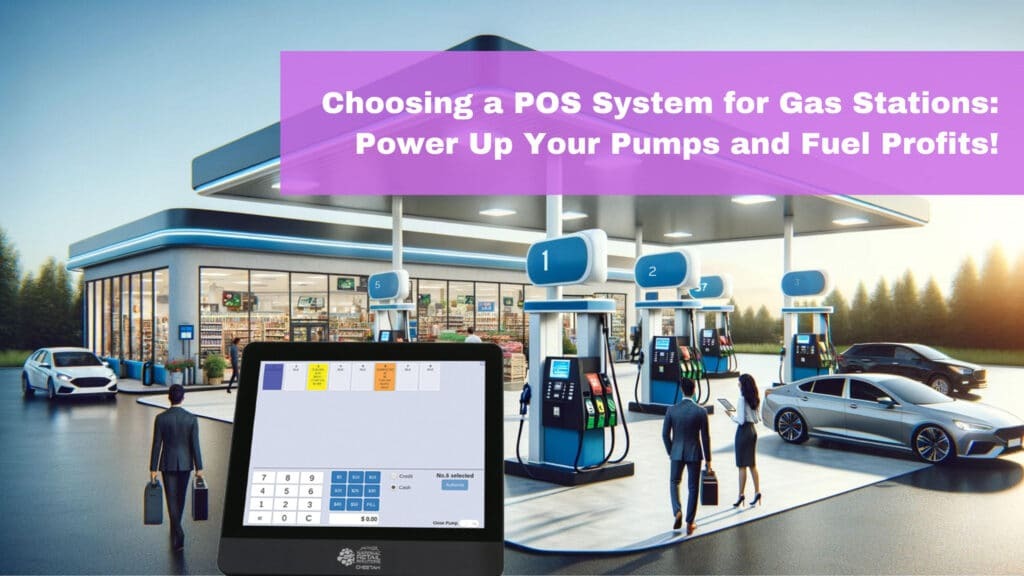
Running an independent gas station in the United States today involves a different set of pressures than it did even five years ago. Fuel margins remain tight, convenience store revenue has become essential to profitability, and compliance requirements around age-restricted sales, lottery transactions, and fuel tax reporting have grown more demanding. At the same time, customer expectations around payment speed and transaction accuracy have risen significantly.
For independent dealers who do not have the infrastructure or dedicated IT teams of large chain operators, the technology that sits at the front counter carries enormous operational weight. It processes every fuel sale, manages every in-store purchase, handles shift reconciliation, and in many cases communicates directly with back-office accounting and inventory systems. When that system works well, it is invisible. When it does not, the consequences move quickly — lost sales, inaccurate reporting, compliance failures, and frustrated staff.
This guide is written for independent station owners and operators who are evaluating their options in 2025, whether they are replacing aging equipment, opening a new location, or consolidating operations across multiple sites. The goal is to provide clear, grounded information that supports a confident purchasing decision.
What Gas Station Point of Sale Software Actually Does
Point of sale technology in a fuel retail environment is not simply a cash register with additional features. Gas station point of sale software is a purpose-built system that integrates fuel pump control, inside store transactions, payment processing, and back-office reporting into a single operational platform. Each of these functions is interdependent, and how well they communicate with each other determines the efficiency and accuracy of daily operations.
On the fuel side, the software communicates directly with pump controllers using industry protocols that allow the cashier or the system to authorize, monitor, and close pump transactions. On the inside retail side, it handles barcode scanning, price lookups, promotional pricing, and tax application across a wide product mix that can include tobacco, alcohol, lottery, fuel additives, and foodservice items. Each of these categories carries its own compliance and reporting requirements that the software must handle without manual intervention.
Fuel Control Integration and Why It Matters
The connection between pump hardware and the point of sale system is one of the most operationally critical components in the entire setup. When this integration is reliable, cashiers can authorize pumps, track pre-pays, and reconcile fuel volume against dollar amounts with minimal manual effort. When it is unreliable, the consequences include pump authorization delays, drive-offs that go untracked, and inventory discrepancies that compound over time.
Independent dealers should ask prospective vendors specifically which pump controller brands and models their system supports, and whether that support is native or dependent on third-party middleware. Native integration typically offers more stable performance and faster troubleshooting when issues arise. Middleware layers can introduce latency and add complexity during support calls.
Inside Store Transaction Handling
A gas station convenience store carries a product mix that creates real complexity at the register. Age verification prompts for tobacco and alcohol must be enforced consistently. Lottery ticket scanning and redemption require specific handling. Foodservice items with variable weights or modifiers need configurable product setups. Promotional pricing — buy-two-get-one, fuel discount with qualifying purchase — requires logic that the system must apply automatically rather than relying on cashier judgment.
When evaluating software, it is worth understanding how these configurations are managed. Systems that require a service call or vendor involvement to update pricing or promotional rules create friction and cost. Those that allow store managers to make changes directly through an administrative interface give operators more control over day-to-day operations.
Compliance Requirements Independent Dealers Cannot Ignore
Independent gas station operators in the United States operate under a layered set of regulatory requirements that touch fuel sales, in-store transactions, and payment processing. The software running at the point of sale plays a direct role in how well the station meets these obligations, and gaps in software capability can translate directly into compliance failures with real financial and legal consequences.
Payment card security is one of the most pressing areas. The PCI Security Standards Council sets the requirements for how payment data must be handled, encrypted, and stored at the point of sale and at the pump. Software that is not certified to current standards puts the operator at risk of card brand fines, increased transaction fees, and liability exposure in the event of a data breach. This is not a theoretical concern — independent stations have been disproportionately targeted because older systems at forecourt terminals have historically had weaker security implementations.
Age-Restricted Sales and Audit Trail Requirements
States vary in how strictly they enforce ID verification requirements for tobacco and alcohol, but the baseline expectation is consistent: the point of sale system should prompt cashiers at the time of sale, require confirmation of a birth date or visual ID check, and create a record of that interaction. Systems that allow cashiers to bypass or dismiss age verification prompts without logging the override create audit trail gaps that can become significant during regulatory inspections or in the event of a sale to a minor.
Operators should review how the system handles these prompts and whether compliance behavior can be configured without creating workarounds that undermine the intent of the controls.
Fuel Tax Reporting and Reconciliation
Fuel transactions carry federal and state excise tax obligations, and independent dealers are responsible for accurate reporting. The point of sale system must capture volume and dollar data with sufficient granularity to support this reporting, and ideally should produce outputs that can be used directly or exported into accounting platforms without extensive manual rekeying. Systems that silo fuel and inside store data into separate reports increase the administrative burden on operators who are often managing these tasks without dedicated accounting staff.
Back-Office Integration and Reporting Depth
The value of gas station point of sale software extends well beyond the transaction itself. The data generated at the point of sale — fuel volume by grade, product sales by category, shift totals, payment type breakdowns — is only useful if the operator can access it, interpret it, and act on it without excessive effort. Back-office integration determines how much of that value is actually realized in daily operations.
Reporting depth matters because independent dealers often carry inventory risk that larger chain operators offset through centralized purchasing and logistics. Understanding which products move, which promotions are effective, and where margin is being lost requires reporting that is both granular and timely. Systems that produce end-of-day summary reports with limited drill-down capability leave operators making decisions based on incomplete information.
Inventory Management at the Store Level
For a convenience store attached to a fuel site, inventory management is an ongoing operational challenge. Shrinkage, spoilage, ordering errors, and supplier delivery discrepancies all affect margin. The point of sale system’s ability to maintain accurate product counts, flag low-stock conditions, and produce purchase order suggestions based on sales velocity directly affects how much time store managers spend on inventory-related tasks and how often stockouts affect customer experience.
This does not require the most complex or feature-heavy system available. It requires a system whose inventory features are configured correctly for the specific product mix and sales patterns of the location, and whose data is accurate enough to be trusted.
Multi-Site Management for Operators Running More Than One Location
Independent dealers who operate more than one station face a specific set of challenges around consistency and oversight. Price changes need to propagate across locations reliably. Reporting needs to consolidate across sites without requiring manual aggregation. Staff scheduling and payroll integration, where relevant, needs to work consistently across locations.
Cloud-based or centrally managed systems have made multi-site management more accessible for independent operators, but the key consideration is whether the system’s architecture is designed for this use case or whether multi-site capability is an add-on that was retrofitted after the fact. The distinction affects both reliability and the quality of support available when problems arise.
Evaluating Vendors as a Long-Term Operational Decision
The point of sale system at a gas station is not a short-term purchase. The hardware, software licensing, integration commitments, and staff familiarity that come with a system make switching costly and disruptive. Evaluating vendors with this in mind shifts the conversation away from features and toward operational reliability, support structure, and update cadence.
Support availability is particularly important for fuel retail, where extended operating hours mean that problems do not limit themselves to business hours. An independent operator who experiences a system failure at 11 p.m. on a Saturday needs to understand before signing a contract what support options are available, what the expected response time is, and whether remote diagnostics are possible or whether an on-site visit is required.
Hardware Refresh and Software Update Cycles
Point of sale technology in fuel retail requires ongoing updates to remain compliant with evolving payment security standards and to maintain compatibility with pump controller firmware, payment processor certifications, and operating system security patches. Vendors who provide clear, scheduled update paths with advance notice give operators the ability to plan. Those who manage updates inconsistently or who charge separately for each compliance-driven update create unpredictable cost and operational risk.
Before committing to a system, operators should ask specifically how the vendor handled the transition to EMV compliance at the forecourt. That process was a meaningful test of vendor responsiveness and technical capability, and the answer will reveal how the vendor is likely to handle future compliance transitions.
Total Cost of Ownership Over a Five-Year Horizon
Initial licensing or hardware costs are rarely the most significant expense associated with a point of sale system over time. Support contracts, transaction fees charged by the software provider, the cost of required hardware upgrades, and the labor cost of managing manual workarounds around system limitations all contribute to the total cost. Operators should request a clear breakdown of these costs over a realistic operating horizon before making a final decision.
Closing Considerations for Independent Dealers in 2025
The independent gas station and convenience store operator in 2025 is navigating a business environment that demands more from technology than at any previous point. Payment security standards have tightened. Customer expectations around transaction speed have increased. Fuel margins continue to require that inside-store operations carry more of the profitability burden. All of these pressures converge at the point of sale.
Choosing the right system is not about finding the most feature-rich option or the lowest upfront cost. It is about finding a platform that is reliable, compliant, well-supported, and operationally appropriate for the specific context of an independent station — which is often leaner in staff, more variable in product mix, and more dependent on the owner-operator’s direct involvement than a chain location.
The most effective evaluations happen when operators start from their specific operational pain points — whether that is shift reconciliation errors, inventory inaccuracy, pump control instability, or compliance gaps — and measure candidate systems against those real problems rather than a generic feature checklist. Software that solves the problems that are actually costing the business time and money is worth more in practice than software that scores well on paper.
Take time to speak with other independent operators who are running each system you are considering. Ask vendors for references from stations with a similar size and product mix to your own. And treat the quality of the support relationship as seriously as the quality of the software itself — because over a multi-year operating horizon, how a vendor responds when things go wrong will define the experience as much as how the system performs when everything is working.