
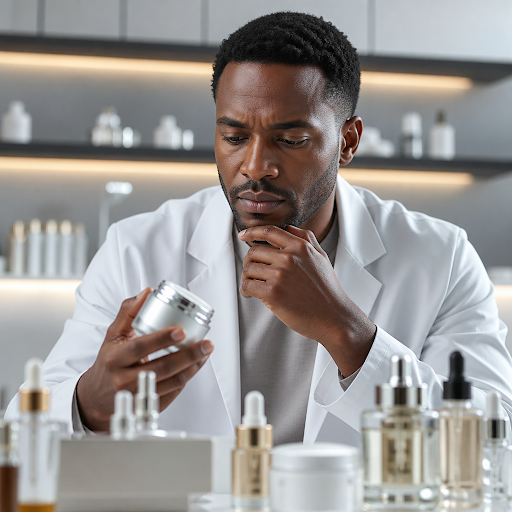
There is a particular kind of seduction that happens inside a high-end beauty counter. The lighting is flattering, the packaging is architectural, and the sales associate speaks with the quiet confidence of someone who has memorized every clinical study ever conducted on a peptide. Before you know it, you are holding a jar that costs more than your electricity bill, nodding along to phrases like “bio-fermented actives” and “epigenetic renewal.” The question is not whether luxury skincare can work. Some of it genuinely does. The question is whether you have the tools to tell the difference between a product that earns its price and one that simply performs the idea of luxury without delivering the substance.
Why Luxury Skincare Marketing Is Designed to Overwhelm Your Judgment
Premium skincare brands invest heavily in what the industry calls “perceived efficacy” — the feeling that a product is working, regardless of whether the active ingredients are present in meaningful concentrations. Thick textures, complex fragrances, and elaborate application rituals all contribute to this perception. None of these elements are inherently dishonest, but they can obscure the actual science. A moisturiser that costs $600 may contain the same concentration of hyaluronic acid as one that costs $30. The difference often lies in the delivery system, the supporting cast of ingredients, the sourcing, or simply the brand’s positioning strategy. Understanding which of these factors actually matters to your skin is the first step toward spending wisely.
The Ingredient List Is Your Most Reliable Tool
Cosmetic ingredients are listed in descending order of concentration, which means the first five to seven ingredients make up the bulk of what you are applying. If a brand charges a premium for a rare botanical extract but that extract appears near the bottom of the list — after preservatives and fragrance — it is present in trace amounts that are unlikely to produce meaningful results. Look for key actives such as retinoids, niacinamide, vitamin C derivatives, peptides, and AHAs appearing in the upper half of the ingredient list. If they are buried at the bottom, the product is trading on the ingredient’s reputation rather than its efficacy.
Clinical Claims Versus Marketing Language: Knowing the Difference
Phrases like “clinically proven,” “dermatologist tested,” and “visible results in 28 days” are not regulated in the same way that pharmaceutical claims are. A brand can conduct a study on twelve participants, ask them to self-report whether their skin felt smoother, and use the results to support a clinical claim. This does not mean the product is ineffective — it means you should ask harder questions. How large was the study? Was it placebo-controlled? Was it published in a peer-reviewed journal, or was it conducted in-house? Brands that invest in genuine third-party clinical validation will usually make that information available. If the only evidence is a percentage printed on a box, treat it as marketing rather than science.
Understanding Delivery Systems and Bioavailability
One area where luxury skincare can genuinely justify a higher price point is in the sophistication of its delivery systems. Encapsulated retinol, liposomal vitamin C, and time-release peptide complexes are technologies that require significant research and development investment. These systems protect unstable actives from oxidation, improve skin penetration, and reduce irritation potential. If a brand can explain — clearly and specifically — how its delivery technology improves the bioavailability of its actives, that is a meaningful differentiator. Vague references to “advanced technology” or “proprietary complexes” without further explanation are not. unlocking radiant skin through evidence-based skincare solutions requires understanding not just what ingredients are present, but how effectively they are delivered to the skin layers where they can actually function.
What Genuine Luxury Skincare Brands in the USA Are Getting Right
The American luxury skincare market has matured considerably over the past decade. A new generation of brands has emerged that combines genuine scientific investment with premium positioning, moving away from the purely aspirational model that dominated the category for so long. These brands tend to be transparent about their formulations, willing to publish their clinical data, and focused on specific skin concerns rather than making sweeping anti-ageing promises. If you are navigating this landscape and want a curated starting point, exploring luxury skincare brands USA can help you identify which names are consistently recognised for both formulation integrity and results — a useful filter before you commit to a significant purchase.
The Role of Texture, Sensory Experience, and Skin Compatibility
It would be reductive to dismiss the sensory dimension of luxury skincare entirely. The texture of a product affects how consistently you use it, and consistency is one of the most significant variables in skincare outcomes. A beautifully formulated serum that you find unpleasant to apply will not outperform a simpler product that you use every morning without thinking. Luxury brands often invest in the elegance of their formulations — the way a cream absorbs, the weight of a serum, the absence of pilling under makeup — and these qualities have genuine functional value. The issue arises when sensory sophistication is used as a substitute for active ingredient performance rather than a complement to it.
Practical Steps Before You Commit to a High-Price Purchase
Before spending a significant sum on a single product, there are several practical steps worth taking. First, request a sample. Most reputable luxury counters and online retailers will provide samples on request, and any brand confident in its product should welcome the opportunity. Second, research the brand’s formulation philosophy independently — look for interviews with the founders or lead chemists, not just the marketing copy on the product page. Third, check whether the product has been reviewed by credentialed skincare experts rather than only by influencers with affiliate relationships. For practical, no-nonsense guidance on building a skincare routine that actually works, expert skincare advice from Caroline Hirons offers a grounded perspective that cuts through the noise of premium marketing.
Price Per Use and the True Cost of Luxury
An $800 product used twice daily for four months works out to roughly $3.30 per application. Framed that way, the cost becomes more manageable — but only if the product is genuinely delivering results that a less expensive alternative cannot. The honest calculation requires you to identify what specific outcome you are seeking, whether a product in a lower price bracket addresses that concern with comparable actives, and whether the luxury version offers a meaningful advantage in formulation, delivery, or concentration. If the answer to the last question is yes, the premium may be justified. If the advantage is primarily aesthetic — the packaging, the brand heritage, the counter experience — that is a legitimate purchase too, but it should be made with clear eyes.
Conclusion: Informed Spending Is the Most Sophisticated Choice
Luxury skincare is not a category to avoid — it is a category to approach with the same critical intelligence you would bring to any significant investment. The brands that deserve your money are the ones that can explain their science, stand behind their clinical evidence, and formulate with integrity rather than relying on heritage and packaging to carry the product. When you understand what you are looking for and why, the $800 decision becomes considerably less daunting — and considerably more likely to be the right one.