
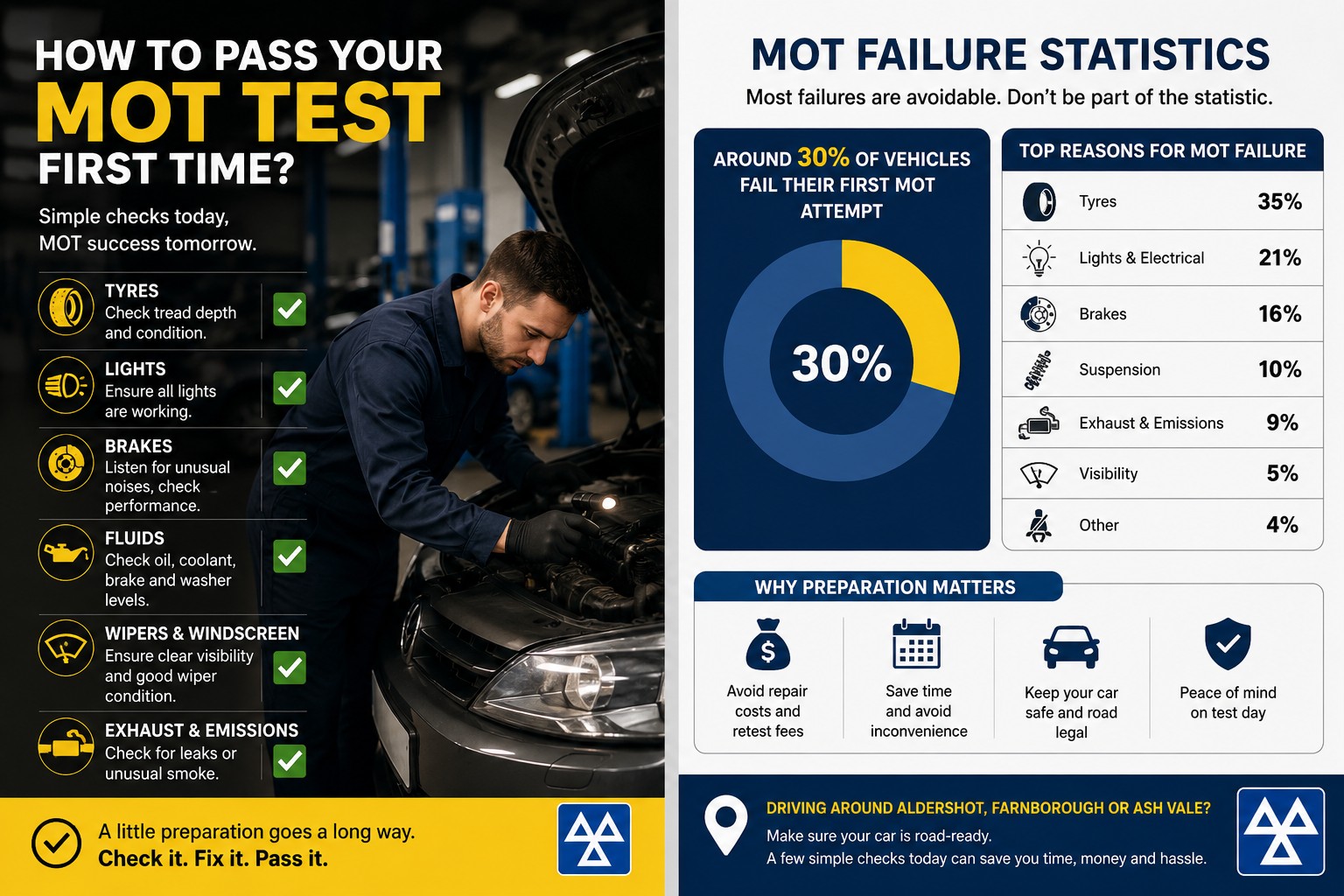
Failing an MOT isn’t just frustrating, it’s expensive and inconvenient. You’re left scrambling to book repairs, arrange a retest, and potentially lose access to your car for days. The good news? Most MOT failures are completely avoidable with a little preparation and awareness. Booking a professional car service in Aldershot before your test can help identify worn brakes, tyre issues, and fluid problems early.
The MOT test checks if your vehicle meets the minimum legal safety and environmental standards. While some failures happen due to unexpected wear, the majority stem from easily spotted issues like worn tyres, broken lights, or neglected fluid levels. According to DVSA data, around 30% of vehicles fail their first MOT attempt, but many of these failures could have been prevented with basic pre-test checks. Whether you’re driving around Aldershot, Farnborough, or Ash Vale, getting your car road-ready before test day makes all the difference. This guide walks you through everything you need to know to pass your MOT first time, from DIY checks you can do at home to understanding what testers actually look for.
What Does an MOT Test Actually Check?
An MOT isn’t a full service, it’s a safety and emissions inspection. Understanding what gets tested helps you focus your preparation on the areas that matter most.
The MOT examines several core vehicle systems. Your lights must all work correctly, including headlights, brake lights, indicators, and number plate lights. Tyres are checked for tread depth (minimum 1.6mm across the central three-quarters), damage, and correct pressure. Brakes undergo a thorough inspection covering pads, discs, fluid condition, and handbrake effectiveness.
Suspension components, steering systems, and exhaust emissions all face scrutiny too. Testers check for excessive smoke, catalytic converter function, and emission levels against your vehicle’s standards. Your windscreen must be free from significant chips or cracks in the driver’s viewing area, and wipers need to clear the screen effectively.
Seatbelts, mirrors, and the horn also get tested. Even seemingly minor things like damaged wiper blades or a missing fuel cap can cause a failure. The test doesn’t cover your engine’s mechanical condition, clutch operation, or gearbox function, but these won’t cause an MOT fail unless they affect emissions or safety components.
Common MOT Failure Points You Can Fix Yourself
Most failures happen for predictable reasons, and many are simple enough to fix at home without professional help.
- Lighting Issues
Blown bulbs are one of the easiest failures to prevent. Walk around your car at night, check every light works, headlights, brake lights, fog lights, indicators, and number plate lights. Replace any dead bulbs immediately. Check indicator lenses aren’t cracked and that light units are secure.
- Tyre Problems
Check tread depth using a 20p coin. Insert it into the main grooves, if you can see the outer band, your tread is below the legal limit. Look for uneven wear patterns, bulges, cuts, or embedded objects. Don’t forget the spare tyre if your vehicle carries one. Inflate all tyres to the manufacturer’s recommended pressure, usually found on a sticker inside the driver’s door.
- Wiper Blade Condition
Perished or torn wiper blades cause smears and fail the test. Run your finger along the blade edge, if it feels brittle or torn, replace it. Top up your washer fluid with proper screenwash, not just water.
- Number Plate Condition
Cracked, faded, or illegible plates will fail. Your registration must be clearly readable, with the correct spacing and font. Clean dirty plates thoroughly, replace damaged ones before the test.
- Fluid Levels
Check brake fluid, coolant, and power steering fluid levels. Low brake fluid often indicates worn pads, which will also cause a failure. Top up screenwash and ensure your engine oil sits within the recommended range.
- Mirrors and Glass
Any crack longer than 10mm in the swept area of the windscreen (the section cleaned by wipers) causes a failure. Chips bigger than 40mm anywhere on the windscreen also fail. Check door mirrors aren’t loose or damaged.
Professional Checks Worth Doing Before Your MOT
Some issues need trained eyes and proper equipment to identify. Booking a pre-MOT inspection or getting these areas checked as part of regular car servicing saves you from unexpected failures.
Brake System Health
Worn brake pads, damaged discs, or contaminated brake fluid cause frequent failures. A technician can measure pad thickness, check disc condition, and test brake fluid moisture content. They’ll spot issues like sticking callipers or leaking brake lines that you might miss during a visual check.
Suspension and Steering Components
Ball joints, track rod ends, bushes, and shock absorbers wear gradually. Excessive play in these components fails the MOT, but it’s hard to diagnose without lifting the vehicle. Professional checks identify worn parts before they become failures.
Exhaust Emissions Testing
Emission failures often come as a surprise because you can’t easily test them at home. A pre-test emissions check highlights potential problems like a failing catalytic converter or oxygen sensor. If your car runs rough, struggles to start, or uses more fuel than usual, get it checked before the MOT.
Steering Alignment
Misaligned wheels cause uneven tyre wear, which fails the test. If your car pulls to one side or the steering wheel sits off-centre, get the alignment checked. This also improves handling and fuel economy.
Understanding MOT Advisory Notices
Not everything flagged during your MOT causes an immediate failure. Advisory notices warn you about components that are wearing but still legal, think of them as early warnings.
Advisories typically highlight issues like brake pads wearing thin, slight oil leaks, or tyres approaching the minimum tread depth. Your car still passes with advisories, but they tell you what needs attention soon. Ignoring advisories often leads to failures at your next test.
When you receive your MOT certificate, check the advisory section carefully. Prioritise any advisories related to safety items like brakes, tyres, or steering. If you’re unsure what an advisory means, understanding how to read your MOT certificate helps you make informed maintenance decisions. Address advisories before they become expensive failures, especially if your next MOT is months away.
Some advisories relate to minor corrosion or wear that won’t worsen quickly. Others, like brake pads at 3mm thickness, need urgent attention. Use advisories as a maintenance roadmap, not just a list of problems.
What to Do in the Days Before Your Test
The final week before your MOT is crucial for catching last-minute issues and ensuring your car arrives at the test centre in optimal condition.
Drive your car regularly in the days leading up to the test. This warms up the engine, charges the battery, and helps the emissions system operate efficiently. Cold engines often produce higher emissions, which can cause failures. Aim for at least one 20-minute drive at varied speeds.
Clean your car inside and out. Testers need clear access to inspect components, and a clean vehicle makes their job easier. Remove any clutter from the boot that might obstruct access panels or tools. Wash the number plates until they’re fully legible.
Check your paperwork. You’ll need your V5C registration document and any previous MOT certificates if available. Ensure the vehicle details match exactly, incorrect registrations cause administrative delays. If you’ve recently bought the car, make sure the logbook reflects your ownership.
Top up all fluid levels one final time. Double-check tyre pressures, including the spare. Test every light again, particularly if you’ve recently driven through deep water or rough terrain that might have dislodged bulbs or damaged wiring.
Book your MOT with enough time before your current certificate expires. You can book up to a month early without losing any remaining time on your current MOT. This gives you flexibility if repairs are needed. Many drivers in Fleet, Farnborough, and Church Crookham book early to avoid last-minute stress.
Common Myths About MOT Tests
Misunderstandings about the MOT process cause unnecessary worry and sometimes lead to wasted preparation efforts.
Myth 1: The MOT Checks Your Engine’s Mechanical Condition
False. The test doesn’t assess whether your engine runs smoothly, whether the clutch slips, or if the gearbox changes cleanly. These only matter if they affect emissions or safety components.
Myth 2: Aftermarket Parts Cause Automatic Failures
Not true. Modified exhausts, alloy wheels, or upgraded suspension components pass as long as they meet legal standards and don’t compromise safety. Excessively loud exhausts or lowered suspension that causes tyre rubbing will fail though.
Myth 3: Older Cars Have Lower Pass Standards
Wrong. All cars face the same safety standards regardless of age. Older vehicles do get some concessions on emissions testing, but safety items like brakes, tyres, and lights must meet current standards.
Myth 4: You Must Service Your Car Before the MOT
Incorrect. Services and MOTs are separate. A service maintains your car’s condition and longevity, an MOT checks legal safety standards. However, regular servicing does catch many issues that would otherwise cause MOT failures, so combining them makes practical sense.
Myth 5: Testers Fail Cars to Generate Repair Work
This conspiracy theory ignores how MOT centres actually operate. Testers work to strict DVSA guidelines, and test centres face regular audits. Deliberately failing cars risks losing their testing license. Most failures result from genuine safety issues, not profiteering.
What Happens If You Fail Your MOT?
Failing isn’t the end of the world, but understanding the process helps you handle it efficiently.
When your car fails, you receive a VT30 refusal certificate listing every failure and advisory. The certificate includes detailed descriptions of what failed and why. You have two options: fix the issues and return for a free retest within 10 working days, or abandon the test and make other arrangements.
During the free retest period, the test centre only rechecks the failed items, not the entire vehicle. This saves time and money, but you must return to the same test centre. After 10 working days, you’ll need to pay for a completely new MOT.
Your current MOT certificate remains valid until its expiry date, even if you fail a test taken early. However, if you’re testing after your certificate expires and you fail, you cannot legally drive the car except directly to a pre-booked repair appointment or retest.
Some failures are minor enough to fix at the test centre immediately, like replacing a blown bulb. Many centres offer this service for simple issues. Major failures like worn brakes or failed emissions require proper repairs at a garage.
Always get a detailed explanation of what failed. Understanding the problem helps you avoid being overcharged for unnecessary repairs. Take photos of failed components if you’re unsure about the diagnosis.
How Much Does MOT Failure Really Cost?
Financial planning matters when it comes to MOT preparations, and understanding potential costs helps you budget properly.
The MOT test itself costs a maximum of £54.85 for cars, set by the government. Many test centres charge less as a promotional rate. If you fail and return within 10 working days, the retest is free for the failed items.
Repair costs vary dramatically depending on what fails. A blown bulb costs a few pounds, a new catalytic converter runs into hundreds. According to industry data, the average MOT failure repair bill sits around £120, but this includes everything from minor fixes to major component replacements.
Common repair costs include brake pads at £80 to £150 per axle, tyres from £50 to £150 each depending on size and quality, and wiper blades at £10 to £30 per pair. Suspension components like track rod ends or ball joints cost £100 to £200 including fitting.
Prevention beats cure financially. Spending £30 on a pre-MOT check potentially saves hundreds in unexpected repairs. Regular maintenance spreads costs throughout the year rather than hitting you with a large bill at MOT time. Understanding typical car service costs helps you plan maintenance budgets effectively.
MOT Exemptions and Special Cases
Not every vehicle on UK roads requires an annual MOT, and understanding exemptions prevents unnecessary tests.
Vehicles manufactured before 1960 are permanently exempt from MOT testing, though they must remain roadworthy. Classic cars built before 1981 also qualify for exemption if they haven’t been substantially modified in the previous 30 years. Despite the exemption, many classic car owners still get voluntary MOTs for insurance purposes.
New vehicles receive their first MOT at three years old. Until then, they’re exempt from testing but must still meet construction and use regulations. Electric vehicles follow the same three-year rule but benefit from exemption from emissions testing throughout their life.
Some vehicles never need MOTs regardless of age, including agricultural tractors, road rollers, and vehicles used exclusively on private land. Goods vehicles over 3,500kg require commercial testing under different regulations.
Even if your vehicle qualifies for exemption, maintaining it to MOT standards makes sense for safety and insurance validity. Many insurers require proof of roadworthiness for exempt vehicles.
Final Pre-Test Checklist
Run through this comprehensive checklist 24 hours before your test to catch any last-minute issues.
Exterior Checks: Walk around the vehicle checking body condition, no loose trim or sharp edges. Verify number plates are clean, secure, and correctly formatted. Test every exterior light, headlights on dipped and full beam, brake lights, indicators, fog lights, reverse lights, and number plate lights. Check all lenses are intact without cracks.
Tyre Inspection: Measure tread depth across all four tyres plus the spare. Look for cuts, bulges, or objects embedded in the tread. Verify pressures match manufacturer specifications. Check for unusual wear patterns indicating alignment or suspension problems.
Under the Bonnet: Check all fluid levels, brake fluid, coolant, power steering fluid, engine oil, and screenwash. Look for obvious leaks or damaged hoses. Ensure the battery terminals are clean and tight.
Interior Checks: Test seatbelts for smooth operation and check for fraying or damage. Verify all mirrors adjust properly and aren’t cracked. Test the horn. Check windscreen for chips or cracks in the swept area. Operate wipers on all speeds, ensuring they clear the screen without leaving streaks.
Driver Controls: Test the handbrake holds the car on a slope. Check the footbrake pedal doesn’t feel spongy or travel too far. Verify the steering wheel doesn’t have excessive play.
Boot Inspection: Ensure the fuel cap seals properly. Check exhaust mounting isn’t loose or blowing. Look underneath for obvious damage or corrosion to suspension components.
Conclusion
Passing your MOT first time isn’t about luck, it’s about preparation and awareness. Most failures happen because drivers overlook simple maintenance tasks or ignore warning signs their car displays weeks before the test. By following the checks outlined in this guide, you dramatically improve your chances of sailing through.
Remember, the MOT tests minimum legal standards, not your car’s overall health. Even a pass doesn’t mean your vehicle is in perfect condition. Use the test as an opportunity to identify developing issues before they become expensive problems or safety hazards. Whether you’re booking your MOT in Aldershot or elsewhere in Hampshire, taking preparation seriously saves time, money, and stress. Address advisories promptly, maintain your car regularly, and treat the MOT as one part of responsible vehicle ownership rather than an annual hurdle to dread.
FAQs
Can I drive my car if it fails its MOT?
It depends on your current MOT status. If you have a valid MOT certificate that hasn’t expired yet, you can continue driving legally until the expiry date, even after failing an early test. However, if your MOT has expired and you fail the test, you can only drive the car directly to a pre-booked repair appointment or MOT retest. Driving otherwise is illegal and invalidates your insurance.
How early can I get my MOT done?
You can take your MOT test up to one month, or 30 days, before your current certificate expires without losing any time. If you pass, the new certificate starts from the day after your old one expires, so you don’t forfeit any remaining validity. This gives you flexibility to arrange repairs if needed without rushing.
What’s the difference between an MOT and a service?
An MOT is a legal safety and emissions test checking your car meets minimum standards. A service is preventative maintenance that keeps your vehicle running efficiently and reliably. Services include oil changes, filter replacements, and thorough mechanical checks that the MOT doesn’t cover. You need both, the MOT for legality, the service for longevity.
Do I need to tell my insurance company if my car fails its MOT?
Most insurance policies require your car to have a valid MOT certificate. If your MOT expires or you fail and don’t get it retested, technically you should inform your insurer as your cover might be affected. However, if you fail an early test while your current certificate is still valid, this doesn’t affect your insurance. Always check your specific policy terms.
What happens if I forget to renew my MOT?
Driving without a valid MOT is illegal and carries a fine of up to £1,000. It also invalidates your insurance, meaning you’re uninsured, which carries penalties including points on your licence, unlimited fines, and possible vehicle seizure. If you realise your MOT has expired, arrange a test immediately and don’t drive the car except directly to a pre-booked MOT appointment.