
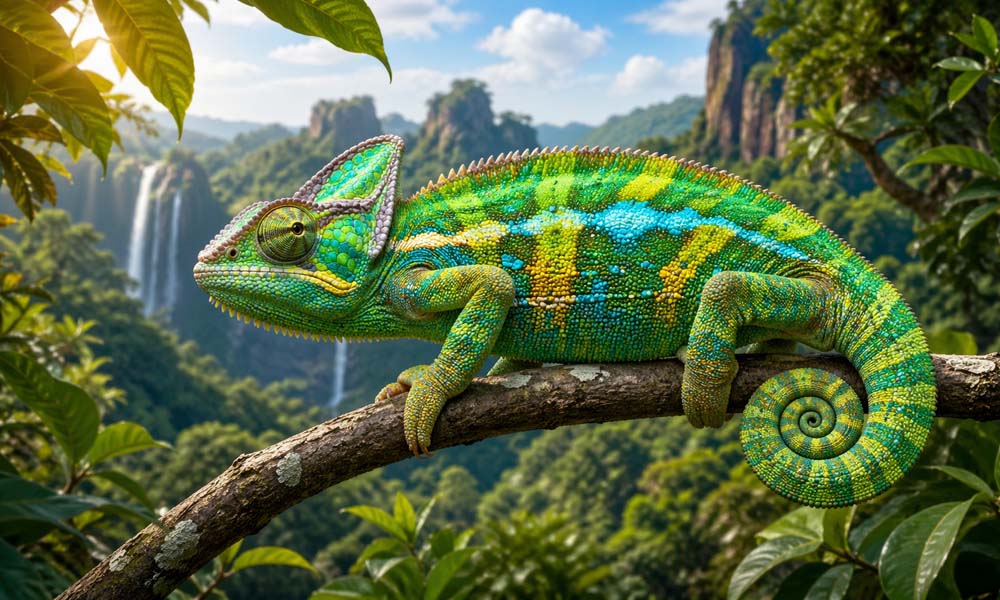
Have you ever looked at a chameleon and wondered how one small reptile can do so many strange things at once? It can change color, move each eye in a different direction, and catch food with a long tongue that shoots out in a flash. That is a big reason why so many people are curious about Chameleónovité. These reptiles do not just look unusual. They are built in a very special way.
In simple words, Chameleónovité is the family group for chameleons. This group includes many different kinds of chameleons found in several parts of the world. Some are tiny and hard to spot. Others are larger and brighter. But all of them share special body tools that help them survive. Once you start learning about them, it becomes easy to see why they stand out from other reptiles.
In this article, we will explore the world of Chameleónovité in a clear and friendly way. We will talk about what the word means, where these reptiles live, why their bodies are so unusual, how their eyes and skin work, and how they hunt their food. We will also look at their daily life, their role in nature, and the problems they face today. Let’s start with the meaning of the word itself.
What Is Chameleónovité?
Chameleónovité is the family name used for chameleons. In science, this family is called Chamaeleonidae. That may sound formal, but the idea is simple. It means all true chameleons belong under one big family group. So when someone uses the word Chameleónovité, they are talking about chameleons as a whole, not just one kind.
This family includes more than 200 species. That is one reason the group is so interesting. Some species live in thick forests. Some live in dry areas with shrubs and small trees. Some are bright and colorful, while others are more plain and quiet-looking. Even though they can look different, they still share many of the same special traits that make chameleons easy to recognize.
Chameleons are reptiles, and they belong to the order Squamata, which also includes snakes and other lizards. But Chameleónovité are very different from most of their reptile relatives. Their eyes, feet, tail, skin, and hunting style all work in unusual ways. They are not just another kind of lizard. They are one of the most specialized reptile groups in the world.
Where Chameleónovité Live
Most Chameleónovité live in Africa and Madagascar. In fact, Madagascar is one of the most important places for chameleons on Earth. Many species there are found nowhere else. That makes the island very special. Because it was separated from other land for a very long time, animals there had time to develop in their own way. Chameleons were one of the groups that changed and spread into many forms.
Africa also has a huge number of chameleon species. They live in different kinds of places across the continent. Some live in wet forests full of leaves and branches. Others live in open savannas, mountain areas, or dry shrublands. This shows that Chameleónovité are able to adapt to many different homes, as long as the conditions are right.
A smaller number of chameleons also live in parts of the Middle East, southern Europe, and South Asia. Species can be found in places like Yemen, Saudi Arabia, India, Sri Lanka, Spain, and Portugal. Even though these areas have fewer species than Africa and Madagascar, they still matter a lot in the story of Chameleónovité. Climate, trees, bushes, and local food all help shape how chameleons live in each place.
Warm weather is very important for chameleons. Most species do best in places with enough heat, safe hiding spots, and the right balance of light and moisture. Some need humid forest air. Others handle drier land better. That is why where they live matters so much. A chameleon built for cool mountain forests will not live the same way as one built for hot dry scrub land.
Why Chameleónovité Are So Special
There are many reptiles in the world, but Chameleónovité still stand out right away. Why? Because they have a mix of features that seem almost unbelievable at first. They can shift skin color, move their eyes in different directions, grip branches with special feet, and shoot out a tongue faster than most people can follow. When you put all of that together, it creates one of the most unusual animals in nature.
What makes Chameleónovité even more special is that these traits are not random. Each one helps them survive. Their color change can help with mood, heat, and social signals. Their eye movement helps them watch for danger and food at the same time. Their feet and tail help them stay safe in trees. Their tongue lets them hunt without running after prey. Every part of the chameleon’s body has a purpose.
Think of it like a perfect set of tools. A hammer is made for one job. A saw is made for another. In the same way, the body of a chameleon is built for careful climbing, quiet hunting, and staying alive in tricky places. That is why Chameleónovité are not just strange for the sake of being strange. They are special because their whole design works together so well.
Chameleónovité Body Parts and Smart Design
The body of Chameleónovité is made for life in branches, bushes, and leaves. Many chameleons have a body that is flat from side to side. This shape helps them move through plants more easily and makes them harder to spot. When they stand still on a branch, their body can blend into the shape of leaves and twigs around them.
Their feet are also very special. Chameleons do not have ordinary lizard feet. Their toes are grouped in a way that helps them grip branches tightly. This strong grip matters because many chameleons spend most of their lives above the ground. A weak grip could mean a dangerous fall. But with these strong feet, Chameleónovité can move carefully and stay balanced even on thin branches.
Their tail is another smart body tool. Many species have a tail that can wrap around branches for extra support. This is called a prehensile tail, but the simple idea is easy: the tail acts almost like an extra hand. It helps the chameleon stay steady when climbing or reaching forward. In windy places or on narrow branches, that extra support can make a big difference.
Some chameleons also have extra features like crests, horns, or helmet-like heads. These can make them look even more unusual. In some species, these features may help with display, recognition, or protection. In others, they may simply be part of how that species developed over time. All together, the body of Chameleónovité shows careful design built for climbing, balance, and survival.
Chameleónovité Eyes and Amazing Vision
One of the most famous features of Chameleónovité is their eyes. A chameleon’s eyes do not move the way human eyes do. Each eye can turn almost on its own. That means one eye can look one way while the other eye looks somewhere else. This gives the chameleon a very wide view of the world around it.
This kind of vision is a huge survival tool. A chameleon can watch for danger and search for food at the same time. Imagine sitting on a branch and being able to check two places without moving your head. That makes it easier to stay safe. Birds, snakes, and other hunters are less likely to surprise a chameleon that can see so much at once.
When it is time to hunt, both eyes can work together. They turn toward the same target so the chameleon can judge distance better. This matters because the tongue strike must be accurate. If the distance is wrong, the prey may escape. So the eyes of Chameleónovité are not just strange-looking. They are one of the main reasons chameleons are such skilled hunters.
Their sharp vision also helps them notice tiny movements. A small insect on a leaf may be hard for many animals to spot, but a chameleon can pick it out from a good distance. This is one reason Chameleónovité do not need to chase their food. They can stay calm, keep watching, and strike only when the moment is right.
Why Chameleónovité Change Color
When most people think about chameleons, the first thing that comes to mind is color change. It is the most famous trait of Chameleónovité. But many people also misunderstand it. A lot of people think chameleons change color only to match whatever they are sitting on. That can happen a little, but it is not the main reason.
Color change is often about communication. A chameleon may become brighter when it wants to attract a mate or appear strong in front of a rival. It may show darker tones when it feels stressed, scared, or angry. In this way, color works almost like a silent message. Instead of making loud sounds, Chameleónovité often “speak” through color and body posture.
Color also helps with body temperature. Chameleons are cold-blooded reptiles, so the heat around them affects how their body works. Darker colors can help them absorb more heat from sunlight. Lighter colors can help reflect heat and keep them cooler. This means color is not just about appearance. It is also a useful tool for daily survival.
Camouflage still matters too, just not in the simple way many people imagine. A chameleon may blend better with leaves, bark, or branches in some moments. This can help it avoid danger or get closer to prey. So the truth is more interesting than the myth. Chameleónovité change color for many reasons at once, including mood, heat, social signals, and sometimes hiding.
How Chameleónovité Change Color
The way Chameleónovité change color is more complex than it looks. Their skin has special layers that help create different colors. Some layers contain pigments, while others affect how light reflects from the skin. When these layers shift or react, the color we see can change too.
In simple terms, the skin is not acting like a paint bucket being mixed around. It is more like a smart surface that changes how light looks. Tiny parts inside the skin can reflect light in different ways. When that changes, the reptile may look greener, darker, brighter, or more patterned. That is why chameleon color change feels so impressive. It is not just one simple trick.
Not all species change color in the same way. Some chameleons can show strong changes with bright yellows, blues, reds, or greens. Others only shift a little, maybe becoming darker or lighter. So when we talk about Chameleónovité, it is important to remember that not every species is a dramatic color shifter. Some are much more subtle.
Mood, stress, light, temperature, and social contact can all affect color change. A relaxed chameleon in a calm place may look very different from the same animal during a stressful moment. This is one reason people find Chameleónovité so fascinating. Their skin tells a story about what is happening inside and around them.
How Chameleónovité Hunt Their Food
Chameleónovité are not active chasers. They do not run after prey the way some other reptiles do. Instead, they are sit-and-wait hunters. They stay still, watch carefully, and strike only when the moment is right. This hunting style saves energy and fits well with life in trees and shrubs.
Most chameleons eat insects like crickets, flies, grasshoppers, beetles, and similar small prey. Larger species may sometimes eat small lizards or other tiny animals, but insects are the main food for many of them. Their hunting success depends on patience, sharp sight, and timing. They do not need to rush. They let the prey come into the right position.
The tongue of Chameleónovité is one of their most famous hunting tools. It is long, fast, and sticky at the tip. When the chameleon locks onto prey, the tongue shoots out quickly and grabs the insect almost at once. Then it pulls the food back into the mouth. This all happens so fast that it can be hard to see with the naked eye.
This hunting method is very smart. It lets the chameleon catch food without moving too much or risking a fall from a branch. Instead of jumping, chasing, or wrestling with prey, it uses distance, aim, and speed. That is one more reason Chameleónovité are so special. Even the way they eat shows how perfectly their bodies match their lifestyle.
Chameleónovité Behavior in Daily Life
In daily life, Chameleónovité are usually calm, quiet, and careful. They do not move around in a wild rush like some other reptiles. Instead, they take slow steps and often pause between movements. This helps them stay hidden. It also helps them save energy. In the wild, wasting energy can be a real problem, so this slow style works very well for them.
Many chameleons also have a funny way of walking. They sway a little as they move, almost like a leaf shaking in the wind. At first, that may look strange. But this movement can help them blend into the plants around them. A bird looking down may only see something that looks like part of the tree moving with the breeze. That small trick can help keep the chameleon safe.
Most Chameleónovité also like to live alone. They are usually solitary animals. That means they do not spend much time with others of their kind unless it is time to mate. If another chameleon enters their space, they may become stressed or defensive. Instead of making loud sounds, they often use body posture, open mouths, puffed-up shapes, or color changes to show how they feel.
This quiet way of life tells us something important. Chameleónovité are not lazy animals. They are smart and careful animals. Every move has a reason. Staying still can keep them hidden. Moving slowly can keep them balanced. Watching first and acting later helps them stay alive.
Chameleónovité Life Cycle and Baby Chameleons
Like other reptiles, Chameleónovité reproduce through mating, but the details can change from one species to another. In many species, the male uses bright colors and body displays to impress the female. He may show stronger colors, raise his body, or move in a certain way to look healthy and strong. These displays are an important part of chameleon life.
After mating, many female chameleons lay eggs. They usually choose a safe place in soil or sand and bury the eggs carefully. Then they leave them there to develop. Depending on the species and the weather, the eggs may hatch after weeks or even months. This waiting time can be long, but it helps the young develop before they enter the world.
Some species of Chameleónovité do something different. Instead of laying eggs, they give birth to live young. This is not true for all chameleons, but it does happen in some species. It is one more example of how wide and varied the chameleon family really is. They may share many traits, but their life cycles are not all exactly the same.
When baby chameleons hatch or are born, they are usually on their own right away. There is no long period of care from the parents. The babies must quickly learn to find food, stay hidden, and avoid danger. It sounds harsh, but this is how many reptiles survive in nature. From the start, young Chameleónovité must rely on their own instincts and tiny but powerful survival tools.
Why Chameleónovité Matter in Nature
It is easy to focus only on how strange or beautiful chameleons look, but Chameleónovité are important for another reason too. They play a real role in nature. One of their biggest jobs is helping control insect numbers. Since many chameleons eat insects every day, they help keep those populations from growing too large.
This matters more than many people realize. Insects are part of nature, of course, but in some places, too many can damage plants and upset the balance of a habitat. By feeding on insects, Chameleónovité help support healthier forests, shrubs, and wild spaces. In this way, even a quiet reptile sitting on a branch can be helping the whole system around it.
Chameleons are also part of the food chain in another way. They are food for other animals. Birds, snakes, and some larger reptiles may hunt them. So they are not only hunters. They are also prey. That means they help connect different parts of the ecosystem. If chameleon numbers fall sharply, that can affect other animals too.
This is why Chameleónovité matter beyond their unusual look. They help hold ecosystems together. They remind us that even small animals with quiet lives can have an important place in the natural world. When we protect them, we are also helping protect the larger web of life around them.
Problems Chameleónovité Face Today
Even though Chameleónovité are great survivors, many species face serious problems today. One of the biggest is habitat loss. Forests are cut down. Bush land is cleared. Trees and plants disappear to make room for farms, roads, and buildings. When that happens, chameleons lose the exact places they need for shelter, food, and safety.
This is especially dangerous for species that live only in small areas. Madagascar is a good example. Many of its chameleons are found in limited places and nowhere else on Earth. If one forest area is damaged, a whole local group can suffer badly. That is why habitat loss is such a big problem for Chameleónovité. Some species simply cannot move somewhere else and start over.
Climate change is another growing threat in 2026. Changes in heat, rain, and seasonal patterns can make habitats harder to live in. Some chameleons need very specific conditions. If temperatures rise too much or moisture levels change too much, they may struggle to find food, stay hydrated, or reproduce successfully. Small changes in weather can lead to big problems over time.
Illegal wildlife trade also harms many chameleons. Some are taken from the wild to be sold as pets. This may sound small, but it can hurt wild populations, especially rare species. When animals are removed from places where they already live in small numbers, recovery becomes much harder. For Chameleónovité, protection is not just about stopping one threat. It is about guarding them from several dangers at once.
Can Chameleónovité Live as Pets?
Many people find chameleons beautiful and interesting, so it is easy to see why some want one as a pet. But Chameleónovité are not simple pets. They have special needs, and they can become stressed very easily. This is why they are often not the best choice for beginners. A chameleon may look calm, but that does not mean it is easy to care for.
Chameleons need the right heat, the right light, and the right humidity. Many also need UVB lighting to help their bodies stay healthy. They need safe places to climb and hide. They also need fresh live food, such as insects, and proper access to water. Some prefer droplets on leaves rather than standing water in a bowl. These details matter a lot.
Another important point is stress. Many Chameleónovité do not enjoy being handled often. They are animals that usually do best with quiet space and careful observation. Too much touching, too much change, or the wrong setup can make them stop eating or show signs of stress. This is one reason new owners often struggle. Chameleons are sensitive, and they do not hide problems for long.
That does not mean they should never be kept by humans. It just means people should be honest about the work involved. Responsible ownership starts with research and ethical sourcing. Animals should come from trusted captive breeders, not from harmful wild capture. If someone wants to care for Chameleónovité, they must be ready to meet the animal’s needs fully, not just enjoy its looks.
Fun Facts About Chameleónovité
There are many fun facts about Chameleónovité, and some of them sound almost unreal. For example, some chameleon species are tiny enough to fit on a finger. Others are much larger and can grow to impressive lengths. This size range shows just how wide and varied the chameleon family really is.
Another amazing fact is their vision. Their eyes can move separately, giving them a very wide view of the world around them. That means they can scan for danger and food at the same time. It is almost like having two cameras working on different jobs. Then, right before a hunt, both eyes come together to focus on one target. That mix of wide vision and sharp focus is one reason Chameleónovité are such effective hunters.
Their tongue is also one of nature’s most impressive tools. It can shoot out with great speed and grab prey in a moment. If you blink, you may miss it. And while many people think every chameleon is bright and flashy, the truth is more mixed. Some are colorful, but others have softer shades and only show stronger changes during certain moods or situations.
One more fun fact is that chameleons are not strange by accident. Every odd feature they have does a job. Their feet help them grip. Their tail helps with balance. Their skin helps with signals and heat. Their slow movement helps them stay hidden. When you add it all up, Chameleónovité look less like a collection of strange parts and more like a perfectly designed survival system.
What Science Learns From Chameleónovité
Scientists study Chameleónovité for many reasons. One big reason is their color-changing skin. Researchers want to understand how skin can shift appearance so smoothly and quickly. This has helped inspire ideas for materials that change color or react to the environment. Nature often teaches science new tricks, and chameleons are a good example of that.
Their body design also gives scientists ideas. The way chameleons grip branches, move carefully, and use their tails for balance can inspire work in robotics and smart design. Even their quiet hunting style can teach lessons about movement, aim, and timing. When researchers look closely at Chameleónovité, they are not just studying one reptile family. They are studying a set of natural solutions built over millions of years.
Chameleons also help scientists understand evolution. Why did some species become tiny while others became larger? Why do some live in wet forests and others in drier places? Why do some change color more strongly than others? These questions help scientists learn how animals change over time to fit different habitats.
In 2026, science is also using better tools to protect chameleons. Mapping, field surveys, and genetic studies help researchers find species, understand their populations, and see which ones are most at risk. So Chameleónovité are not only interesting animals to admire. They are also important teachers in the worlds of biology, conservation, and technology.
Conclusion
Chameleónovité are some of the most surprising reptiles on Earth, and now it is easy to see why. They are not special because of one feature alone. They are special because so many amazing traits come together in one animal. Their eyes, skin, tongue, feet, tail, and behavior all work as one smart system built for climbing, hiding, and hunting.
The more we learn about Chameleónovité, the more respect they earn. They may look quiet and slow, but they are full of skill. They solve daily problems with balance, patience, sharp vision, and perfect timing. They also play an important role in nature by helping control insect numbers and supporting the food chain around them.
At the same time, many chameleons face real threats today. Habitat loss, climate change, and harmful trade continue to put pressure on many species. That means learning about them is not only fun. It also matters. The more people understand these reptiles, the more likely they are to care about protecting them.
In the end, Chameleónovité remind us that nature is full of quiet wonders. Not every amazing animal is loud, fast, or huge. Sometimes the most impressive creature is the one holding still on a branch, watching the world with two turning eyes, ready to show just how clever survival can be.
You may also read: Darlnaija: Why So Many People Are Searching for It Online