
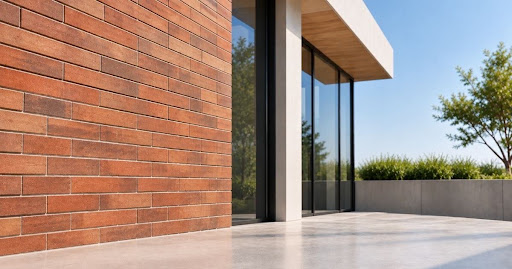
Brick remains one of the most trusted materials in architecture, and specifying it for a modern project takes careful thought that goes well beyond picking a colour from a sample board. A wrong choice at the specification stage can lead to costly delays, inconsistent finishes, or long-term durability issues.
Architects and specifiers must balance aesthetics, performance, sustainability, and budget, all while making sure the final product suits the building’s structural and environmental demands. The challenge for many specifiers comes from the sheer number of options available. With so many brick types, finishes, and manufacturing standards on the market, narrowing down the right specification requires a clear, structured approach.
How to Approach Brick Specification Step by Step
Here’s how to approach brick specification by considering performance, appearance, compliance, and long-term value:
1. Define the Performance Requirements First
Before considering colour or texture, architects need to establish what the brick must actually do. This includes compressive strength, water absorption rates, frost resistance, and fire performance, particularly for projects in exposed or high-load applications.
Skipping this step and starting with appearance alone often leads to specifying a brick that looks right but underperforms once installed. Reviewing structural and environmental requirements early, and confirming them with your brick supplies partner, ensures every subsequent decision is grounded in function rather than assumption.
2. Match the Brick to The Building’s Exposure Conditions
Climate and site exposure play a major role in how a brick performs over time. Bricks used on a coastal building, for instance, need higher resistance to salt and moisture than those used inland. Similarly, projects in freeze-thaw climates require bricks with proven frost resistance to prevent cracking and surface degradation.
Understanding local exposure categories, and specifying bricks tested and rated for those conditions, from manufacturers such as Vandersanden, helps avoid premature weathering and reduces long-term maintenance costs.
3. Consider Format and Modular Coordination
Modern architectural projects increasingly move beyond the standard brick format, using longer, thinner, or oversized units to achieve a particular visual rhythm. While these formats can create striking facades, they also affect coursing, mortar joint width, and how the brick interacts with structural elements like lintels and movement joints.
Specifiers should confirm that the chosen format is compatible with the building’s design intent, and that manufacturers like Michelmersh can supply matching special shapes, such as corners, copings, or cills, without long lead times.
4. Evaluate Colour, Texture, and Finish Consistency
Appearance is often the starting point for design conversations, but achieving a consistent look across a facade requires more than selecting a swatch. Batch-to-batch colour variation, texture blending, and the effect of different bonding patterns should be reviewed using full-size panels or mock-ups rather than small samples alone.
This is especially important for large-scale or highly visible projects, where inconsistency can be difficult and expensive to correct once installation is underway, and where early testing saves both time and budget later.
5. Check Compliance With Standards and Certifications
Every brick specification should be checked against relevant building codes, structural standards, and, where applicable, sustainability certifications such as EPDs (Environmental Product Declarations). This matters most on projects targeting green building ratings, where embodied carbon and material sourcing directly affect certification outcomes.
Confirming compliance early avoids the risk of redesigning facades late in the process because a chosen product fails to meet regulatory or certification requirements, protecting both the project timeline and its sustainability credentials.
6. Factor in Availability and Lead Times
Even the ideal brick specification can fall apart if the product isn’t readily available in the required quantity or timeframe. Custom colours, non-standard sizes, and handmade finishes often carry longer lead times than standard extruded units.
Engaging with manufacturers early, and confirming stock levels or production schedules against the project timeline, helps prevent delays that ripple through the wider construction programme, keeping trades on schedule and reducing the risk of costly last-minute substitutions.
7. Plan For Long-Term Maintenance and Repairability
A well-specified brick should be easy to maintain and, if necessary, repair or replace without disrupting the overall facade appearance. This means considering whether the brick and matching mortar will remain available in the future.
It also means thinking about how easily damaged units can be sourced and replaced without a visible patchwork effect. Thinking beyond completion, to how the building will age and be maintained, is a hallmark of a thorough specification process and a mark of genuine design foresight.
Turning Brick Specification Into A Design Advantage
Specifying bricks for a modern architectural project is a balance of performance, appearance, compliance, and practicality. Rushing the process or focusing solely on aesthetics can create problems that surface long after construction is complete.
An approach that starts with performance and exposure conditions, then refines through format, finish, compliance, and long-term maintenance, turns brick selection into a genuine design advantage. A well-specified brick meets a project’s technical requirements and strengthens the building’s durability and visual identity for decades to come.