
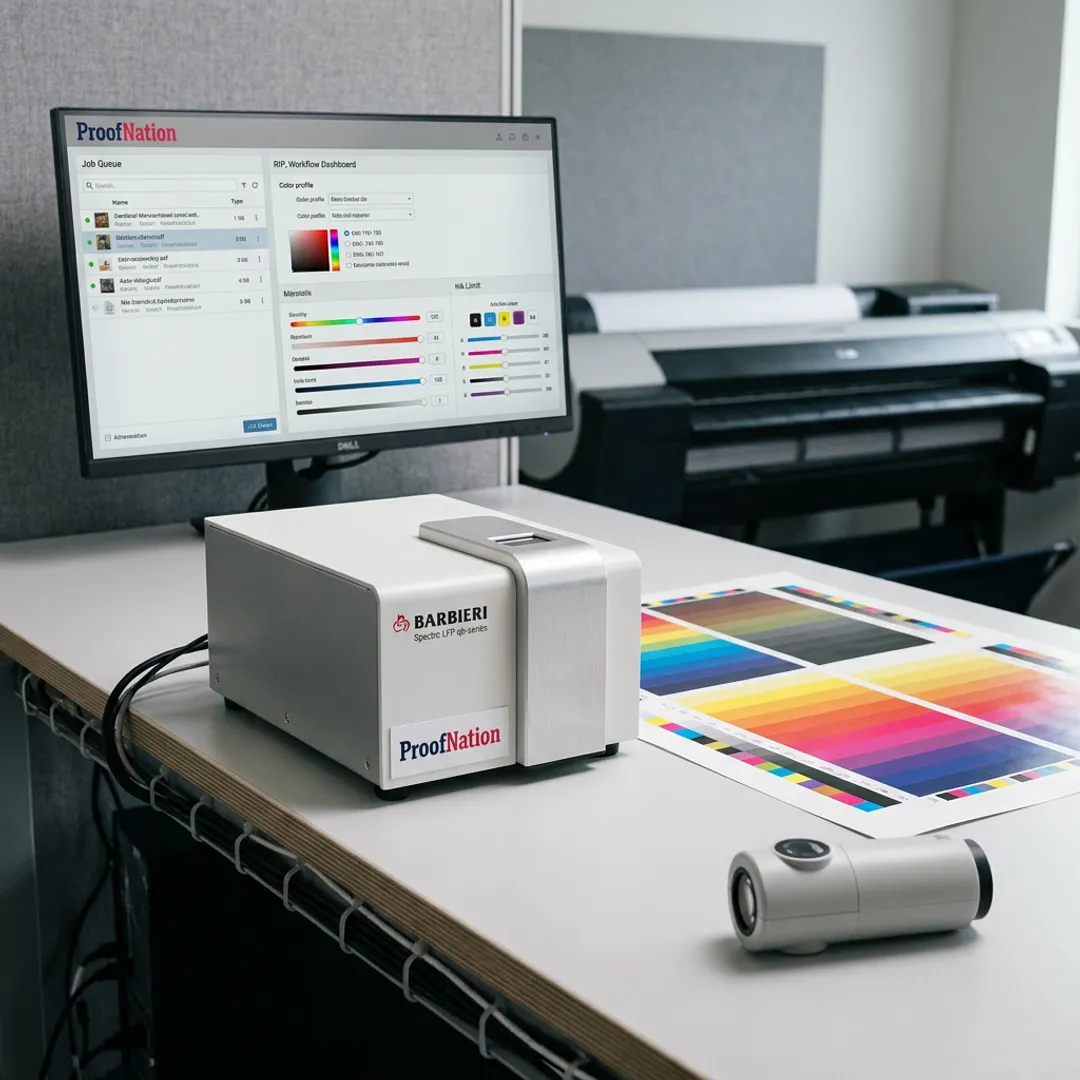
Production Management Software
Print production environments operate under a specific kind of pressure that most other industries don’t fully appreciate. Deadlines are fixed, materials are expensive, and errors discovered late in the process carry real financial consequences. A job that misses its press time doesn’t just delay delivery — it disrupts downstream logistics, strains client relationships, and often requires costly reprints or rush scheduling that erodes margins.
As print operations have grown more complex — managing multiple job types, vendor relationships, approval cycles, and delivery timelines simultaneously — the limitations of spreadsheets, email threads, and disconnected tools have become harder to ignore. Operations managers, production coordinators, and print buyers are increasingly looking for software that can keep pace with the real demands of their workflow, not just offer a digital version of what they were already doing manually.
Choosing the right platform isn’t straightforward. The market includes everything from basic job tracking tools to enterprise-level systems with more features than most shops will ever use. The challenge isn’t finding software — it’s knowing what to look for before committing to a platform that may fall short once production volume increases or workflow complexity grows. This article outlines ten features that genuinely matter in a production environment, and why each one deserves serious scrutiny before a purchase decision is made.
End-to-End Job Tracking with Real-Time Visibility
When evaluating print media production management software, the first thing to examine is whether the platform offers complete job visibility from intake through delivery — not just status labels, but actual workflow transparency. The right print media production management software allows every stakeholder involved in a job — from the account manager to the press operator — to see exactly where a job stands, what’s holding it up, and what’s coming next.
Why Partial Visibility Creates Operational Risk
When job tracking only captures certain stages of production, teams compensate by creating informal workarounds — status update emails, manual check-ins, or parallel spreadsheets that quickly fall out of sync. These gaps don’t just create confusion; they delay decisions. A prepress manager who doesn’t know whether a client has approved artwork will either wait unnecessarily or move forward without confirmation, both of which carry risk. Real-time visibility eliminates the gap between what’s happening and what’s known.
Integrated Proofing and Approval Workflows
Approval bottlenecks are one of the most common sources of schedule failure in print production. When proofing happens outside the production system — through email attachments, shared drives, or separate review platforms — version control becomes unreliable and response times become unpredictable. An integrated proofing workflow keeps approval cycles tied directly to the job record, with time stamps, revision histories, and clear sign-off confirmation.
The Cost of Disconnected Approval Processes
A print job that goes to press with an unapproved version of artwork isn’t just an operational error — it’s a financial liability. When approvals are tracked outside the core system, it becomes difficult to establish exactly which version was approved and by whom. This matters not just for quality control, but for accountability when disputes arise. Integrated approval workflows create a documented chain of decisions that protects both the print provider and the client.
Accurate Job Costing and Estimating Tools
Estimating is where profitability is either protected or quietly eroded. Software that connects job specifications directly to cost calculations — factoring in materials, press time, finishing, and outsourced services — gives production managers the ability to quote with confidence and track actual costs against estimates as jobs progress.
Estimate Accuracy as a Competitive Factor
Underquoting to win work is a short-term strategy that produces long-term losses. When estimating tools are disconnected from actual production data, estimators rely on memory, general assumptions, or outdated rates that no longer reflect current material costs. Software that pulls from live pricing data and historical job records produces estimates that are both more accurate and more defensible when clients question line items.
Vendor and Outsource Management Capabilities
Most print operations rely on a network of outside vendors — whether for specialty finishing, large-format output, mailing services, or overflow press capacity. Managing those relationships outside the production system creates a parallel tracking problem: jobs move through internal workflow while outsourced components exist in a separate communication thread with no connection to the main job record.
Keeping Outsourced Work Inside the Workflow
When vendor orders, delivery confirmations, and purchase records are attached to the job rather than stored in a separate inbox or folder, production coordinators can assess the full status of a job without switching between systems. This also simplifies billing reconciliation, since the cost of outsourced work is already associated with the correct job record when invoicing time arrives.
Scheduling and Capacity Planning Tools
Print shops that operate without a clear picture of available press time, finishing capacity, and staffing availability routinely accept work they cannot complete on schedule. Scheduling tools within a production management platform should reflect actual resource availability — not just a
list of jobs with due dates — so that conflicts are visible before they become missed deadlines.
Planning Ahead vs. Reacting to Conflicts
There is a significant operational difference between a shop that catches scheduling conflicts a week out and one that discovers them the morning a job is due on press. Capacity planning tools allow managers to look at the full production load for a given week, identify where bottlenecks are likely to occur, and make adjustments before commitments are broken. This kind of forward visibility is particularly important when managing multiple clients with overlapping deadlines.
Client-Facing Portals and Communication Tools
Client communication that happens entirely through email is difficult to track, easy to lose, and nearly impossible to audit after the fact. A client portal within the production system gives buyers a single location to submit jobs, review proofs, check status, and communicate with the production team — all within a recorded environment that both parties can reference.
Reducing Back-and-Forth Without Losing Responsiveness
One concern print operations have about client portals is that they create distance from the client relationship. In practice, the opposite tends to be true. When clients can see job status without calling or emailing for updates, routine inquiries drop. The communication that does happen tends to be more substantive and purposeful, rather than repetitive status checks that consume time on both sides.
Inventory and Stock Management Integration
Paper stock, specialty substrates, and consumables represent a significant portion of production costs. When inventory is managed separately from the production system, shops either overstock materials to avoid shortages or face mid-job delays when a required stock is unavailable. Integration between job scheduling and inventory levels allows production managers to anticipate material needs before they become urgent.
Connecting Inventory to Job Demands
The real value of inventory integration isn’t just knowing what’s on hand — it’s knowing what will be needed across the next two weeks of scheduled work. A system that can cross-reference job specifications with current stock levels and flag potential shortfalls gives purchasing enough lead time to order without paying rush premiums or accepting substitutes that may not meet client expectations.
Reporting and Production Data Analysis
Operational improvement depends on accurate data. According to principles outlined by the International Organization for Standardization, evidence-based decision making is a core principle of effective quality management — a standard that applies directly to how print operations should approach performance tracking. Software that generates meaningful reports on job profitability, production cycle times, error rates, and resource utilization gives management the information needed to identify where the operation is losing time or money.
Reports That Support Decisions, Not Just Records
Many platforms offer reporting features that produce data summaries without offering much insight into what the data means for operations. The more useful tools present information in a way that connects patterns to causes — showing, for example, that a particular job category consistently runs over estimate, or that a specific production stage is where most delays originate. That kind of analysis supports targeted improvement rather than general observation.
Scalability and Workflow Customization
A platform that works well for a shop producing fifty jobs per month may introduce friction at five hundred. Scalability isn’t just about processing speed — it’s about whether the workflow structure can accommodate growing job complexity, additional users, new service lines, and changing client requirements without requiring a complete system overhaul.
Customization as a Long-Term Investment
Off-the-shelf workflows rarely align perfectly with the way any individual shop operates. The ability to configure job types, approval sequences, status milestones, and user permissions to match actual operational practice reduces the amount of workaround behavior that users develop when software doesn’t quite fit their process. Workarounds are not neutral — they introduce inconsistency and create gaps in the data that reporting tools depend on.
System Integration with Existing Business Tools
Print production doesn’t happen in isolation from the rest of a business. Accounting systems, CRM platforms, mailing and fulfillment tools, and shipping carriers all touch the production process at various points. Software that can exchange data with these systems reduces redundant data entry, minimizes the risk of errors caused by manually transferring information between platforms, and creates a more complete picture of job costs and client activity.
Integration as Operational Infrastructure
When a job closes in the production system and that information has to be manually re-entered into an accounting platform to generate an invoice, there is both a time cost and an error risk attached to every transaction. Automated data exchange between systems eliminates that step, but more importantly, it ensures that the financial record matches the production record — which matters significantly during audits, client billing disputes, or operational reviews.
Making a Considered Software Decision
The features described here are not an exhaustive list of everything available in the market, but they represent the capabilities that most directly affect whether a print production environment runs with consistency or struggles with preventable disruptions. Not every platform will deliver all of them with equal depth, and some features will matter more to certain operations than others depending on volume, job mix, and client expectations.
The most important thing a production manager or operations decision-maker can do before committing to a platform is test it against their actual workflow — not a simplified demo scenario, but the real complexity of their daily operation. A system that handles straightforward jobs elegantly but breaks down under complex multi-vendor, multi-approval jobs will reveal its limitations quickly once it’s deployed.
Taking the time to evaluate these ten features carefully, to ask vendors specific questions about how each one functions under load, and to speak with current users in comparable operations will produce a much more reliable outcome than selecting software based on interface appearance or price alone. Production management platforms are long-term operational infrastructure. The decision deserves the same discipline as any other significant investment in the business.