
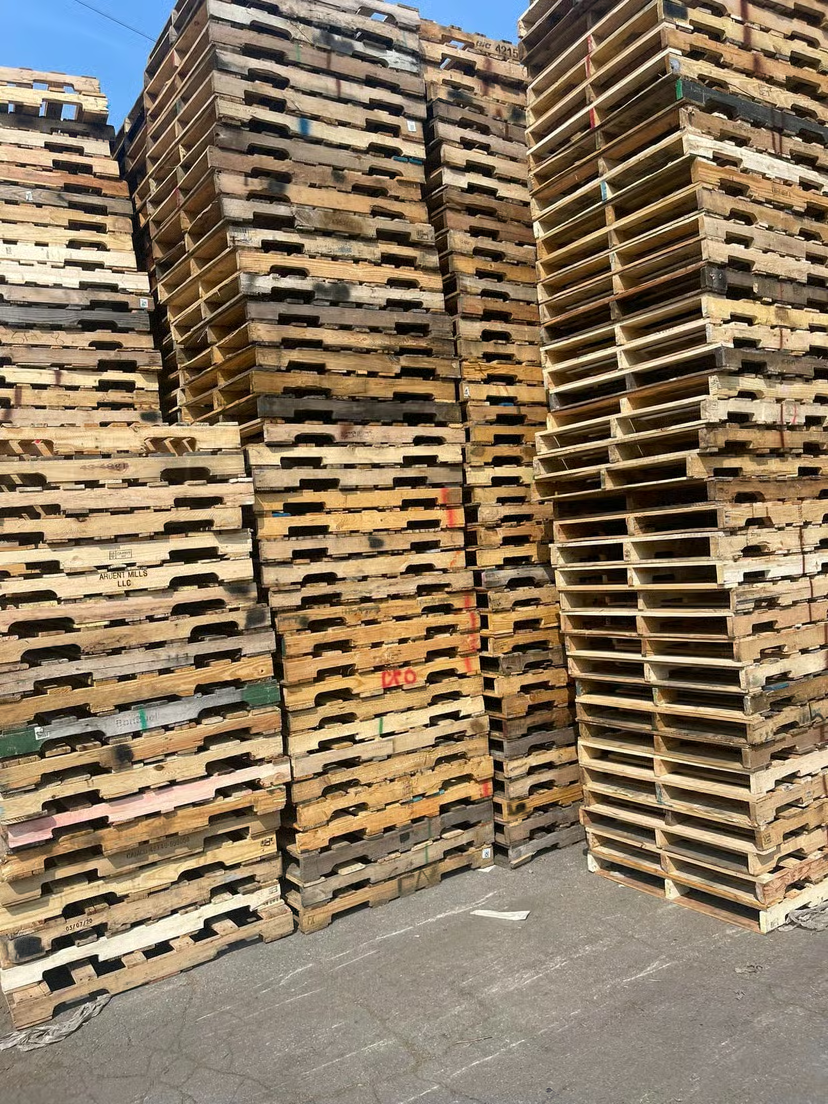
Purchasing pallets for operational use is rarely as straightforward as it appears. What looks like a simple supply decision often carries real consequences for warehouse flow, product safety, carrier compliance, and procurement costs. In a regional market as active and diverse as North Texas, the variables multiply quickly. Distribution centers, manufacturers, food processors, and logistics providers all operate under different loading conditions, storage environments, and downstream requirements — and yet they often source pallets without fully accounting for those differences.
The questions you ask before placing a pallet order can determine whether your operation runs smoothly or faces repeated disruptions. This guide is organized around the most important considerations a buyer should work through before committing to a pallet supplier or specification in the Dallas-Fort Worth region.
Understanding What You Are Actually Buying
When sourcing 48×40 pallets dallas fort worth, buyers often focus on price per unit without fully examining what condition and grade category they are receiving. Pallet grading is not a universal standard — different suppliers use different definitions for terms like “Grade A,” “used,” or “remanufactured.” Understanding what those terms mean in the context of a specific supplier’s inventory is the first step toward making a reliable purchasing decision.
New pallets are manufactured to a consistent specification and carry no wear history. Recycled or reconditioned pallets have been repaired to varying degrees and may include boards replaced with different wood species or densities. The difference in performance between these categories is not always visible during a casual inspection.
Why Condition Grading Affects More Than Appearance
A pallet that passes a visual check may still carry structural inconsistencies from previous repairs. Boards added during reconditioning may be attached with nail patterns that don’t match the original frame, which can create weak points under dynamic load. In high-throughput environments where pallets are moved quickly through forklifts and pallet jacks, these inconsistencies translate into real safety and productivity risks. Buyers should always ask for a clear written definition of the grade they are purchasing, not just a verbal assurance.
What Load Capacity Do You Actually Need
The weight your pallets will carry — both static and in motion — shapes almost every structural requirement. Static capacity refers to what a loaded pallet can support while resting on a flat surface. Dynamic capacity, which is lower, refers to what the pallet can support while being moved by a forklift. Racking capacity is lower still, because the load is distributed only across two support points rather than the full deck surface.
Matching Capacity to Your Specific Operation
Facilities that store pallets in selective racking have fundamentally different requirements than floor-stacked operations. A pallet that performs reliably on a flat warehouse floor may fail prematurely in a racked environment where load concentration is more severe. Before purchasing, buyers should confirm the intended use case — floor storage, racking, transportation, or a combination — and ask the supplier to confirm which configurations the pallet is rated for. Assumptions made at the purchasing stage often become expensive corrections during operations.
Is Your Supplier Operating With Consistent Regional Inventory
Pallet quality in any given market depends heavily on what enters the local supply chain. In the Dallas-Fort Worth metro area, pallet recyclers and suppliers draw from a large and varied pool of returned inventory from distribution centers, retail operations, and manufacturing facilities. The consistency of that incoming inventory directly affects the consistency of what buyers receive.
What Inconsistent Supply Looks Like in Practice
Buyers who source from suppliers with inconsistent inventory may receive pallets that vary significantly in board thickness, stringer depth, or overall structural integrity from one order to the next. This creates problems in automated or semi-automated handling environments where uniformity in pallet height and deck surface matters. Conveyor systems, stretch wrappers, and automated guided vehicles are all sensitive to dimensional variation. Asking a supplier directly how they manage inventory consistency — what their sorting process looks like and how they handle variability in incoming pallets — is a reasonable and necessary question.
Are the Pallets Compatible With Your Handling Equipment
Not all pallets work equally well with all handling equipment. The entry points of a pallet — the spaces where forklift tines and pallet jack forks enter — must match the equipment being used. Stringer pallets and block pallets have different entry configurations, and mixing incompatible pallet types with the wrong equipment leads to damage, dropped loads, and equipment wear.
Two-Way Versus Four-Way Entry and Its Operational Implications
A two-way entry pallet can only be accessed from two sides, which limits flexibility in tight warehouse aisles or receiving docks. A four-way entry pallet allows access from all sides, which improves handling speed and reduces repositioning time. In high-density storage environments or facilities with narrow aisles, this distinction affects throughput in measurable ways. Before purchasing a large volume, buyers should confirm how the pallet design aligns with the equipment currently in use at their facility.
Does Your Industry Carry Specific Pallet Compliance Requirements
Certain industries operate under regulatory or retailer-imposed standards that affect what pallets can be used in their supply chains. Food and beverage manufacturers, pharmaceutical distributors, and exporters all face specific requirements that go beyond general structural adequacy. For example, the International Plant Protection Convention, which establishes guidelines for wood packaging materials used in international trade, requires that wood pallets used in cross-border shipments meet specific heat treatment and marking standards. Buyers whose products move through international channels need to confirm that their pallets carry the appropriate certifications.
Retailer Compliance and Pallet Program Requirements
Large retail and big-box distribution networks often specify pallet programs that require suppliers and vendors to use particular pallet types or dimensions. Delivering product on non-compliant pallets can result in rejection at the dock, chargebacks, or delays that disrupt the entire order fulfillment cycle. Before purchasing pallets, buyers who supply major retailers should review their compliance documentation and confirm that the pallets they are considering will be accepted at the destination facility.
How Are the Pallets Stored Before Delivery
The condition in which pallets are stored between production or reconditioning and delivery affects their performance. Wood pallets stored outdoors or in uncovered environments absorb moisture, which increases their weight, reduces their structural stability, and introduces mold risk — particularly relevant for food-grade or pharmaceutical applications. Buyers should ask suppliers whether their inventory is stored indoors or outdoors, and under what conditions.
What Are the Delivery Lead Times and Minimum Order Requirements
Operational planning depends on reliable supply timing. Suppliers who serve the broader Texas region may have delivery windows that shift depending on demand, driver availability, or regional logistics constraints. Understanding the realistic lead time for your order size — and whether that lead time changes during peak procurement periods — allows you to plan inventory levels accordingly.
Aligning Order Volumes With Storage and Cash Flow
Minimum order quantities matter for smaller operations or facilities with limited staging space. Ordering more than you can store creates handling problems and exposes pallets to unnecessary wear while they sit. Ordering too few requires more frequent procurement cycles, which increases administrative and delivery costs over time. Finding the right order cadence for your operation requires an honest conversation with the supplier about both their minimums and your realistic consumption rate.
What Happens When Pallets Arrive Damaged or Below Specification
Even well-managed suppliers occasionally ship pallets that arrive damaged in transit or fail to meet the agreed specification. How a supplier handles those situations is as important as the quality of their standard product. A clear return and replacement policy — one that does not require lengthy disputes to enforce — is a sign of operational maturity on the supplier’s part.
Can the Supplier Scale With Your Volume Requirements
A supplier who can fulfill a moderate initial order may not have the infrastructure to scale when your volumes increase. This is particularly relevant for companies that are growing, seasonal businesses with demand spikes, or facilities that are planning expansions. Switching suppliers mid-cycle is disruptive and often more expensive than the savings from a lower unit price. Asking about a supplier’s current capacity and their ability to accommodate growth is a reasonable step in supplier qualification.
What Is the Total Cost of Ownership, Not Just the Unit Price
The purchase price of a pallet is only one component of its true cost. Pallets that fail prematurely under load must be replaced more frequently, increasing the cost per use cycle. Pallets that damage product or cause equipment wear introduce costs that don’t appear on the original invoice. The time spent managing returns, filing damage claims, or sourcing emergency replacements all carry operational costs that compound over time.
Calculating Value Across the Full Use Cycle
A slightly higher unit price for a consistently graded, properly stored pallet often produces better economics over a full procurement cycle than a lower price point with high variability. Before comparing quotes from multiple suppliers, establish a baseline for how many cycles you expect from a pallet under your specific operating conditions. That number makes cost comparisons more meaningful and helps avoid decisions that appear favorable on the surface but underperform in practice.
Closing Thoughts
Pallet procurement in the Dallas-Fort Worth market involves more variables than most buyers initially account for. The region’s industrial density, the diversity of operations drawing from the same pallet supply pool, and the compliance requirements of specific industries all create conditions where a careless purchasing decision can cause persistent operational friction.
The questions outlined here are not exhaustive, but they cover the categories where most procurement problems originate. Asking them before committing to a supplier or an order volume reduces the likelihood of surprises after delivery. The goal of any pallet purchase is continuity — uninterrupted movement of product through your facility, without the complications that poor-quality or mismatched pallets introduce. That outcome is achievable, but it requires treating the purchasing process as an operational decision rather than a commodity transaction.