
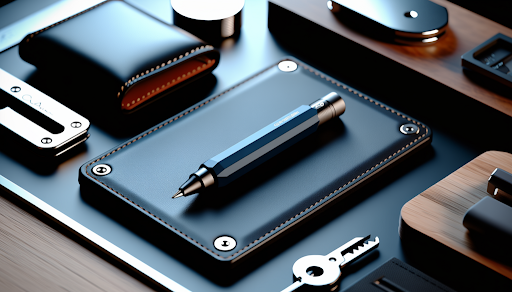
In design and engineering, tools shape outcomes. The mechanical pencil—particularly those built for everyday carry—has earned its place not through novelty, but through reliability. Unlike disposable pens or wooden pencils that dull mid-sketch, a well-made mechanical pencil delivers consistent line weight, requires no sharpening, and fits easily into a pocket or bag.
This isn’t about nostalgia. It’s about function. Designers, architects, and engineers continue to reach for mechanical pencils because they solve real problems: precision under pressure, portability without compromise, and the ability to move seamlessly between rough concepts and technical detail. This article examines why these tools endure, what separates a good mechanical pencil from a great one, and how choosing the right instrument can sharpen your creative process.
The Evolution of Mechanical Pencils
The mechanical pencil emerged in the 19th century as a solution to a simple frustration: the constant need to sharpen. Early patents focused on advancing graphite through a barrel without breaking it—a surprisingly complex engineering challenge. These early designs laid the groundwork for modern drafting tools.
What began as rudimentary lead-advancement mechanisms has evolved into precision instruments. Modern mechanical pencils feature adjustable lead hardness indicators, cushioned lead suspension systems to prevent breakage, and bodies machined from aircraft-grade aluminum. This evolution reflects demands from professional users who need tools that perform under deadline pressure and travel well.
Today’s options range from utilitarian drafting pencils to collectible designs that blur the line between tool and craft object. The best examples balance engineering with ergonomics, proving that even mature technologies can improve when designers pay attention to how people actually work.
Why Mechanical Pencils Outperform Traditional Options
The advantages of mechanical pencils become clear in daily use:
- Consistent line weight: A 0.5mm lead produces a 0.5mm line from first mark to last. No tapering, no variation—critical when technical accuracy matters.
- Zero downtime: Sharpening interrupts flow. Mechanical pencils eliminate that friction entirely, keeping you in the work.
- Material durability: Metal and high-grade polymer bodies outlast wood by years. Many designers use the same pencil for decades.
- Lead flexibility: Swap between 2H for precise technical work and 2B for expressive sketching without changing tools.
- Pocket-safe design: Retractable tips and sturdy clips mean you can carry a mechanical pencil anywhere without worry.
These aren’t marginal improvements. They’re the difference between a tool that supports your process and one that interrupts it.
What Makes a Mechanical Pencil Work for Design
Not all mechanical pencils suit design work equally. The best options share specific characteristics:
- Build quality that lasts: Look for metal barrels—brass, aluminum, or stainless steel. These materials provide the weight and balance that reduce hand fatigue during extended sessions.
- Grip design: Knurled metal grips offer control without requiring a tight hold. Rubberized sections work for some users but can degrade over time. Test what feels natural in your hand.
- Lead size selection: Fine leads (0.3mm to 0.5mm) excel at detailed technical drawing and small handwriting. Thicker leads (0.7mm to 0.9mm) handle sketching and shading without constant breakage. Match the lead to your primary use case.
- Mechanism reliability: The lead advancement system should feel smooth and precise. Cheap mechanisms jam or advance inconsistently—a frustration that compounds over time.
Design Meets Function: Mechanical Pencils Worth Noticing
Some mechanical pencils transcend pure utility and become objects worth examining. These designs demonstrate what’s possible when engineering meets thoughtful aesthetics:
- Material innovation: Carbon fiber barrels reduce weight without sacrificing rigidity. Titanium offers corrosion resistance for field work. Even traditional brass develops a patina that tells the story of use.
- Modular systems: Higher-end pencils feature interchangeable grips, adjustable lead hardness indicators, and replaceable clips—allowing customization without buying multiple tools.
- Minimal design language: The best examples strip away unnecessary elements. Clean lines, precise tolerances, and purposeful details create tools that feel as good as they look.
- Functional extras: Built-in erasers under removable caps, lead hardness indicators, and pocket clips positioned for actual pocket carry separate thoughtful designs from generic ones.
Build quality is where mechanical pencils tend to separate from each other once the novelty wears off. Everyman, Baron Fig, and Tactile Turn all machine their pencils from solid metal rather than leaning on plastic components, and the difference tends to show up years later rather than in the first few weeks of use. Readers weighing their options might want to look at a mechanical pencil built to last, since grip comfort and mechanism durability vary more across brands than most people expect.
Precision Tools for Technical Work
Engineering and technical drawing demand more than general-purpose writing instruments. The requirements are specific:
- Line consistency: Technical drawings rely on uniform line weights to convey information. A mechanical pencil that maintains 0.5mm throughout a drawing session isn’t a luxury—it’s a requirement.
- Lead hardness options: Different drawing phases need different lead grades. Initial layouts might use 2H for light, erasable lines, while final details require HB or B for visibility and reproduction quality.
- Durability under use: Technical work involves rulers, templates, and repeated erasing. Pencils need to withstand this without loosening mechanisms or developing play in the lead sleeve.
- Ergonomics for extended sessions: A poorly balanced pencil causes hand fatigue within an hour. Proper weight distribution and grip design matter when you’re working through complex drawings.
Selecting Your Mechanical Pencil
Choosing a mechanical pencil requires matching tool characteristics to your actual work patterns:
- Define primary use: Are you sketching concepts, drafting technical drawings, or taking detailed notes? Each application favors different lead sizes and grip styles.
- Consider lead diameter: 0.5mm offers the best balance for most users—fine enough for detail work, robust enough to avoid constant breakage. Specialists might prefer 0.3mm for precision or 0.7mm for sketching.
- Test grip comfort: If possible, hold the pencil for several minutes. Does the grip diameter feel natural? Does the weight balance in your hand? These factors matter more during hour-long sessions than in a quick store test.
- Evaluate build quality: Check for play in the mechanism, examine how the tip retracts, and assess overall construction. A well-made pencil feels solid without being heavy.
- Think long-term: A quality mechanical pencil costs more upfront but eliminates the need for replacements. Calculate cost per year of use rather than initial price.
Integrating EDC Pencils Into Your Design Process
An everyday carry mechanical pencil becomes valuable when it’s actually with you. The best tool left at your desk helps no one. Here’s how a reliable EDC pencil improves design work:
- Capture ideas immediately: Inspiration doesn’t wait for you to return to your studio. A pocket-ready pencil means sketching concepts the moment they occur—in meetings, during site visits, or while reviewing work in the field.
- Maintain workflow continuity: Switching between digital and analog tools shouldn’t require hunting for supplies. An EDC pencil stays in your pocket, ready when you need to annotate a printout or rough out a quick diagram.
- Consistent line quality: Using the same pencil for all hand work creates visual consistency across sketches, notes, and technical drawings. Your line weight becomes recognizable and reliable.
- Reduce decision fatigue: One good pencil eliminates the need to choose between multiple mediocre options. You develop muscle memory with a single tool, improving both speed and precision.
- Professional presentation: A quality mechanical pencil signals attention to craft. It’s a small detail that reinforces your commitment to doing work properly.
The key is selecting a pencil robust enough for daily pocket carry but refined enough for professional work. It should feel natural to grab, comfortable to use for extended periods, and reliable enough that you never think about the tool—only the work it enables.