
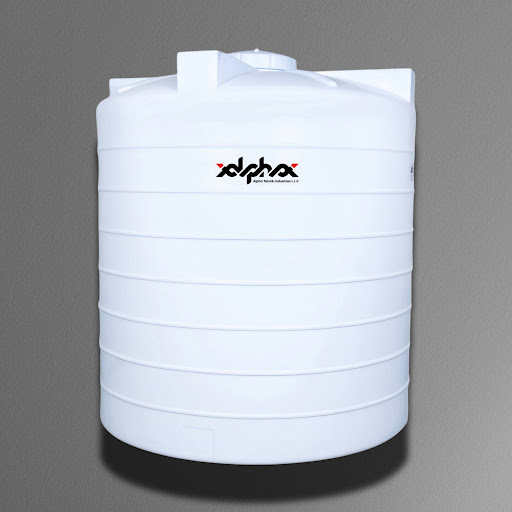
Long before polyethylene was invented, long before desalination plants changed the character of water supply in the Gulf, and long before the cities of the UAE existed in anything like their current form, the people of the Arabian Peninsula had developed sophisticated and effective systems for capturing, storing, and distributing water in one of the most challenging environments on earth.
The history of water storage in this region stretches back several thousand years, and understanding it gives a perspective on the modern water tank that transforms it from a mundane piece of plumbing infrastructure into the latest chapter in a very long story of human ingenuity applied to the problem of surviving in a desert. Without a properly sized and well-built water tank, any home, building, or business is at risk.
The most impressive ancient water management system in the Arabian Peninsula is the falaj, an underground channel that moves water from mountain sources to inhabited areas by gravity alone, without any pumping or mechanical assistance. The falaj system works by starting the channel at a point where groundwater is accessible in elevated terrain, then running the channel downward at a very slight gradient through tunnels and open channels for distances that can reach tens of kilometers, delivering water continuously to towns, farms, and oases at the destination.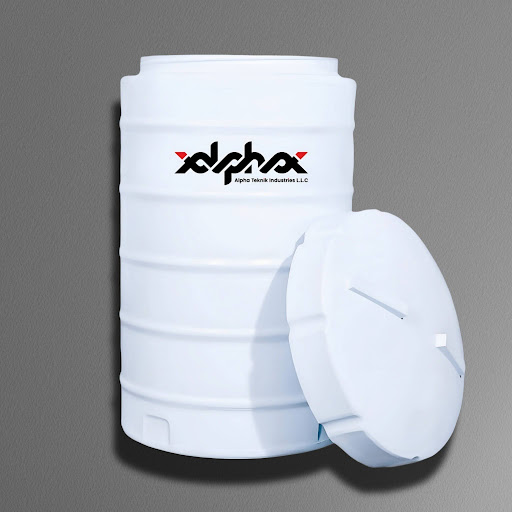
The engineering involved in building a falaj was remarkable. Without modern surveying instruments, ancient engineers maintained precise gradients over long distances through solid rock and loose desert soil, ensuring continuous flow without pooling or erosion. Many of the aflaj in Oman and the UAE were constructed more than 2,000 years ago. Some are still carrying water today. The aflaj of Al Ain, which helped sustain the oasis city for millennia, were recognized by UNESCO as a World Heritage Site alongside similar systems in Oman.
Alongside the falaj networks, ancient settlements in the region used surface cisterns and underground storage tanks called birkas to hold water against the dry season. These birkas were excavated from the ground and lined with multiple layers of finely mixed lime plaster applied while still wet and worked smooth by hand to create a waterproof surface. The craftsmanship involved in achieving a watertight liner using only natural materials was highly specialized, and the skills were passed down through generations of craftsmen who were among the most valued workers in desert communities.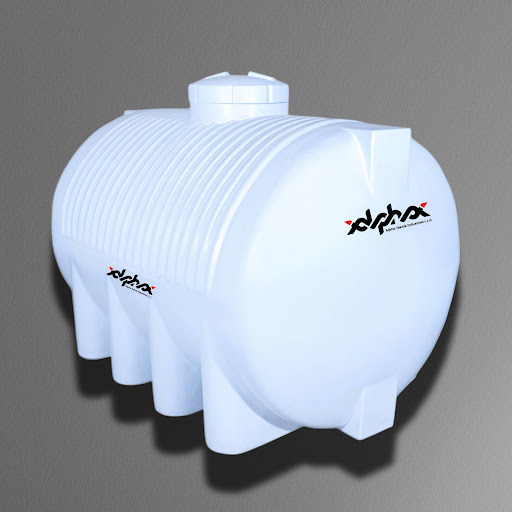
A large birka could hold hundreds of thousands of liters. Some of the oldest known cisterns in the Arabian Peninsula had volumes that would impress even by modern standards, representing years of labor to excavate and line. When rain fell, which might happen only a few times per year, these cisterns could be filled quickly by channeling water from large catchment areas. The stored water then supported the community through months of dry weather that would otherwise make settlement impossible. Alpha Teknik Industries LLC has been supplying water tanks across the UAE for years. We manufacture plastic polyethylene tanks, GRP fiberglass tanks, and IBC tanks for residential, commercial, and industrial customers in Dubai, Abu Dhabi, Sharjah, and all other emirates. This guide will help you understand each product, compare your options, and make the right purchase decision.
Archaeological discoveries across the UAE have revealed the remains of ancient water storage structures dating back thousands of years. Sites at Hili in Al Ain, at Mleiha in Sharjah, and at various coastal locations have all produced evidence of deliberate water management that predates written historical records of the region. The inhabitants of these sites understood that survival in the desert depended on solving the water storage problem, and they invested enormous effort in doing so.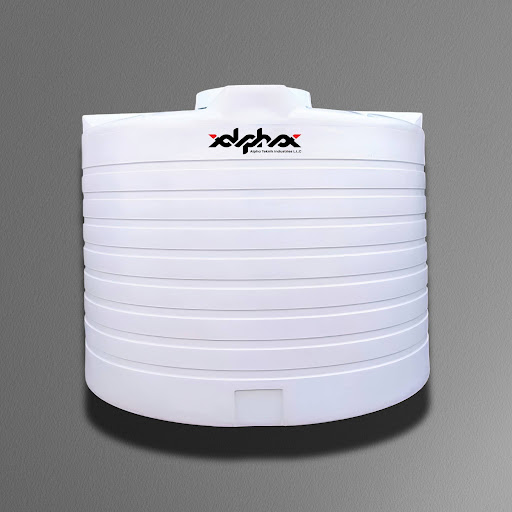
The water storage containers used by nomadic and semi-nomadic populations presented a different engineering challenge. Fixed cisterns could not travel with a moving community. Nomadic groups relied on animal-skin containers and pottery vessels for personal water supply during travel, and on knowledge of natural water sources, seasonal wadis, and rare permanent springs that could be reached on the travel circuit before the next stored supply ran out. This knowledge of water sources was among the most valuable information a community possessed and was guarded carefully.
The date palm, which has been cultivated throughout the Arabian Peninsula for at least five thousand years, played an indirect role in water storage strategy. Date palms are exceptionally drought-tolerant once established but need regular watering during the years it takes to reach productive maturity. The presence of a palm grove in an ancient settlement was a signal of access to reliable water, because no community would invest the years needed to grow palm trees unless they could count on maintaining that water access. The groves themselves, through their shade, reduced evaporation from the soil and helped maintain moisture levels in the root zone.
The discovery of petroleum in the mid-twentieth century and the subsequent rapid development of the Gulf states transformed water supply almost completely. Desalination became economically viable, piped networks extended across every populated area, and the elaborate traditional infrastructure of falaj channels and birka cisterns faded from active use. Some were destroyed by development. Others simply fell into disrepair as the communities that maintained them found easier alternatives.
But the fundamental problem those ancient systems addressed has not gone away. The UAE still depends on stored water at every scale. The government maintains strategic national reserves. Municipal systems maintain tank farms that buffer the distribution network against plant outages or demand spikes. Every building stores water against daily supply fluctuations. The materials are different, the scale is different, and the reliability is incomparably better than anything ancient engineers could achieve. But the principle, store water when it is available against the time when it is not, is unchanged from the earliest birka built into the desert floor.
There is something worth reflecting on in this continuity. The modern polyethylene tank on a UAE rooftop is the current answer to a question that humans in this region have been answering for thousands of years. The question is always the same. How do you make sure there is enough water when you need it? The materials and methods evolve. The question does not.